Is Nara deer park worth visiting?
An honest assessment of Nara Park's free-roaming deer: what it costs, how safe it is, how long it takes, and who it suits.
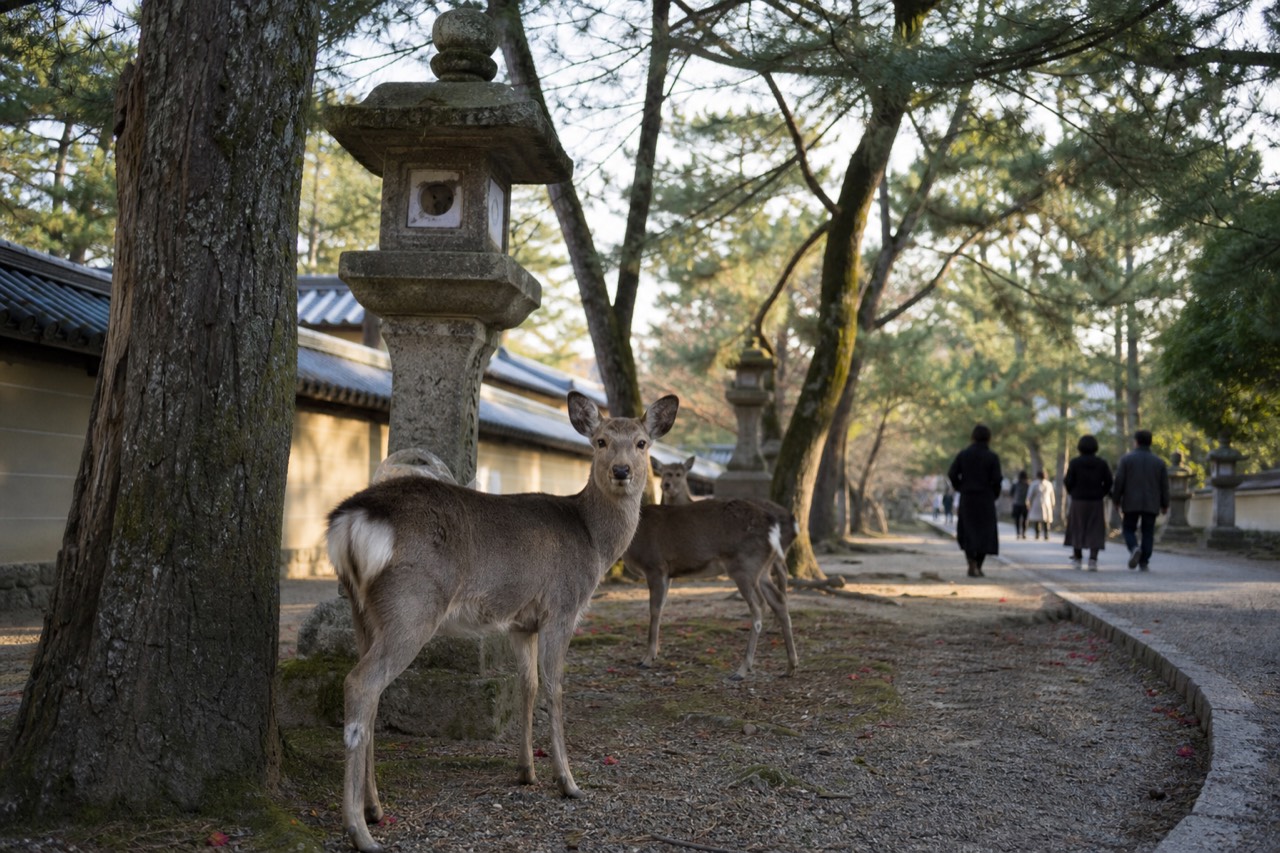
Is Nara deer park worth visiting?
Yes, for almost every traveller: Nara Park is worth visiting because roughly 1,687 free-roaming deer, a Great Buddha hall and 8th-century shrine grounds sit together in one walkable area, entry costs nothing, and the whole thing works as a half-day trip from Kyoto or Osaka. The one honest caveat is behaviour: the deer are wild animals, they bite and butt, and a small minority of visitors each year leave with bruises. Worth it, with your eyes open.
The park is not a zoo and not a petting farm. The Nara Deer Preservation Foundation, the body that manages and protects the herd, is explicit that the deer are habituated but wild, and that they bite, strike, butt and charge. That is not a lawyer's disclaimer; it is the operating reality of a park where 1,687 animals share gravel paths with several thousand daily visitors. The 2026 census, taken by foundation staff and volunteers on the mornings of 15 and 16 July, counted 411 stags, 990 does and 286 fawns, a rise of 222 on the previous year.
What that means in practice is mostly delightful. Deer bow for crackers. They nap against the base of stone lanterns. They photobomb toddlers with the patience of trained actors. Most visitors spend their whole visit at a comfortable distance and never see a bad moment. But the foundation's own guidance deserves to be quoted in spirit: feed nothing except shika senbei, the special crackers sold in the park for about 200 yen a bundle, hand the cracker over fast, and never hold it in a closed fist or the deer will follow and press you.
If you are weighing Nara against other day trips from Kyoto, the deer are the tiebreaker. Nothing else in Kansai offers this. A reasonable comparison of the practical options, including the coach tour that pairs the park with Kyoto's headline temples, is covered in our guide to day trips from Kyoto.
What does it actually cost to visit the deer?
The park itself costs nothing to enter, deer crackers run about 200 yen for roughly ten, and the big paid items nearby are Todai-ji's Great Buddha hall at 800 yen and its Museum at 800 yen, or 1,200 yen for the set ticket covering both. Kasuga Taisha's grounds are free, with its special inner worship at 700 yen. So a full deer-and-temples morning costs under 2,000 yen per adult before lunch, one of the cheapest big days out in Japan.
That free entry is not a marketing gimmick, it is the park's legal status: Nara Park is a prefectural urban park and the deer are a protected natural monument. Nobody can charge you to walk among them. The costs arrive only when you step inside the paid buildings that ring the park, and there the fees are set by each temple and shrine independently.
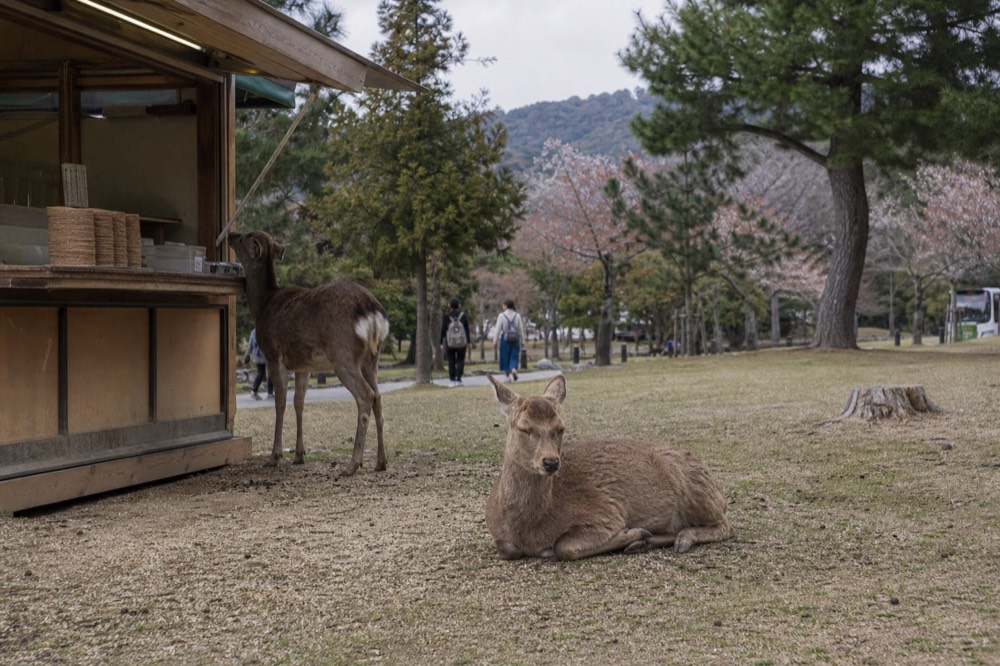
Two practical notes on money. First, Todai-ji states on its own admission page that payment is cash only, and Kofuku-ji says the same; carry yen notes, because the ticket windows do not take cards. Second, the shika senbei stalls are licensed by the foundation and their proceeds support deer welfare, so the 200 yen is money well spent. A bundle is enough for a memorable ten minutes.
| Item | Cost | Notes |
|---|---|---|
| Nara Park entry | Free | Public park, open to walk through at any time |
| Shika senbei crackers | About 200 yen | Roughly 10 crackers per bundle, licensed stalls |
| Todai-ji Daibutsuden | 800 yen adult | Cash only; set ticket with the Museum 1,200 yen |
| Todai-ji Museum | 800 yen adult | Cash only; same fee scale as the hall |
| Kasuga Taisha grounds | Free | Special inner worship 700 yen |
| Kofuku-ji combined ticket | 1,600 yen adult | Three buildings, sold 09:00-16:00 only, cash only |
For travellers who would rather fold all of this into one booked day, a coach tour covers the admissions differently: the Kyoto and Nara day tour includes a licensed English-speaking guide, the coach and the temple admissions in its price, with six options depending on your departure city and lunch choice. Check availability if that appeals.
How close can you safely get to the deer?
Keep a respectful distance outside the feeding moment, feed only shika senbei, hand it over immediately, and give does a wide berth from mid-May to June and stags a wide berth from September to November, which are the foundation's two designated deer-protection months. Those windows, calving season and the rut, are when the animals are most likely to react badly to being approached, teased or cornered by a visitor chasing a photo.
The safety question is where a lot of online advice goes soft, so it is worth being blunt. The foundation's own educational page does not describe the deer as gentle; it describes them as wild animals that bite, strike, butt and charge, and it singles out older visitors and small children as needing extra care. Bowing deer are performing a learned behaviour for food. A deer that has finished bowing and not been fed is a large animal with a strong neck deciding what to do next.
The four rules the foundation publishes are simple enough to memorise. Feed nothing except the crackers sold in the park, because human food harms them. Hand the cracker over quickly rather than teasing. Do not hide it in a closed fist. And do not chase, grab or provoke, which sounds obvious until you watch a visitor try to hug a stag for a selfie.
Timing matters as much as behaviour. Fawns are born from mid-May through June, and a doe near a hidden newborn can turn aggressive without warning; approaching a fawn provokes the mother directly. From September to November the rut makes stags territorial, and the foundation notes that even de-antlered stags must not be approached then. Visit outside those windows, follow the cracker rules, and the risk drops to the level of any encounter with a large tame-ish animal: low, but not zero.
How many hours does the park need?
Most visitors need about two to four hours for the deer, Todai-ji and Kasuga Taisha, and a full comfortable day if you add Kofuku-ji, Naramachi and a proper lunch stop, with Kintetsu Nara Station only about five to eight minutes from the park edge on foot. Four hours is genuinely enough for the core experience; we break that timing down in detail in is four hours in Nara enough.
The walk itself is part of the appeal. From Kintetsu Nara Station you pass Kofuku-ji's pagoda almost immediately, then the deer lawn, then the approach to Todai-ji, where the Nandaimon gate and its guardian statues stand free to see before you pay anything. Kasuga Taisha's lantern-lined approach forest is a fifteen-minute walk beyond the Great Buddha hall. None of it feels like queueing; it feels like a single continuous landscape.
One thing to factor into your timing: the Five-Storied Pagoda, Nara's postcard silhouette, is completely enclosed in a roughly 60-metre steel weather shroud and will be until March 2034, according to the temple's own restoration project pages. If you arrive expecting the classic view, you will photograph scaffolding. The pagoda is still worth understanding, and the interior halls of Kofuku-ji are open as normal, but plan your photo expectations around the Central Golden Hall instead.
When is the best time of day and year to go?
Early morning is the best time of day: the deer are hungriest and calmest, the paths are quiet, and in July the census is conducted at 05:30 precisely because that is when the park belongs to the animals rather than the crowds. Late afternoon is the second-best window. Midday in high season combines peak crowds with deer that have already been fed all morning and have lost interest in bowing for anyone.
Season-wise, spring and autumn win on aesthetics, but the safety calendar matters more. Cherry blossom in Nara arrived on 25 March in 2026, four days earlier than normal, and the park's open lawns make a fine hanami stage. Autumn colour is the subtler pick: Kyoto's official maple colouring date is a December date, normally 5 December, which surprises visitors who arrive in mid-November expecting peak red. Our best time to visit Nara guide covers the whole calendar.
Summer deserves a specific warning. Kyoto's heat record list is dominated by recent years: 39.7 degrees on 23 July 2026 is the third-hottest day ever recorded at the station, and four of the six hottest days on record fall in 2018, 2024, 2025 and 2026. Nara runs similarly hot. If you visit in July or August, do it early, and note that Todai-ji's hall opens at 07:30 from April to October, a rare cool-hour attraction that opens before almost anything else in the city.
Is the rest of Nara worth the train ride?
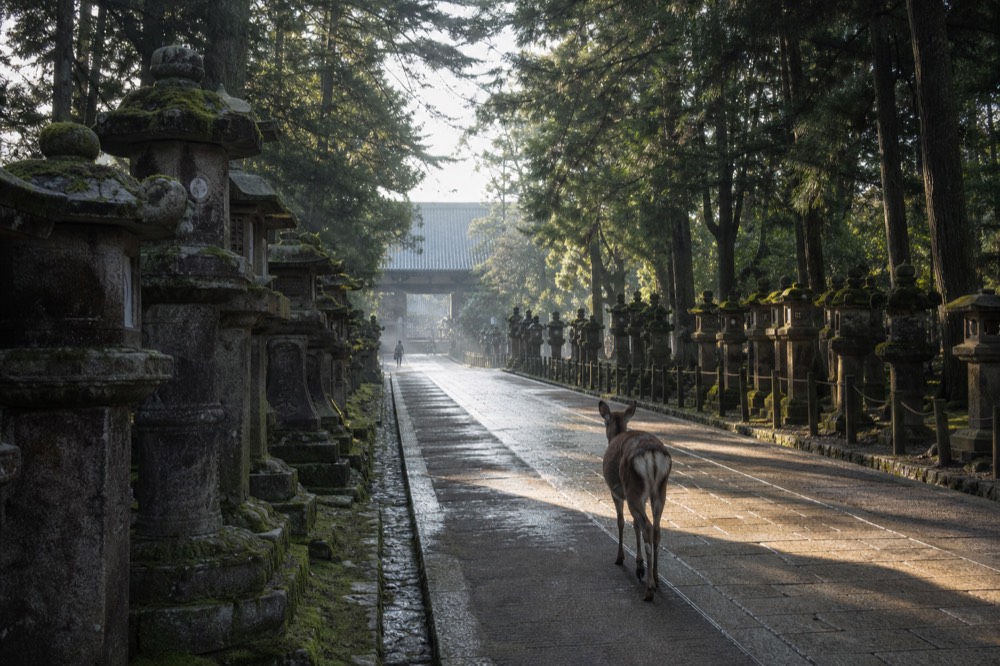
Yes: Todai-ji's Daibutsuden is one of the world's largest wooden buildings, housing a 15-metre seated Buddha, and Kasuga Taisha's forest of roughly 2,000 stone lanterns and 1,000 hanging lanterns is a UNESCO-listed approach you walk for free. The deer alone justify the trip, but the temples around them are why Nara was the capital before Kyoto and why the whole area is inscribed as a UNESCO World Heritage site, in 1998.
Todai-ji rewards the modest ticket. The present hall, rebuilt in 1709, measures 57.012 metres east to west and stands 48.742 metres tall, and even at that scale it is a cut-down version: the original Tenpyo-era hall was 11 bays wide, about 88 metres, before cost forced a 7-bay rebuild. The eye-opening ceremony for the Great Buddha was held in 752. Inside, the statue's serenity and the hall's dim scale do what photos cannot.
Kasuga Taisha, the shrine the deer were originally sacred to, is a different register entirely: vermilion lacquer against cedars, with bronze and stone lanterns donated across centuries lining the approach. The shrine's museum holds 354 National Treasures. And if the word "controversy" crossed your radar about the herd, the story of culling debates and protected status is a genuinely interesting one, covered in the Nara deer controversy.
For the full picture of the area's other sights, from Naramachi's machiya streets to the National Museum, see our things to do in Nara guide, or start with the practicalities in Nara day trip from Kyoto.
Should you go independently or on a tour?
Going independently is cheaper, about 1,440 yen return on JR from Kyoto, and gives you full control of the clock and the walking route; a coach tour is better if you want Nara folded into one Kyoto sightseeing day with a licensed guide, the coach and the temple admissions all arranged for you. Neither answer is wrong, and the deciding factor is usually how many Kyoto temples you also want on the same day.
The independent route is simple. Trains from Kyoto run every half hour or so on the JR Nara Line, the Miyakoji Rapid takes about 45 minutes, and Kintetsu's express costs a similar amount and drops you closer to the park. We compare all the options, fares and stations in best way to get to Nara.
The tour route suits a different traveller: someone with two nights in Kyoto who wants Nijo Castle, Kinkaku-ji, the Imperial Palace, Kasuga Taisha and Todai-ji seen in one organized sweep, with a licensed guide doing the explaining. The Kyoto and Nara day tour, run by JTB Sunrise Tours, is rated 4.8 from 32 reviews, and its six options differ by departure city and lunch. One honest note from those reviews: the included lunch is the tour's weakest element, and reviewers have said so on and off for a decade, so the cheaper no-lunch option, from $185.65, is often the smarter buy, with Nara's own food scene covered in our what to eat in Nara guide.
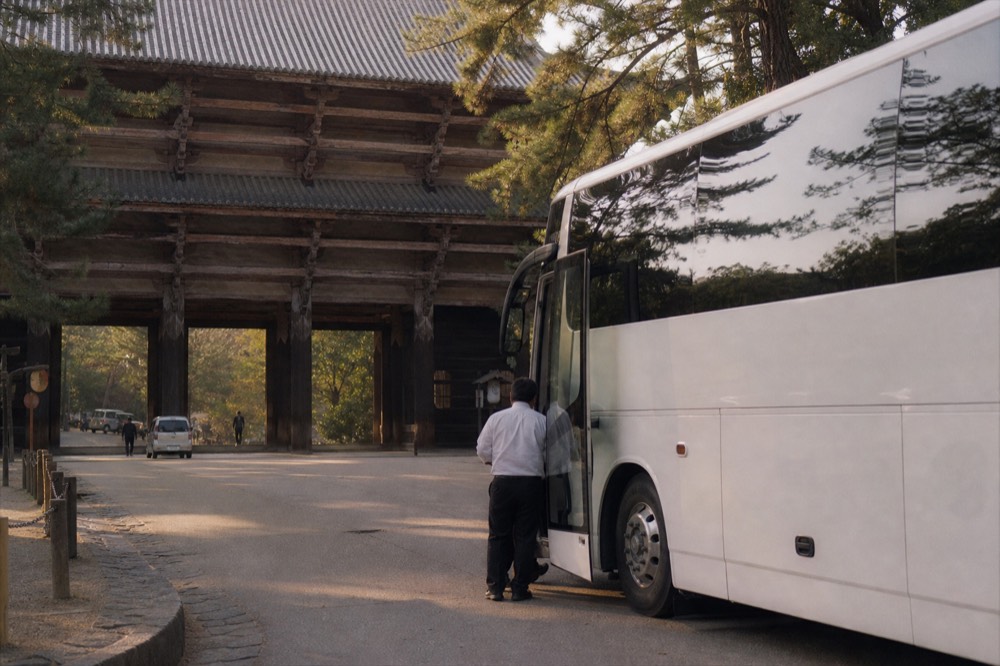
Whichever way you go, the underlying advice on Kyoto Nara Day Tour is the same: book the transport that matches your energy, carry cash for the temples, and give the deer the respect that a 1,687-strong wild herd has earned.
The short answers: yes, it is worth visiting; park entry is free with about 200 yen crackers; feeding is safe if you follow the rules; two to four hours covers the core; and early morning beats midday in every season. The details below expand on each of those points, including the two times of year when the deer deserve extra distance and the cash-only rule that catches out card-carrying visitors at the Todai-ji ticket window.
Common questions about Nara deer park
Is Nara deer park worth visiting?
Yes. Free entry, roughly 1,687 free-roaming deer, a 752-era Great Buddha hall at 800 yen and lantern-lined shrine approaches make it one of Japan's best value days out. Just follow the feeding rules, because the deer are wild animals.
Is it safe to feed the deer at Nara Park?
Yes, if you feed only shika senbei, hand each cracker over immediately, and never hold food in a closed fist. Avoid approaching does in June and stags from September to November, when the foundation's protection months apply.
How much does Nara Park cost?
Park entry is free. Crackers cost about 200 yen for roughly ten. Todai-ji's hall is 800 yen cash only, Kasuga Taisha's special worship is 700 yen, and Kofuku-ji's combined ticket is 1,600 yen.
Can you do Nara Park in half a day?
Yes. Two to four hours covers the deer, Todai-ji and Kasuga Taisha, since Kintetsu Nara Station is only about five to eight minutes' walk from the park edge.
When should you not visit Nara Park?
Avoid midday in peak season, when the deer are overfed and crowds are heaviest, and take extra care in June, calving season, and September to November, the rut, when the animals are most reactive.