Best Time to Visit Nara: Cherry Blossoms, Deer Season and Month-by-Month Weather
Most timing advice for Nara repeats folklore. The dates below come from the Japan Meteorological Agency's own phenology records and the Nara Deer Preservation Foundation's published guidance, so you can plan around what actually happens, not what a brochure says.
Short answer
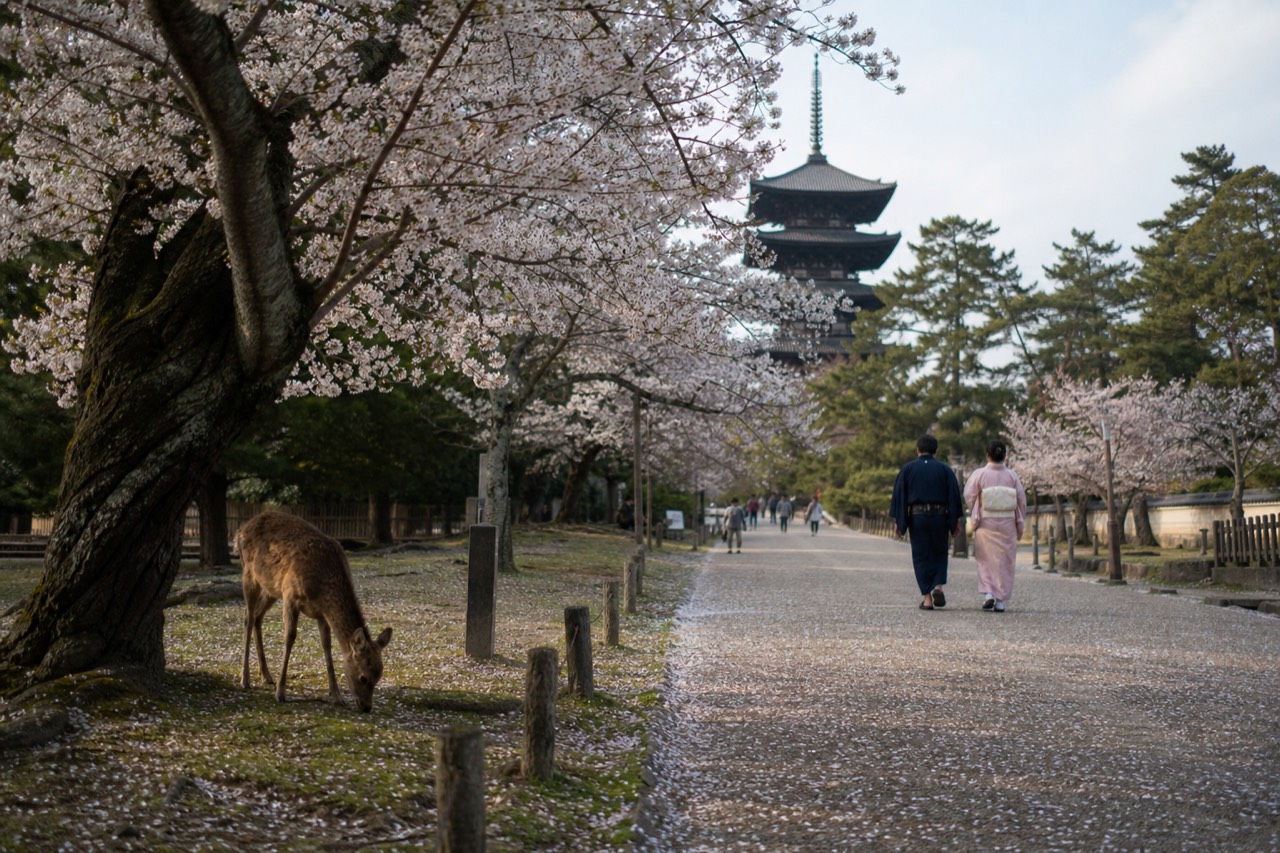
The best time to visit Nara is late March to early April for cherry blossoms: the Kyoto normal for full bloom is 4 April, and 2026 hit it on 30 March. For autumn colour, plan for late November into December, since the official maple colouring date is 5 December, not mid-November. Avoid June and November if you want calm deer.
When is the best time to visit Nara?
The best time to visit Nara is late March to early April for cherry blossoms, with the 1991-2020 normal for full bloom at 4 April in Kyoto and 30 March observed in 2026. For autumn colour, the official maple colouring date is 5 December, far later than most guides claim. June and November are the two months the deer foundation flags for extra caution around the animals.
That answer is built on records rather than travel-brochure habits. The Kyoto Local Meteorological Observatory, which sits close enough to Nara to share the same Kinki weather pattern, has tracked cherry flowering and maple colouring for over a century, and its published normals are the most reliable timing tool a visitor can use. Nara's own station publishes climate normals too, so rainfall and temperature expectations below are anchored to measured 1991-2020 averages, not to a vague sense that spring is nice.
Timing matters in Nara more than in most Japanese cities because the park is the attraction. The deer, the open grass and the lantern-lined approaches to Kasuga Taisha are all outdoor experiences, so a week of rain or a stretch of 35-degree heat changes the day more than it would in a museum city. The Kyoto Nara Day Tour site exists because so many people combine the two cities in one trip, and the season you pick shapes that day considerably.
This page walks through the cherry blossom dates, the autumn-colour correction that surprises almost everyone, the two deer-caution months, the summer heat, and a month-by-month summary you can plan against.
When do the cherry blossoms bloom in Nara and Kyoto?
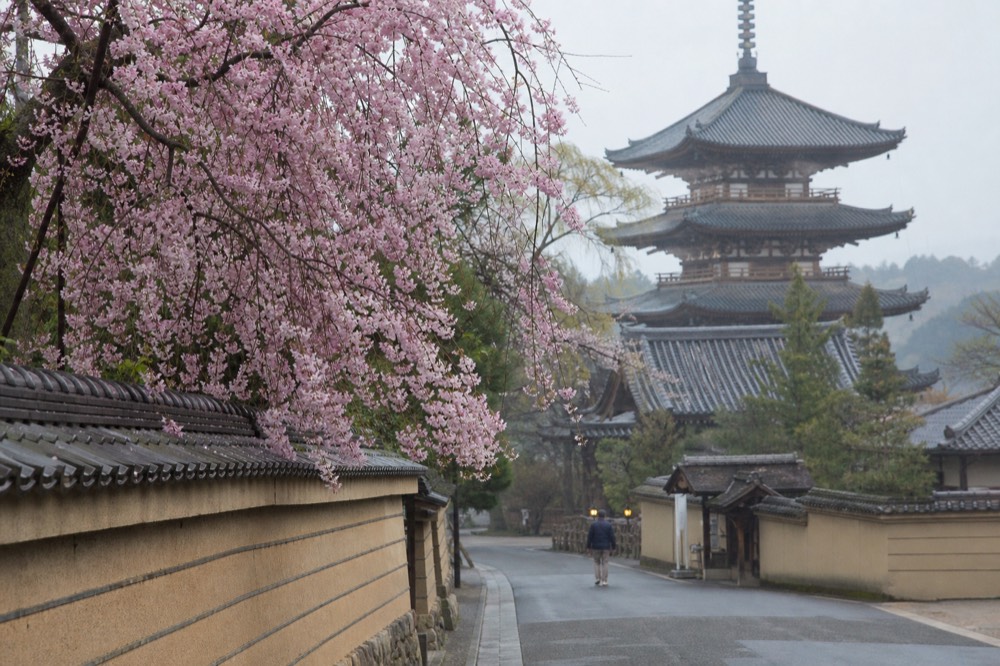
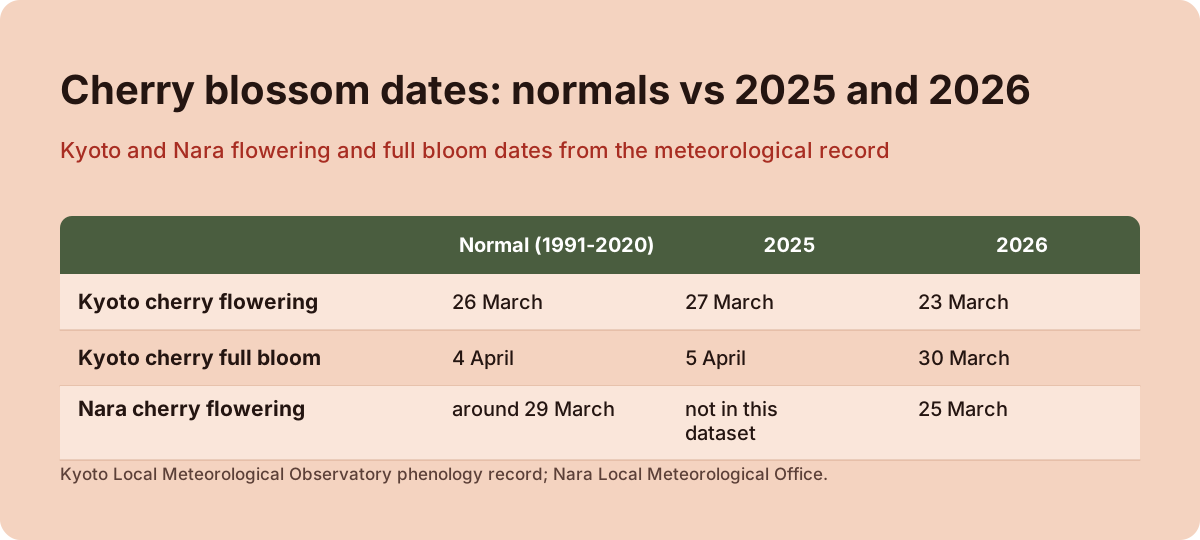
Cherry blossoms in the Kinki region normally flower around 26 March and reach full bloom around 4 April, using the Kyoto observatory's 1991-2020 normals. In 2026, Kyoto recorded flowering on 23 March and full bloom on 30 March, while Nara's Somei Yoshino began blooming on 25 March, four days earlier than its average. Plan for the last week of March through the first week of April.
Those figures come straight from the observatory's own phenology page, which is the dataset Japanese forecasters themselves use. The records stretch back far enough to show the range: the earliest Kyoto flowering on record is 16 March 2021, and the latest is 9 April 1984. Full bloom has landed as early as 24 March 2023 and as late as 17 April 1965. In other words, a nine-day window is the plan, not a promise, and any itinerary built around a single date will sometimes miss.
The 2026 season ran early and compact. Kyoto flowered on 23 March against the 26 March normal and hit full bloom on 30 March, five days ahead of the 4 April normal. Nara's Local Meteorological Office reported its first blooms on 25 March, four days earlier than both the average and the previous year. For 2027, no forecast exists yet from any primary source, so the normals are the honest planning tool: aim for the final days of March and the first week of April, and accept that the trees set the schedule.
| Observation | Normal (1991-2020) | 2025 | 2026 |
|---|---|---|---|
| Kyoto cherry flowering | 26 March | 27 March | 23 March |
| Kyoto cherry full bloom | 4 April | 5 April | 30 March |
| Nara cherry flowering | around 29 March | not in this dataset | 25 March |
| Earliest flowering on record for Kyoto | 16 March 2021 | ||
| Latest Kyoto flowering on record | 9 April 1984 |
One structural point worth knowing: the Kyoto observatory cut its phenology programme in January 2021 to six plant species and nine phenomena, so the modern record is leaner than the historical one, but the cherry and maple series continue. If you see a precise "Nara full bloom date" forecast months ahead, treat it as speculation until the meteorological offices publish their season forecasts in late winter.
A blossom-timing trip also pairs naturally with the bigger question of whether one day is enough for both cities, which our guide to a Kyoto and Nara day trip covers in detail.
Is autumn really a November thing in Nara?
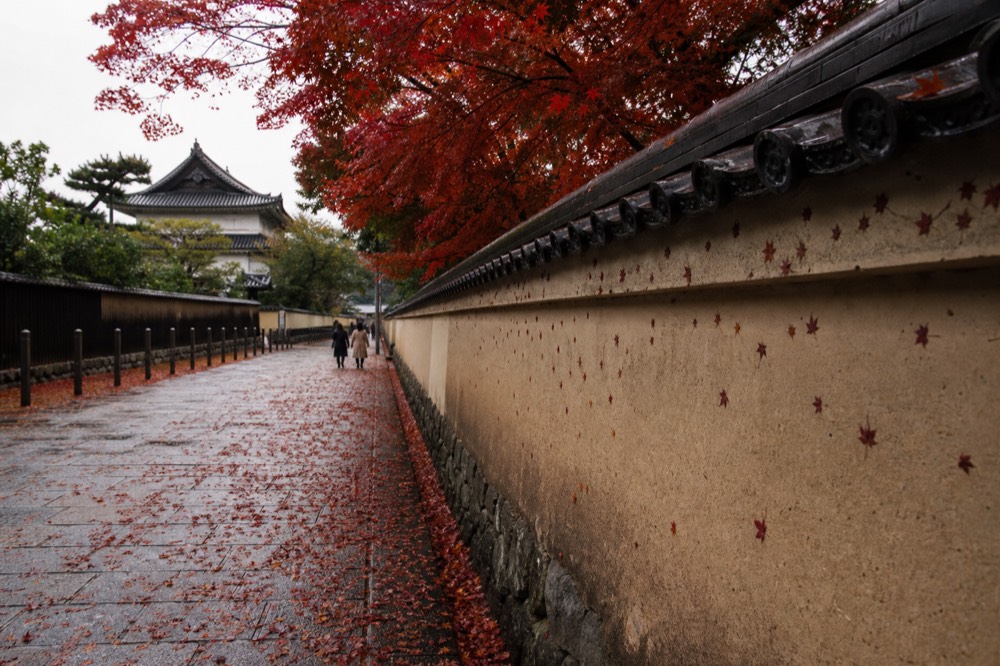
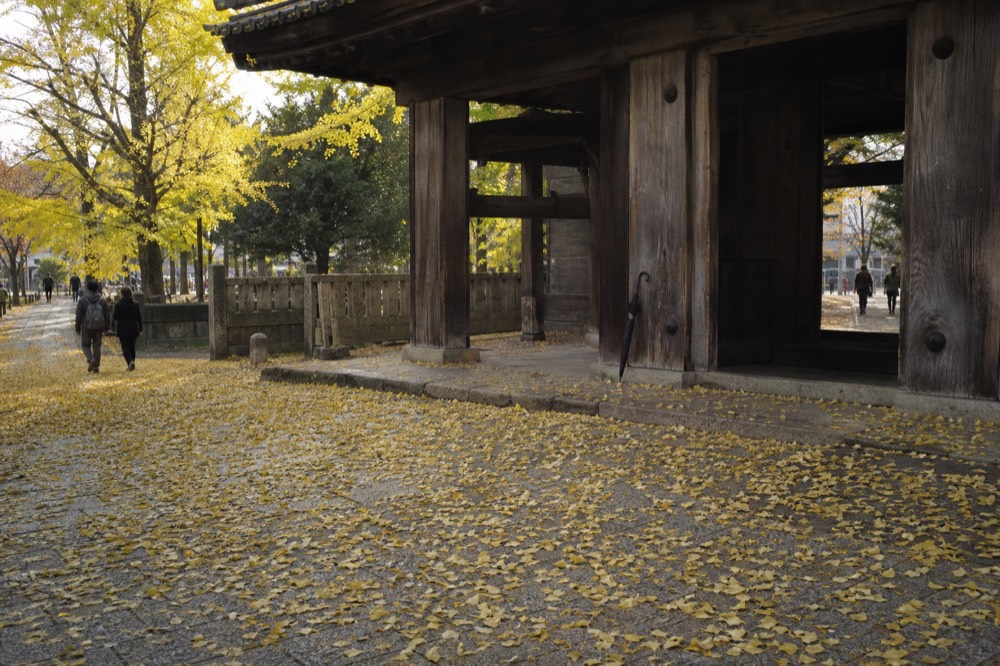
No, and this is the correction that matters most: the official Kyoto maple colouring date, the meteorological benchmark for red leaves, is 5 December on the 1991-2020 normals, and 2025 came in on 10 December. The mid-November peak-colour claim that fills most travel guides is folklore. Ginkgo yellow arrives earlier, with a 24 November normal, but deep red maple colour is a December event.
The observatory defines the colouring date as the day a benchmark tree first shows colour, and the record's extremes make the point starkly. The earliest maple colouring on record is 10 November 1976; the latest is 20 December 2024. The 2025 observation of 10 December was five days late against the normal, and the leaf-fall normal of 18 December means the colour window is short and late. Anyone booking a mid-November Nara trip expecting peak red maple is, in a typical year, about three weeks early.
The 2026 forecast season has already produced first estimates. One private forecaster puts Kyoto's red-leaf viewing date at 11 December against the 5 December normal, and another puts Arashiyama's peak around 24 November. Private forecasts shift through the autumn, so treat September numbers as directional. The safe planning rule: for yellow ginkgo and early colour, late November; for full red maple in the Kinki region, plan the first half of December.
This has practical consequences for day-trippers. Temple hours at some sites shorten in November to March: Todai-ji's Daibutsuden runs 07:30-17:30 from April to October against 08:00-17:00 from November to March, while Kasuga Taisha's worship area opens at 07:00 instead of 06:30 through the November to February winter months. December days are also the coldest on the Kyoto and Nara normals, with mean temperatures of 7.2 and 6.8 degrees respectively, so pack for near-freezing mornings if you chase the true red peak.
| Autumn marker | Normal (1991-2020) | 2025 observed |
|---|---|---|
| Kyoto ginkgo colouring | 24 November | 25 November |
| Kyoto maple colouring | 5 December | 10 December |
| Kyoto maple leaf-fall | 18 December | 22 December |
| Earliest maple colouring on record | 10 November 1976 | |
| Latest maple colouring on record | 20 December 2024 |
The phenology record behind these dates is published by the Kyoto Local Meteorological Observatory, and it is worth a look if you enjoy seeing a century of springs and autumns laid out in one table.
Which months need extra caution around the Nara deer?
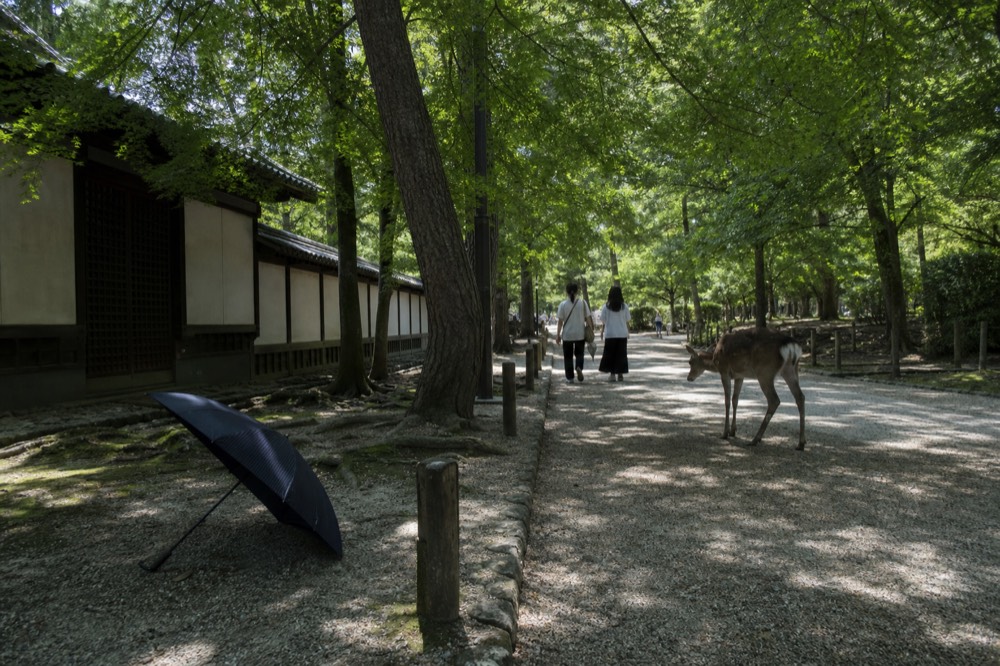
June and November are the two designated deer-protection months, per the Nara Deer Preservation Foundation's own guidance. June covers the calving window from mid-May, when mothers turn aggressive around newborn fawns, and November covers the September-to-November rut, when stags, even de-antlered ones, must not be approached. Visit outside those windows for the calmest interactions.
The foundation is the organisation that actually manages the herd, and its education page is blunt: the deer are habituated but wild, they bite, strike, butt and charge, and older visitors and small children need extra care year-round. What changes seasonally is the intensity. A doe with a newborn nearby is a different animal from the placid cracker-eaters of February, and a stag in the rut behaves unlike the same stag in April, regardless of whether his antlers have been cut.
The numbers behind the herd are also worth knowing. The July 2026 census, conducted by foundation staff and volunteers with Kasuga Taisha, Nara Prefecture and three local universities across the mornings of 15 and 16 July, counted 1,687 deer, up 222 on the previous year: 411 stags, 990 does and 286 fawns. The foundation's figures for fiscal 2025 record 140 deer deaths, 36 of them from road accidents. The herd is large, growing, and protected as a National Natural Monument, which is exactly why the seasonal guidance exists.
The feeding rules apply in every season, and they are simple: feed nothing except shika senbei, the licensed crackers sold in the park for about 200 yen a bundle, hand the cracker over quickly, never tease, and never hold it in a closed fist, or the deer will follow and press. Vendors have reported crackers selling out by midday in peak season, so an early start helps on both crowd and cracker fronts.
| Period | What is happening | What to do |
|---|---|---|
| Mid-May to June | Calving season; does aggressive around fawns | Keep distance, never approach a fawn |
| June | Designated deer-protection month | Extra caution in the park |
| September to November | Rut; stags aggressive, antlered or not | Do not approach stags |
| November | Second designated protection month | Extra caution in the park |
| All year | Wild animals; bites and charges possible | Feed only shika senbei, hand it over fast |
The seasonal behaviour guidance and the census figures both come from the Nara Deer Preservation Foundation, which publishes the annual count on its own site. If you are deciding how long to spend with the herd, our piece on how many hours you need at Nara Park breaks the park into a realistic half-day shape.
The licensed cracker system matters more than it looks. Proceeds support the foundation's welfare work, the crackers are the only food the deer are given by visitors, and the bundle price of about 200 yen is a live-search consensus rather than an official posted price, so carry small change either way.
How hot does Nara get in summer?
Nara's mean daily maximum in August is 33.4 degrees on the 1991-2020 normals, with a mean minimum of 24.1 degrees, and the record table next door in Kyoto lists 39.7 degrees on 23 July 2026 as the third-hottest day since records began in 1880. Four of Kyoto's six hottest days on record fall in 2018, 2024, 2025 and 2026, so summer heat in this region is trending extreme.
That heat record is the one verified heat statistic worth quoting, because no reliable record exists for days above 35 degrees in either city. What the record table shows is a pattern rather than a one-off: 39.8 degrees on 19 July 2018 and 8 August 1994 at the top, then 39.7 on 23 July 2026, 39.6 on 30 July 2025, and 39.5 on 5 August 2018. A visitor planning July or August should assume serious heat, not gamble on a mild year.
The practical adjustments are straightforward. Start at Nara Park early, since the deer are more active and the shade along the Kasuga Taisha approach is real shade, big camphor trees and cedar. Todai-ji's Daibutsuden opens at 07:30 from April to October, so the Great Buddha Hall is a legitimate first stop. Midday belongs to indoor sites: the Kofuku-ji National Treasure Museum, open 09:00-17:00, or the Todai-ji Museum, whose air conditioning is a mercy in August.
Rain also peaks in summer. The Kinki rainy season normally starts around 6 June and ends around 19 July, and 2026 ran early on both ends, starting about 4 June and ending about 8 July. July is the wettest Kyoto month on the normals at 223.6 mm, with August drier but hotter at 153.8 mm and a 33.7-degree mean maximum. An umbrella is not optional in either month.
What about holidays, crowds and the Obon myth?
The 2027 calendar gives a three-day cherry-season weekend, because the spring equinox falls on Sunday 21 March with a substitute holiday on Monday 22 March, right before the blossom window. Obon in mid-August is not a national holiday at all; the only statutory holiday that month is Mountain Day on 11 August. Golden Week 2027 runs 29 April and 3, 4 and 5 May, between the blossom season and the summer heat.
Obon is often described as a public holiday in foreign travel advice, but it does not appear on the Cabinet Office's official list of national holidays. The customary observance runs roughly 13 to 16 August, many businesses do take the period off, domestic travel is heavy, and train seats go scarce, but the only statutory holiday in that window is Mountain Day on 11 August. If a guide tells you "Obon, the national holiday," it has confused custom with law, and you can discount its other claims too.
For crowd planning, the holiday calendar matters most at the edges of the good seasons. The 2027 spring equinox weekend lands inside late March, which is exactly when the cherry normals point, so expect that particular weekend to be busy in Nara Park if the blossoms run to schedule. Golden Week, from 29 April through 5 May, is after the blossom window and before the heat, and it is the busiest domestic travel stretch of the Japanese calendar year. The quieter sweet spots are mid-May, early June before the rainy season, and late September into October, when the weather is mild and the deer are between their two sensitive seasons.
| Period | Weather character | Crowd level | Deer caution |
|---|---|---|---|
| Late March to early April | Mild, blossom window | High in 2027 (equinox weekend) | Low |
| Late April to 5 May | Warm, stable | Very high (Golden Week) | Low |
| Mid-May to June | Warm, rainy season from ~6 June | Moderate | High (calving) |
| July to August | Hot, humid, peak heat records | Moderate | Moderate |
| September to October | Mild, drier | Lower | Rising (rut starts) |
| November | Cool, ginkgo colour | High on weekends | High (rut) |
| December to February | Cold, dry, clear | Low | Low |
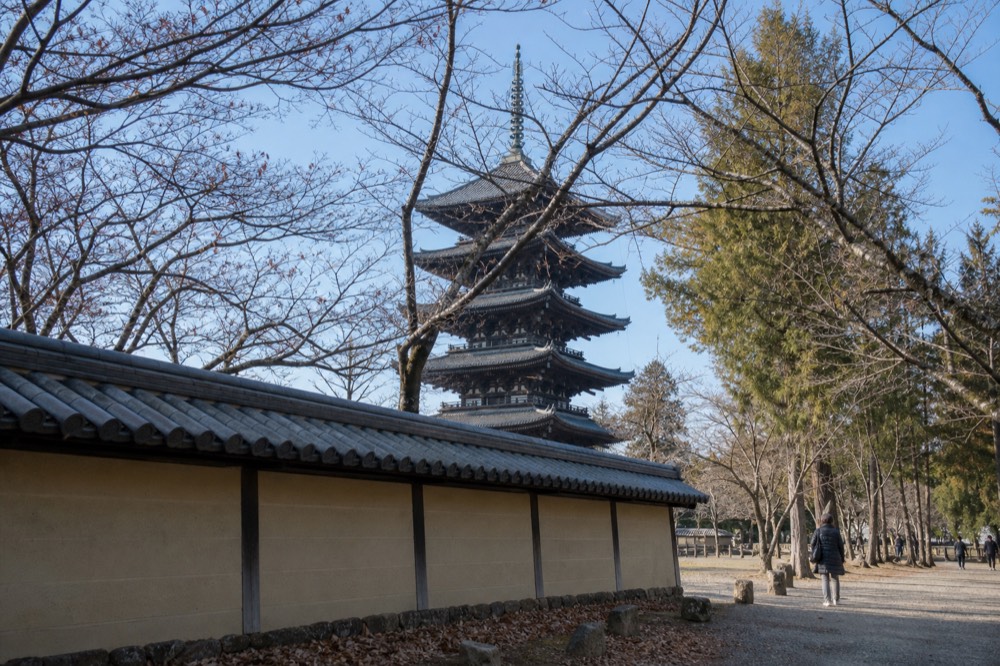
One more seasonal calendar item for temple lovers: the Kofuku-ji Five-Storied Pagoda, Nara's tallest building at about 50 metres, has been completely enclosed under a roughly 60-metre steel weather cover since March 2025 and will stay that way until its scheduled completion in March 2034. No season between now and then offers a clear pagoda photo, so plan around the Central Golden Hall, rebuilt in 2018, and the National Treasure Museum instead. Details and fees are in our Nara Park tickets and fees guide.
What is the best time of day in Nara, regardless of season?
Early morning is the best time of day in Nara Park in every season: the deer census itself runs 05:30 to 08:00 because that is when the herd is countable and calm, the park approaches are quiet before tour coaches arrive, and summer visits before 10:00 avoid the worst heat. In December to February, morning frost is common but the light on the lanterns is at its best.
The census timing is more than trivia. The foundation chooses those pre-08:00 hours in mid-July because the deer are gathered, feeding naturally and not yet surrounded by visitors. That tells you when the park belongs to the animals, and by extension when it is at its most photogenic and least chaotic. By late morning, the coach groups from Kyoto and Osaka arrive, the cracker vendors do steady business, and the deer's attention shifts from grazing to tourists holding biscuits.
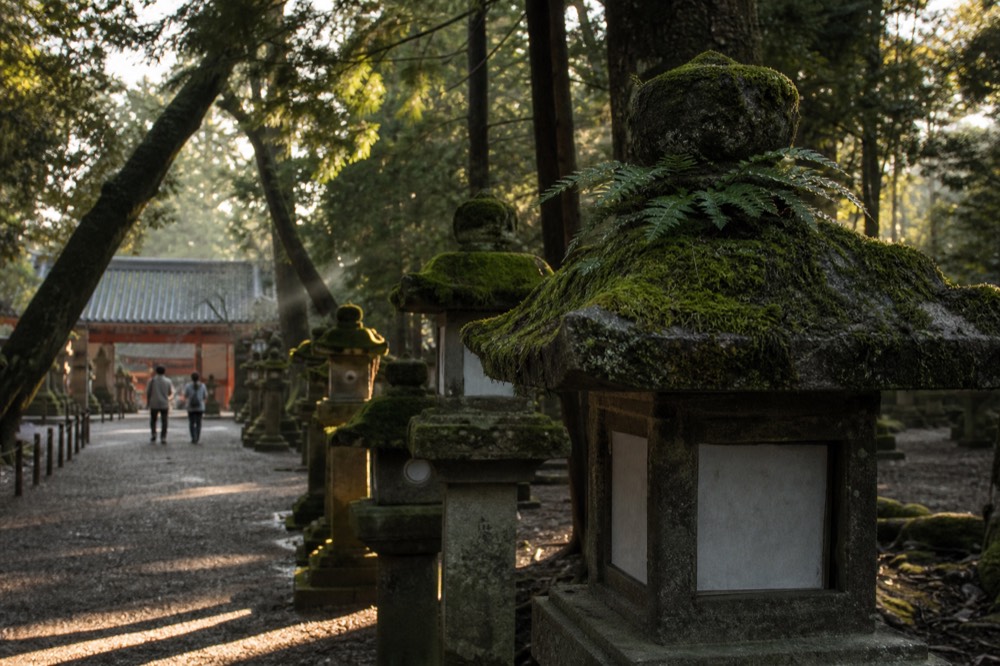
Late afternoon has its own case, especially from November to February when Kasuga Taisha's worship area stays open until 17:00 and the low sun comes through the cedar approach sideways. The bronze and stone lanterns, roughly 2,000 stone and 1,000 hanging by the standard count, which the shrine's own pages do not confirm as a precise total, catch that light well. Todai-ji's halls close earlier than the shrine, at 17:00 or 17:30 depending on season, so sequence the Daibutsuden before the park and the shrine after it.
Our fuller treatment of the best time of day for Nara Park covers the hour-by-hour pattern, but the short version holds in every month: first light for the deer, mid-morning for the big halls, golden hour for the lantern paths.
Does the season change what a day tour covers?
A guided day tour from Kyoto or Osaka runs the same six stops year-round, Nijo Castle, Kinkaku-ji, the Kyoto Imperial Palace, lunch on some options, Kasuga Taisha, and Todai-ji with Nara Park, so the season changes the experience, not the itinerary. Winter tours get shorter daylight and emptier paths; April and December tours get blossom or late colour; summer tours start at 07:15 from Osaka to beat the heat.
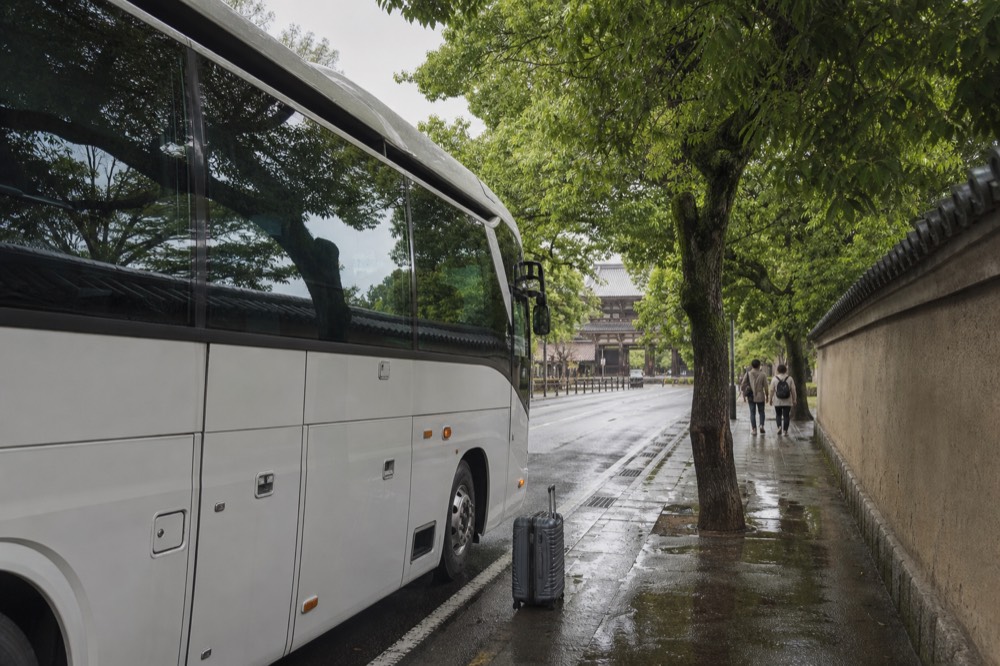
The one bookable product this site covers, the Kyoto and Nara Day Tour operated by JTB Sunrise Tours, rated 4.8 from 32 reviews and priced from $185.65 for the no-lunch Kyoto departure, runs in every season, and the coach journey of roughly 60 to 80 minutes each way between the cities is weather-stable except in heavy snow. Osaka departures meet earlier, at 07:15, against Kyoto's 08:20, and the Osaka options end at Osaka Namba rather than returning to Kyoto, which matters if your hotel is in one city and your interest is the other. Our comparison of starting from Kyoto or from Osaka works through that choice.
A seasonal note on the lunch options: the included lunch is the listing's weakest element by its own reviewers' accounts, flagged in reviews from 2015, 2017 and again in 2025, and the no-lunch options cost less. Nara has a strong food scene of its own, covered in our guide to what to eat in Nara, and the money saved on the no-lunch option buys a good local meal near the park instead.
For travellers who prefer the train, the season barely changes that maths either. A Kyoto-Nara return runs roughly 1,440 yen on JR, using fares of about 720 yen each way that live-search sources report and that change over time, so the Japan Rail Pass is not what decides a Nara day trip. The pass itself rises in price on 1 October 2026, from 50,000 to 53,000 yen for the 7-day ordinary version, which strengthens the case for individual tickets on a short Kansai stay.
A month-by-month guide to visiting Nara
The month-by-month picture from the measured normals: March and April deliver blossom and mild air, May and June bring greenery then rain, July and August are hot enough to warrant early starts, September and October are the quiet shoulder, November offers ginkgo yellow with rut-caution, and December to February give cold, clear, uncrowded days with the true maple red early in December.
Each month below pairs the Nara climate normals, mean temperature and rainfall, with what is actually happening on the ground. The rainfall figures are monthly totals in millimetres from the Nara station's 1991-2020 normals, and the temperature is the monthly mean.
| Month | Mean C | Rain mm | What to expect |
|---|---|---|---|
| January | 4.5 | 52.4 | Cold, clear, quiet; deer calm, frosty mornings |
| February | 5.1 | 63.1 | Cold; plum blossom late in the month, ume in Kyoto flowered 22 February in 2026 |
| March | 8.5 | 105.1 | Blossom watch; 2026 flowering hit 25 March in Nara |
| April | 14.0 | 98.9 | Full bloom, normal 4 April in Kyoto; busiest pretty month |
| May | 19.0 | 138.5 | Green and mild; Golden Week crowds to 5 May, then calm |
| June | 22.9 | 184.1 | Rainy season from about 6 June; calving caution |
| July | 26.8 | 173.5 | Hot and wet; heat records cluster in late July |
| August | 27.8 | 127.9 | Peak heat, mean max 33.4; Mountain Day 11 August |
| September | 23.8 | 159.0 | Heat eases, typhoon tail risk, crowds thin |
| October | 17.7 | 134.7 | Mild, dry-ish, best all-round comfort |
| November | 11.8 | 71.2 | Ginkgo colour, normal 24 November; rut caution all month |
| December | 6.8 | 56.8 | True maple red, normal colouring 5 December; cold nights |
Two readings of that table are worth spelling out. First, October is the month that surprises repeat visitors most pleasantly: 17.7 degrees mean, 134.7 mm of rain, thin crowds, and deer between their two sensitive seasons. Second, the two rainiest months are not in the rainy season at all: March, at 105.1 mm, is wetter than September, so a blossom trip carries more umbrella risk than most people assume.
Is Nara worth visiting in the off-season?
Yes: December to February is the honest bargain window. The maple colouring normal of 5 December means early December still has red leaves, the deer are at their calmest outside the calving and rut windows, crowds are at their lowest, and Nara's winter rainfall is the lowest of the year, 52.4 mm in January and 63.1 mm in February. The trade is cold, with mean lows near freezing in January.
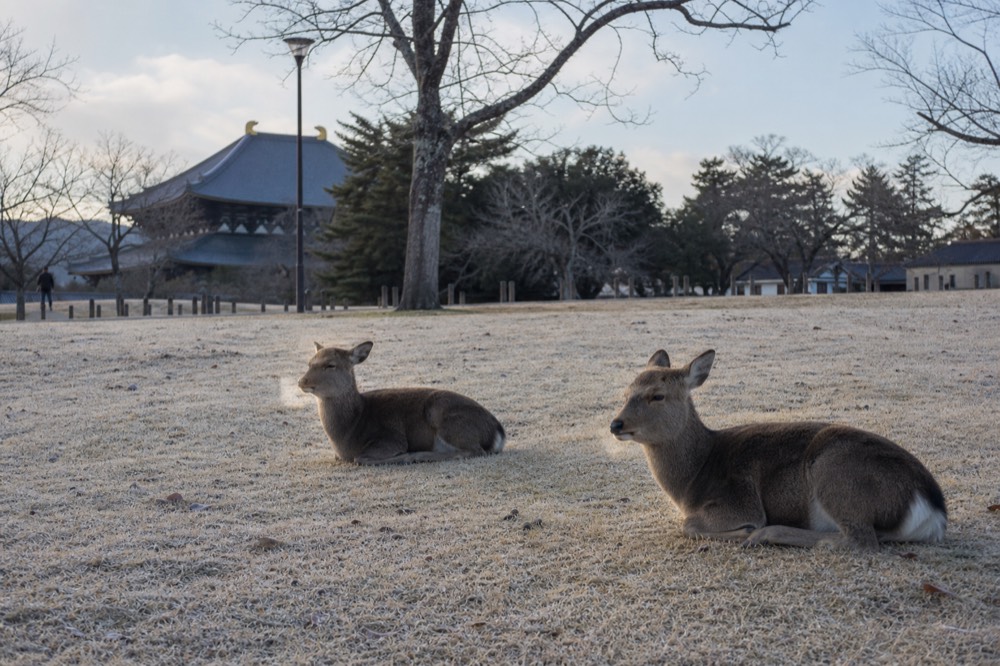
Winter visitors get the park almost to themselves on weekdays. The deer, with no fawns to guard and no rut to fight through, spend January and February grazing and dozing, and the foundation's caution list applies at its gentlest. Kasuga Taisha's winter hours, 07:00-17:00 for the worship area from November to February, still give a full day, and the Setsubun Mantoro lantern festival on 3 February fills the shrine with lit lanterns, a genuinely seasonal event that blossom-season visitors never see.
The costs do not drop, it should be said: temple admissions are flat year-round, 800 yen at Todai-ji's Daibutsuden and 1,300 yen for Nijo Castle with the Ninomaru Palace in Kyoto, and both Todai-ji and Kofuku-ji take cash only, which is true in every month. What drops is pressure: on the paths, at the cracker stalls, and in the queue for the Daibutsuden. Our piece on whether Nara is worth visiting digs into the case in all seasons.
For anyone combining the cities in winter, note the shorter daylight. A full-day coach tour runs about 10.5 hours from Kyoto, and a mid-December sunset near 16:45 in Nara means the last hour of a Kyoto-first itinerary can finish in the dark. That is a feature if you like lantern light, a bug if you want to see Kinkaku-ji glowing at dusk, so check sunset times for your date before choosing the direction of your day.
The short answers: cherry blossoms run the last week of March to the first week of April, red maple colour is a December event with a 5 December normal, June and November carry deer caution, and December to February is the quiet, cold bargain window with the year's lowest rainfall.
Common questions about the best time to visit Nara
When is the best time to visit Nara?
Late March to early April for cherry blossoms, with the Kyoto normal for full bloom at 4 April and 2026 hitting it on 30 March. Early December for true red maple colour, since the official colouring normal is 5 December. October for mild weather and thin crowds. Avoid June and November if calm deer matter to you.
When do cherry blossoms bloom in Nara?
Nara's Somei Yoshino normally flower in late March. In 2026 the Nara Local Meteorological Office recorded first blooms on 25 March, four days earlier than average, and Kyoto's full bloom followed on 30 March against a 4 April normal. Plan for the last week of March through the first week of April.
Is November the best month for autumn leaves in Nara?
Only for ginkgo yellow, whose colouring normal is 24 November. Red maple colour is a December event: the official Kyoto maple colouring normal is 5 December, and 2025 came in on 10 December. November also carries the deer rut, so it needs extra caution around stags.
What months should I be careful around the Nara deer?
June and November are the Nara Deer Preservation Foundation's designated deer-protection months. June covers calving, when does are aggressive around fawns born from mid-May, and November covers the rut, when stags must not be approached. Feed only licensed shika senbei, about 200 yen a bundle, and hand crackers over quickly.
Is summer too hot to visit Nara?
It is serious heat rather than impossible. Nara's August mean daily maximum is 33.4 degrees, and Kyoto's record table lists 39.7 degrees on 23 July 2026 as its third-hottest day since 1880. Start at the park before 10:00, keep midday for museums, and carry water.
Is Nara good in winter?
Yes, and it is the quietest time. Early December still holds red maple colour, the deer are calm, rainfall is the year's lowest, 52.4 mm in January and 63.1 mm in February, and the Setsubun Mantoro lantern festival lights Kasuga Taisha on 3 February. Expect near-freezing January mornings.