Is Nara Worth Visiting? An Honest Verdict for 2027 Trips
Nara gets sold as a half-day add-on to Kyoto, a place of bowing deer and one enormous Buddha. Some travellers leave calling it the best day of their trip; others wonder why they bothered. The difference is almost always about what they expected and how long they gave it.
Short answer
Yes, for most first-time visitors Nara is worth a full day: Todai-ji's Great Buddha hall, Kasuga Taisha's lantern approach, and a deer population of 1,687 sit within a 15-minute walk of each other. It suits temple lovers and families; skip it if you mainly want nightlife, shopping, or scenery.
Is Nara worth visiting?
Yes, for most first-time visitors to Japan, Nara earns its day. It packs Todai-ji's Great Buddha hall, the lantern-lined approach to Kasuga Taisha, and a free-roaming deer population counted at 1,687 in July 2026 into a compact walkable core. Travellers who want nightlife, dense shopping, or dramatic scenery will be happier elsewhere in Kansai.
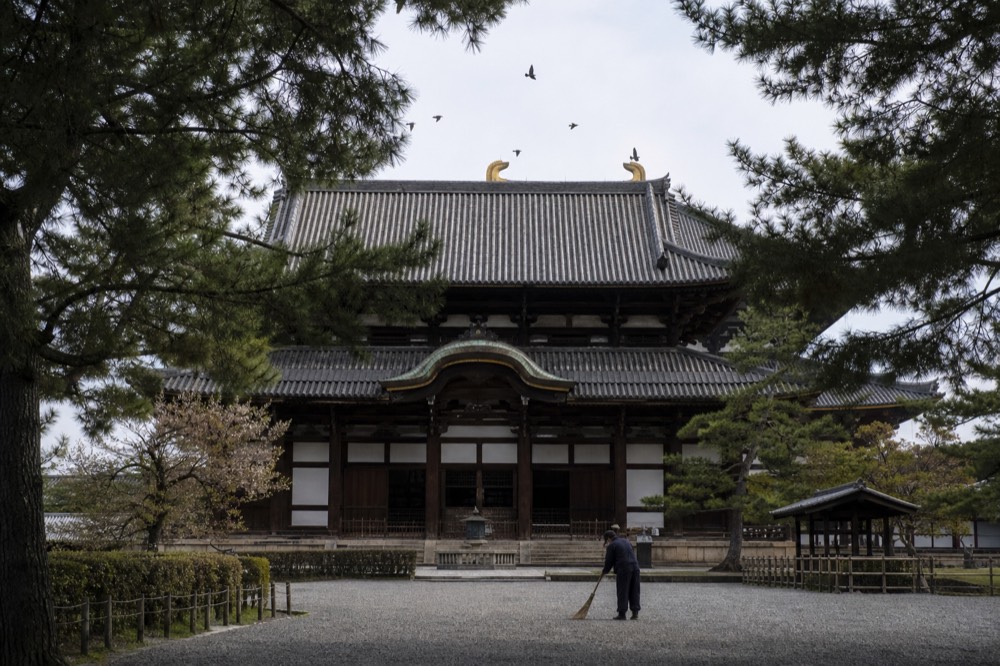
That is the short verdict, but the honest version needs the reasoning behind it. Nara was Japan's capital before Kyoto was, and the temples that survived from that eighth-century era are on a scale Kyoto mostly lost to fire and civil war. Todai-ji's Daibutsuden is one of the largest wooden buildings in the world, and the Buddha inside it has been drawing pilgrims since 752. The Historic Monuments of Ancient Nara were inscribed by UNESCO in 1998 as a group, because the temples, shrine, and palace site together tell the story of that early capital.
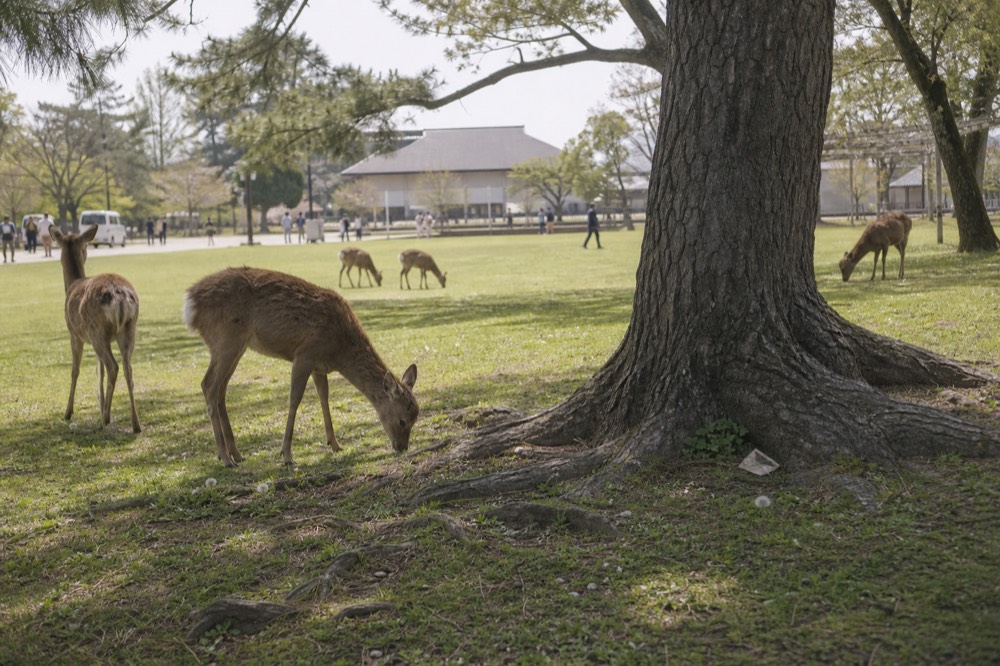
The deer are the other half of the answer. They are not a gimmick tacked onto a temple town; they are protected as a National Natural Monument, the messengers of Kasuga Taisha, and they have the run of the parkland that stitches the sites together. For a lot of visitors the moment a deer bows for a cracker ends up being the story of the whole Japan trip.
What Nara is not: it is not Kyoto. It is quieter, smaller, and it largely empties after the day-trippers leave. Restaurants close early, nightlife is thin, and the shopping is modest. Whether that reads as "peaceful and perfect" or "a bit dull after dark" is exactly the judgement this page helps you make.
If you are still weighing the two cities, the Nara day trip from Kyoto guide covers the route options, and the companion piece on whether you can see both cities in one day is worth reading before you commit.
Who Nara genuinely suits
Nara suits travellers who rank temples, gardens, and animal encounters above nightlife and retail, and families with children, who get a walkable day where the star attraction will eat from their hand. It rewards anyone curious about Japan before the samurai era, because Nara's core buildings are eighth-century originals or near-contemporary rebuilds.
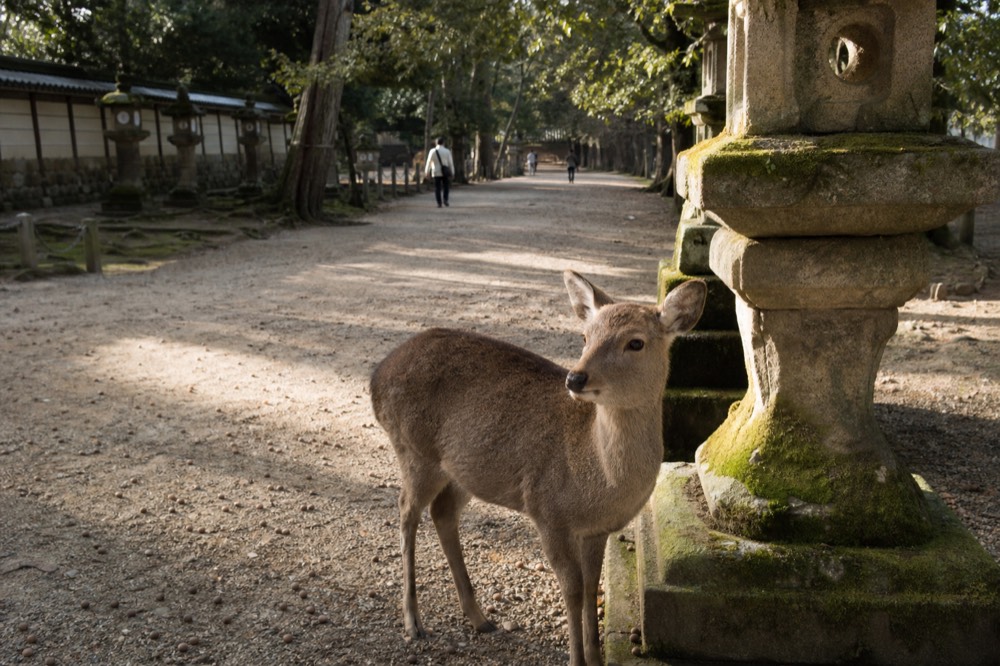
Families are the easiest call. The deer park is free, flat, and endlessly entertaining for children, and the cracker vendors sell bundles for about 200 yen. A five-year-old will remember feeding a deer long after they have forgotten another temple hall. The distances are short: from Kintetsu Nara Station to the edge of the park is a 5 to 8 minute walk, so nobody is negotiating a mile of pavement with a tired child.
Temple and history enthusiasts get the deepest reward. Todai-ji's current hall, dedicated in 1709, was actually built two-thirds the width of the original because the earlier hall had become unaffordable, and even scaled back it remains vast. Kasuga Taisha holds 354 National Treasures and 2,528 Important Cultural Properties in its museum alone. Kofuku-ji's National Treasure Museum carries some of the finest Buddhist sculpture in the country. If your trip already includes Nara's sites, the Todai-ji temple guide goes deeper on the Great Buddha hall itself.
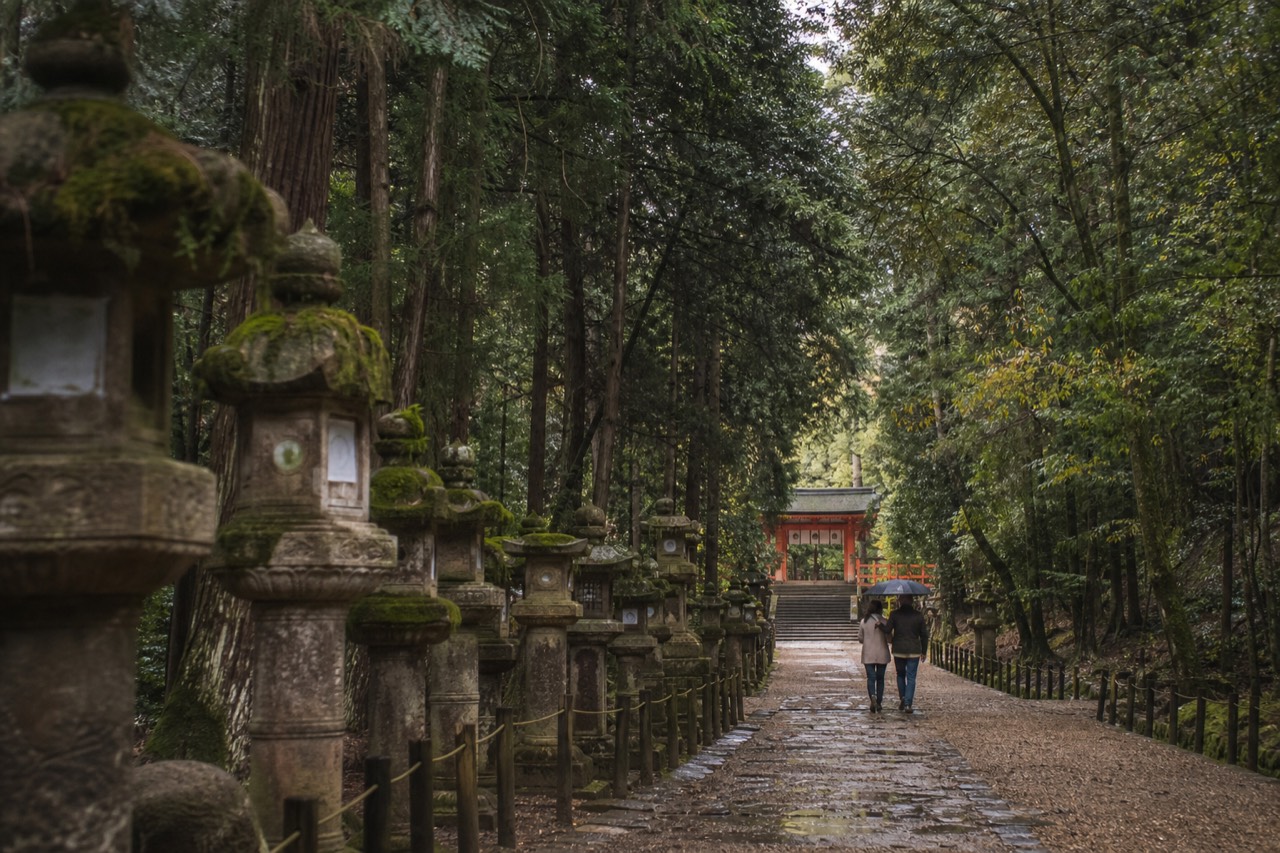
Photographers and slow travellers also do well. The Kasuga approach, with its moss-covered stone lanterns under cedar shade, is one of the most photographed paths in Japan for good reason, and it costs nothing to walk.
Here is a quick matching of traveller type to fit:
| Traveller type | Verdict | Why |
|---|---|---|
| Families with kids | Strong fit | Free park, tame deer, short walking distances, cheap crackers |
| Temple and history lovers | Strong fit | Eighth-century originals, world-class sculpture museums |
| First-time Japan visitors | Good fit | A compact, low-stress contrast to Kyoto's crowds |
| Photographers | Good fit | Lantern paths, park scenes, wooden architecture |
| Nightlife and shopping seekers | Skip | Nara empties early; Osaka is the better night city |
| Budget-squeezed travellers | Mostly fit | Park and shrine grounds are free; temple fees are modest |
Who should skip Nara (and where to go instead)
Skip Nara if your interest is food, nightlife, or urban energy, because the city largely shuts down by early evening; go to Osaka instead. Skip it too if you have already seen many wooden temples and are unmoved by them, because Nara's core is temples plus deer and little else. Uji is the better call for tea lovers short on time.
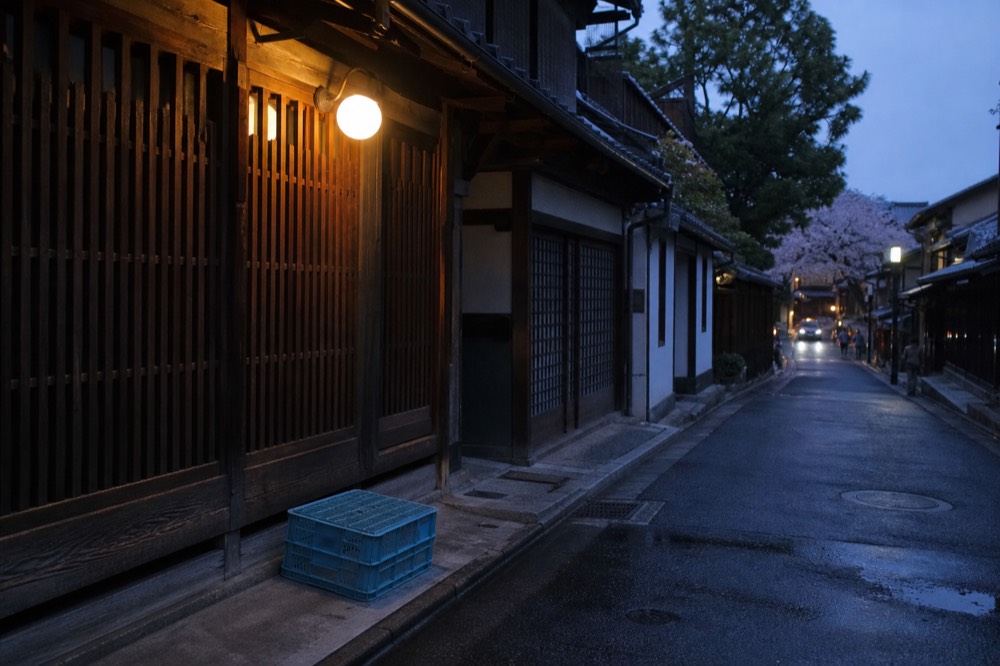
This is the part of the verdict most guides soften, and it should not be. Nara's evening economy is thin. Day-trippers leave on the late-afternoon trains, and with them go most of the energy. If your ideal Japan day ends with a long izakaya crawl or neon streets, you will be bored by eight in the evening, and the Nara from Osaka guide explains why a day trip, rather than an overnight, is the usual pattern for that kind of traveller.
Temple fatigue is real and cumulative. By the time many visitors reach their fifth or sixth great hall, the buildings blur together. If you have already spent three days in Kyoto's temples and felt your attention drifting, Nara will not reverse that; the deer park will hold you for an hour and the halls will feel like more of the same. That is not a criticism of Nara, it is a recognition that the itinerary is already saturated.
The alternatives, honestly framed: Osaka for food, nightlife, and the Osaka option of the Kyoto and Nara coach tour, which starts there at 07:15 and returns you to Namba rather than Kyoto. Uji, between Kyoto and Nara, for matcha culture and the Phoenix Hall, if temples have worn you down but you still want one extraordinary old building. Kyoto itself, if you simply have not finished with it; most first-timers underestimate Kyoto by at least a day.
For travellers who do want both cities handled in one escorted day, three versions of that trip stand out.
The three options above differ in one practical way: where the coach picks you up and whether lunch is included. The no-lunch choices keep the price down and leave you free to eat what you like around Kyoto Station, while the lunch-included versions build a set meal into the day. Whichever way you lean, the same coach, guide, and admission package covers both cities.
How much of Nara is the deer, and how much is the temples?
Roughly half and half, and honestly weighted toward the temples if you give them the time. The deer park is the free, joyful surface of Nara, but the deeper value sits in Todai-ji, Kofuku-ji, and Kasuga Taisha. Visitors who treat Nara as deer-only average a two-hour stop and miss the reason the park exists at all.
The two halves are physically inseparable, which is Nara's quiet genius. The deer roam the parkland that links Kofuku-ji's precinct to Todai-ji's gate to the Kasuga approach. You cannot walk between the temples without walking through the herd. The animals are protected as a National Natural Monument, "Nara no Shika", under the care of the Nara Deer Preservation Foundation, and their July 2026 census counted 1,687 deer, up 222 on the previous year, per the foundation's own published count.
But the park is not a zoo with temples attached. It is the other way around. The deer are traditionally the messengers of Kasuga Taisha, and the shrine's lantern approach, the foundation's feeding rules, and the temples' histories are all one story about an eighth-century capital. A visitor who only feeds crackers gets maybe two hours of fun. A visitor who also walks into the Daibutsuden, looks up at a hall 48.742 metres high, and learns it is the smaller 1709 rebuild, gets the thing Nara is actually for.
The foundation is blunt about the animals being wild, and its guidance is worth taking seriously: feed them nothing except the licensed shika senbei crackers, hand the cracker over quickly rather than teasing, and give stags a wide berth from September to November during the rut. Does and fawns get similar caution in the calving months of mid-May through June.
Half a day or a full day in Nara?
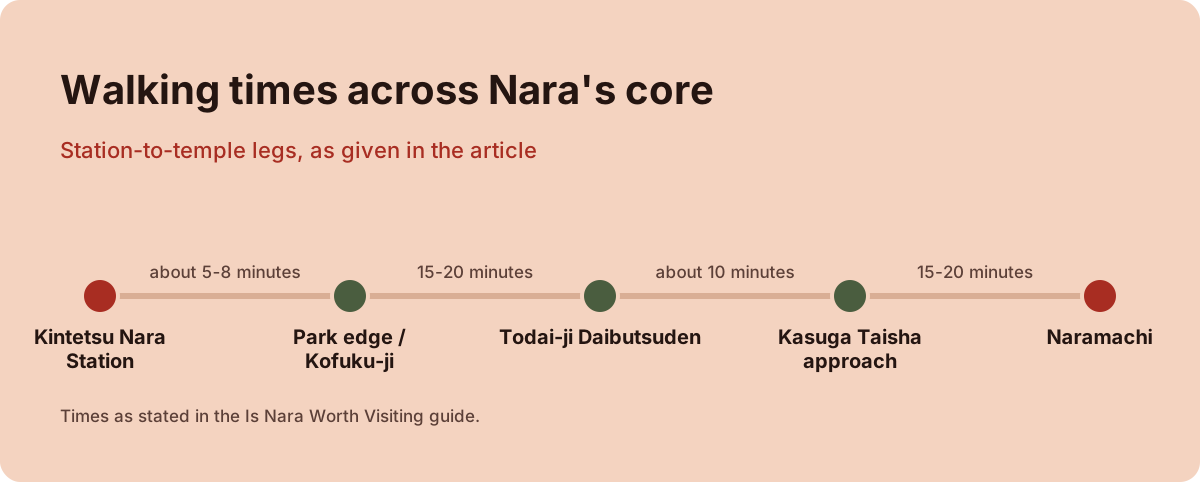
Most visitors can see Todai-ji, the deer park, and the Kasuga approach in a comfortable half day of four to five hours, because the walking distances between them are ten minutes or less. A full day adds Kofuku-ji's halls and museum, Naramachi, and a relaxed lunch, and is the better choice when temples are a priority.
| Route segment | Walking time | Notes |
|---|---|---|
| Kintetsu Nara Station to park edge / Kofuku-ji | about 5-8 minutes | The usual arrival point for Kyoto day-trippers |
| JR Nara Station to park edge | about 15-25 minutes | Longer; Kintetsu is the closer station |
| Park edge to Todai-ji Daibutsuden | about 15-20 minutes | Through the deer lawn, slow with children |
| Todai-ji to Kasuga Taisha approach | about 10 minutes | Downhill through the forest path |
| Kasuga Taisha to Naramachi | about 15-20 minutes | Back through the park and town |
Half a day works when Nara is one stop in a packed Kansai itinerary. Arrive mid-morning, feed the deer, enter the Daibutsuden, walk the Kasuga approach, and leave by mid-afternoon. That is the shape of most escorted coach days too: the classic Kyoto-plus-Nara day tour runs about 10.5 hours from Kyoto, about 11 hours 15 minutes from Osaka, with the road leg between the cities taking roughly 60 to 80 minutes each way, which is why the Nara portion of such tours is necessarily the compressed version.
A full day is better if the temples matter. Kofuku-ji's National Treasure Museum alone deserves an unhurried hour; its combined ticket, covering the Central Golden Hall, Eastern Golden Hall and museum, is 1,600 yen for adults and is only sold until 16:00. Naramachi's machiya shops and gardens reward wandering, and a long lunch of Nara's local specialities, covered in the what to eat in Nara guide, is a pleasure the half-day crowd skips.
One honest warning for the full-day crowd: Kofuku-ji's famous Five-Storied Pagoda, about 50 metres tall and the tallest building in Nara Prefecture, has been completely enclosed in a roughly 60-metre steel weather cover since March 2025 for a full conservation repair scheduled to finish in March 2034. It is not a photo opportunity until then, and any itinerary or brochure showing it in the open is out of date.
What it costs to see Nara's main sites
Nara's paid sites charge per building, not as one package: 800 yen for Todai-ji's Daibutsuden, 1,600 yen for Kofuku-ji's combined ticket, and 700 yen for Kasuga Taisha's special worship, with the Daibutsuden plus Museum set at 1,200 yen at Todai-ji. The park, the deer, and the Kasuga approach cost nothing at all.
| Site | Adult fee | Hours | Notes |
|---|---|---|---|
| Nara Park and deer | free | always open | Crackers about 200 yen a bundle |
| Todai-ji Daibutsuden | 800 yen | Apr-Oct 07:30-17:30; Nov-Mar 08:00-17:00 | Cash only; no booking needed |
| Todai-ji Daibutsuden + Museum set | 1,200 yen | as above | Better value than halls separately |
| Kofuku-ji combined ticket | 1,600 yen | 09:00-17:00, last entry 16:45 | Ticket sales stop at 16:00; cash only |
| Kasuga Taisha grounds and approach | free | Mar-Oct 06:30-17:30 | Lantern path always walkable |
| Kasuga Taisha special inner worship | 700 yen | 09:00-16:00 | Raised from 500 yen in October 2024 |
| Kasuga Taisha Museum (Kokuhoden) | 700 yen | 09:00-16:30 | 354 National Treasures |
Two notes on the table. Kofuku-ji's combined ticket stops selling at 16:00 sharp, after which only single-hall tickets are available, so late arrivals lose the discount. Kasuga Taisha's special worship closes on festival mornings and around certain periods in March and late December, so check the shrine's own schedule if the inner gate matters to you.
Against that outlay, a guided day tour looks different. The Kyoto and Nara day tour options fold the coach, a licensed English-speaking guide, and the main admissions into one price from $185.65 per adult, rated 4.8 from 32 reviews, which suits travellers who would rather not manage cash windows, train times, and temple closures on their own.
When Nara is at its best and worst
Nara is at its best in late March and early April for cherry blossom, and in late November into early December for autumn colour, on weekday mornings before the coach crowds arrive at 10:30. It is at its worst in the midsummer heat of July and August and on national holidays, when the park's paths jam solid with day-trippers.
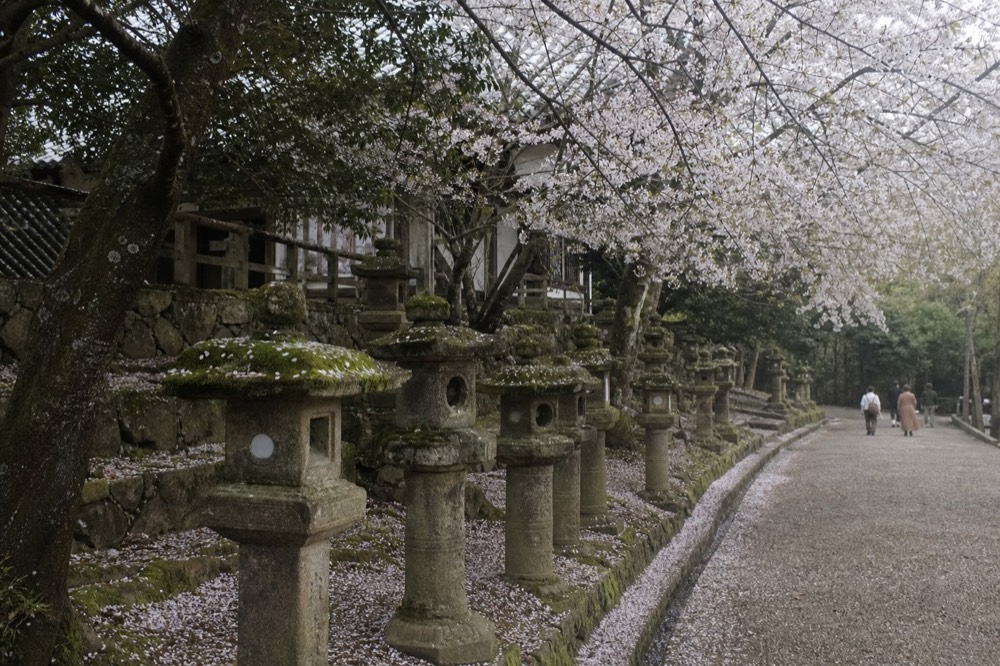
The blossom timing comes from the meteorological record, not folklore. Kyoto's Somei Yoshino cherries flowered on 23 March 2026 and hit full bloom on 30 March, against a 1991-2020 normal of 26 March and 4 April; Nara recorded flowering on 25 March 2026, four days early. So the last week of March and the first days of April are the reliable target, with the first week of April the safer bet on a normal year.
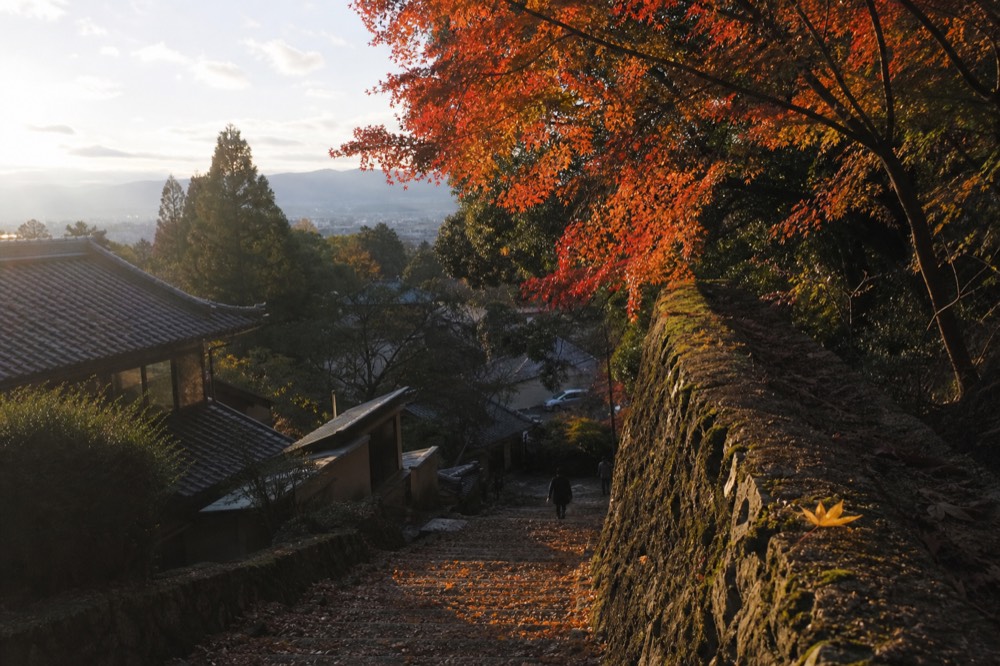
Autumn colour runs later than most guides claim. The Kyoto observatory's normal date for maple colouring is 5 December, and in 2025 it was 10 December; the earliest on record is 10 November 1976, which is the exception, not the rule. Mid-November visits often find green maples. Ginkgo gold arrives earlier, with a normal colouring date of 24 November. The crowd logic still favours late November for the combined gold-and-red effect and the lantern-lit atmosphere, but dress for a December-quality colour payoff rather than expecting peak red in mid-November.
Midsummer deserves a blunt warning. Kyoto's station records from 1880 put four of the six hottest days on record in 2018, 2024, 2025 and 2026, peaking at 39.7 degrees on 23 July 2026, and Nara's inland basin runs similarly hot. Walking an open deer lawn between temples in August is genuinely hard going; if summer is your only window, start at 07:30 when Todai-ji opens and finish by early afternoon.
The rut is the other seasonal caution. From September to November the stags turn territorial, and the Nara Deer Preservation Foundation explicitly warns against approaching them, including de-antlered ones. Deer remain safe to feed, but keep toddlers close and hold nothing edible loosely. The fuller seasonal picture, including festival dates, is in the best time to visit Nara guide.
The short answer is yes for most first-timers, with the caveats spelled out above: skip it for nightlife, plan a full day if temples are the point, bring cash, and time the visit for blossom or late autumn colour. These are the questions readers ask most before committing a day.
Common questions about whether Nara is worth visiting
Is Nara worth visiting?
For most first-time visitors, yes. Todai-ji's Great Buddha hall, Kasuga Taisha's lantern approach, Kofuku-ji's sculpture museum, and a free park with 1,687 protected deer sit within a short walk of each other. It is the better choice over another Kyoto day if you want depth of history; it is the wrong choice if you want nightlife or shopping.
Is half a day in Nara enough?
Yes, for the park, Todai-ji, and the Kasuga approach, roughly four to five hours. No, if you also want Kofuku-ji's three paid interiors and Naramachi at a relaxed pace; that needs a full day. Walking between the core sites takes ten to twenty minutes per leg.
Is Nara better than Kyoto?
They do different jobs. Kyoto has the density, the food scene, and the evenings; Nara has the older temples, the bigger single hall, and the deer. Most travellers should see both, with Kyoto as the base and Nara as a day trip.
Is Nara good for children?
Very. The park is free and flat, the crackers cost about 200 yen a bundle, and the deer are the most interactive attraction in Kansai. Take the usual cautions: feed only the licensed crackers, hand them over fast, and keep distance from stags in autumn.
Can you do Nara and Kyoto in one day?
You can see highlights of both in one long escorted day; the classic coach tour runs about 10.5 hours from Kyoto. Doing both cities independently in one day is rushed and not recommended, because the road or rail leg alone eats 60 to 80 minutes each way.
Do you need cash in Nara?
Yes. Todai-ji and Kofuku-ji both state on their own pages that admission is cash only, and many smaller shops and cracker stalls prefer cash. Withdraw at the station; 7-Eleven and Japan Post ATMs accept foreign cards.
If the verdict has landed on "yes", Kyoto Nara Day Tour covers the practical next steps: trains, tour options, and how to structure the day. For anyone still deciding how Nara fits a wider Kansai plan, these three guided options show the three most common ways travellers book it.