Is Todaiji Temple free?
Todai-ji's grounds are free to walk, but the Great Buddha Hall costs 800 yen in cash. A full breakdown of what is free, what is not, and how the tickets work.
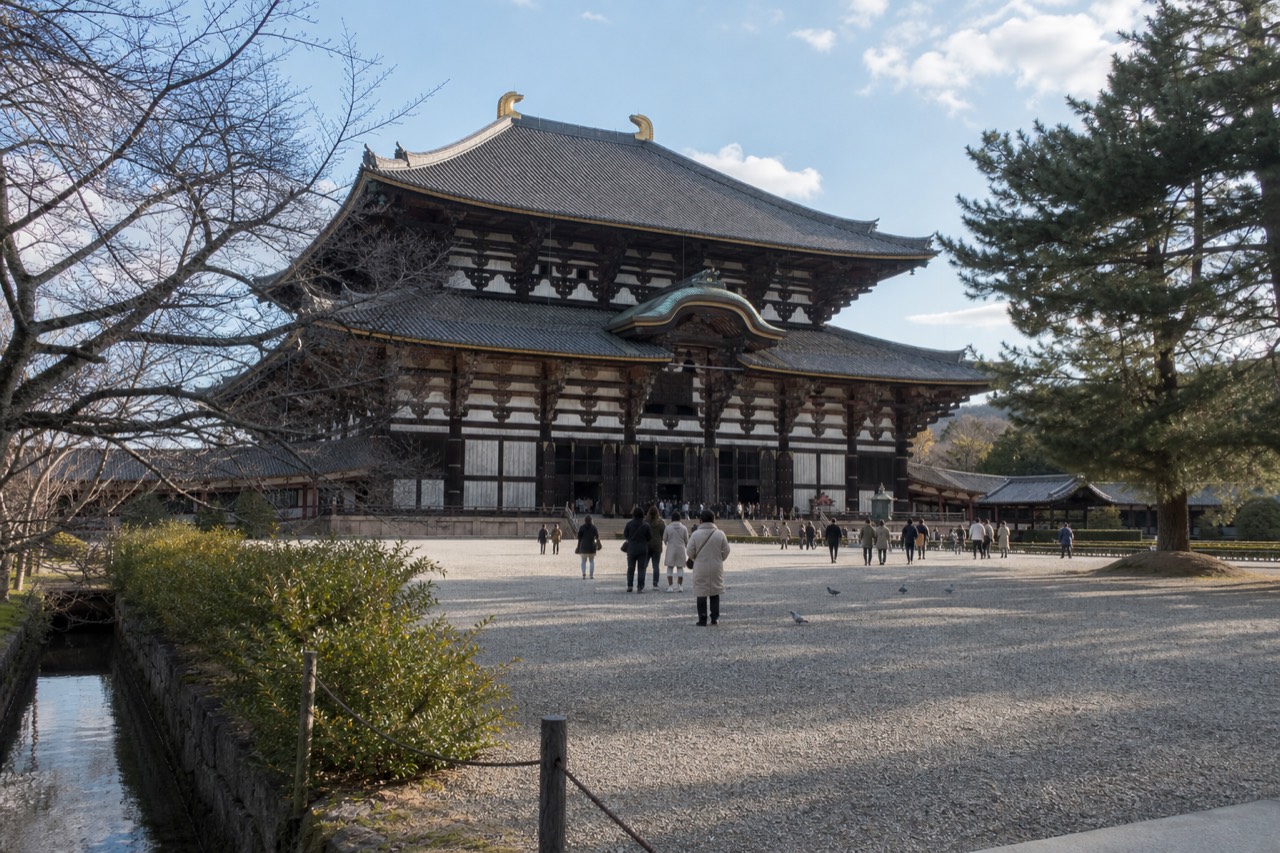
Is Todaiji Temple free?
No, not entirely. Walking Todai-ji's grounds, the approach through Nara Park and the outer viewing areas costs nothing, but the buildings themselves charge separately: the Great Buddha Hall (Daibutsuden) is 800 yen per adult, paid in cash, and the same fee applies to the Hokke-do, the Kaidando and the Todai-ji Museum. A set ticket covering the hall and the museum is 1,200 yen.
That split between free grounds and paid buildings surprises a lot of first-time visitors, and it is worth understanding before you arrive, because the way Todai-ji sells tickets is unusual even by Japanese temple standards. There is no single all-in ticket. Each of the four chargeable buildings has its own admission, its own ticket window and its own scale of child and group discounts. The temple states on its own admission page that payment is cash only, which catches out plenty of travellers who have stopped carrying yen.
The free part is genuinely worth having, though. The Nandaimon gate with its two guardian statues, the long stone approach, the deer wandering the surrounding park, and the exterior of the Daibutsuden itself, one of the largest wooden buildings in the world, are all visible without spending a yen. Plenty of visitors take their best photos of the trip from the free courtyard in front of the hall.
For travellers who would rather leave the logistics to someone else, a guided coach day that includes Todai-ji among its stops is one option:
If you are weighing the tour route against going alone, the comparison in our Nara day trip guide covers the trade-offs in detail, including what a tour actually takes off your plate.
What exactly is free at Todai-ji?
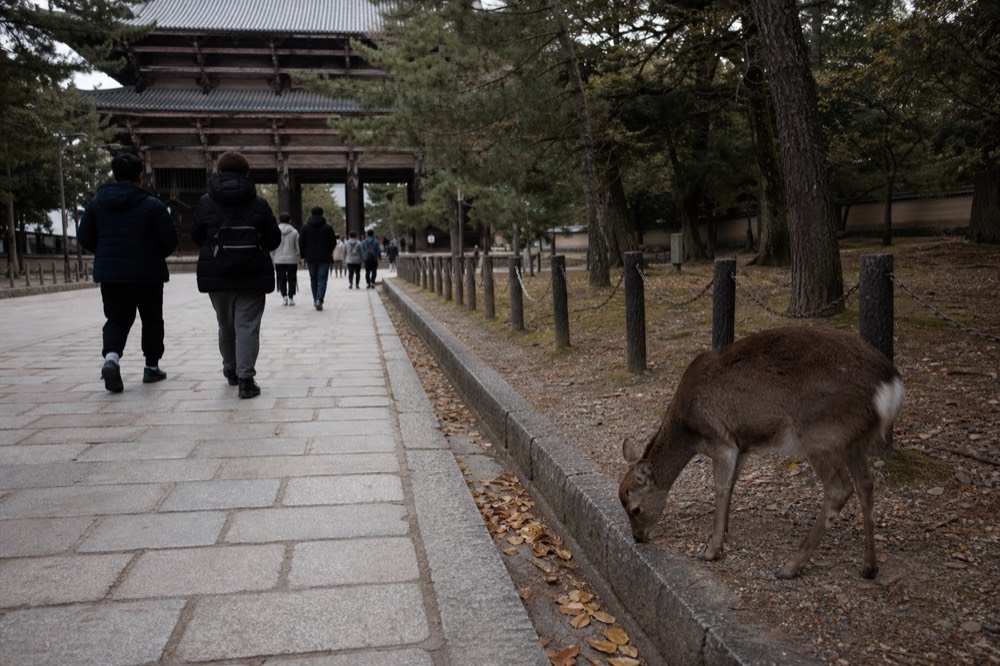
Everything outdoors: the Nandaimon great gate and its guardian statues, the stone and gravel approaches, the courtyard in front of the Great Buddha Hall where the building's full width can be seen and photographed, the surrounding paths through Nara Park, and the exterior of every building on the precinct. No ticket is needed, there is no gate to pass and no suggested donation is solicited.
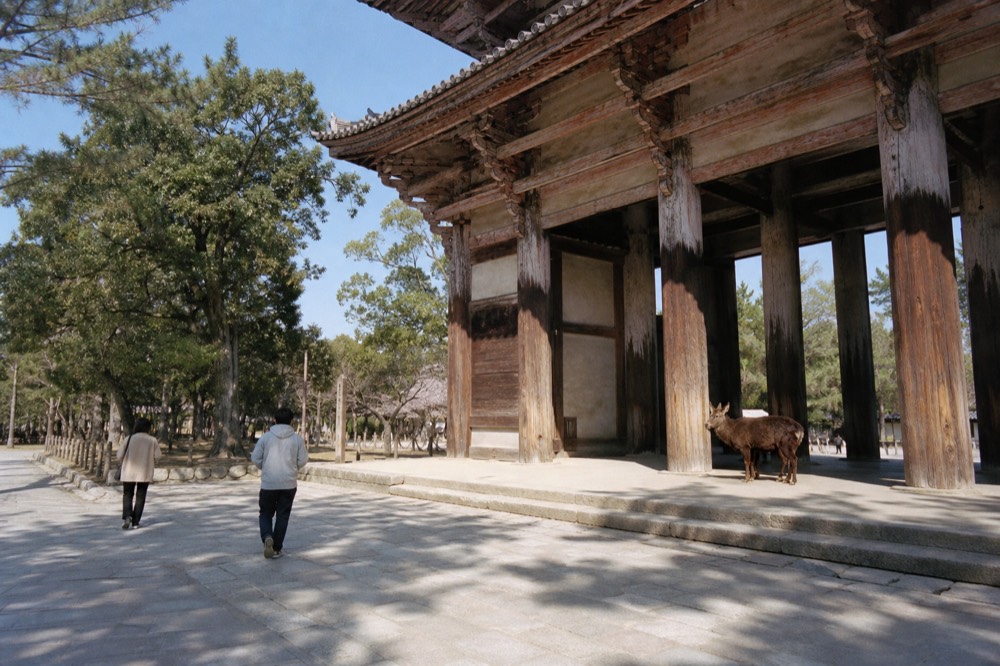
This is the standard arrangement at Japan's large temple complexes, and Todai-ji is one of the most generous examples. The Nandaimon, an enormous eighth-century-style gate rebuilt in the 1200s, houses two fierce Nio guardian figures carved by the sculptor Unkei's workshop, and it stands fully open on the public approach. You can stand beneath it, look up at the statues and photograph them without paying anything.
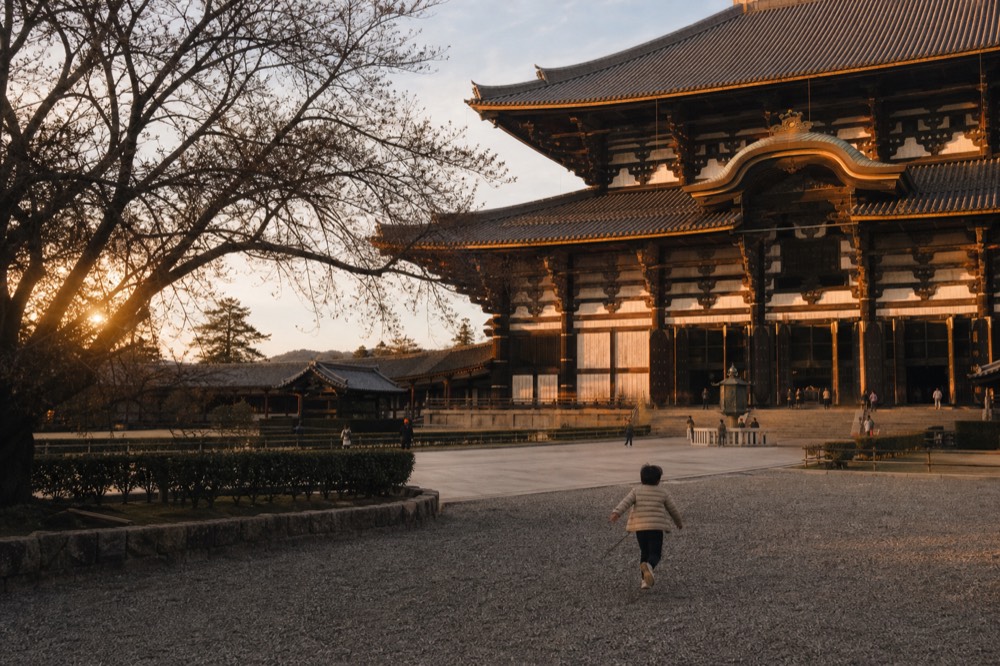
The courtyard view is the one people come for. The present Daibutsuden, dedicated in 1709, measures 57.012 metres east to west, 50.480 metres north to south and 48.742 metres high according to the temple's own published dimensions, and even that rebuilt, cost-reduced version of the original hall is an astonishing object to stand in front of. The Tenpyo-era hall it replaced was about 88 metres wide. Seeing the building from outside, watching deer cross the gravel and looking through the entrance to the Great Buddha, costs nothing at all.
What the free visit does not include is the interior. To stand in front of the 15-metre seated Buddha, to try the pillar with the hole in its base (said to grant enlightenment in a next life to anyone who squeezes through, sized for a child's shoulders), or to see the museum's treasures, you need a ticket at a window, and you need cash.
How much does the Daibutsuden cost to enter?
800 yen for an adult, and the temple's own admission page confirms the same price applies to high school and university students, with 400 yen for elementary school children. Payment is cash only. A set ticket combining the Daibutsuden and the Todai-ji Museum is 1,200 yen for adults and 600 yen for elementary children, which is the best value if you plan to see both.
The full price structure, taken from the temple's admission page, looks like this:
| Ticket | Adult (university and above) | High school | Elementary | Group of 30+ |
|---|---|---|---|---|
| Daibutsuden (Great Buddha Hall) | 800 yen | 800 yen | 400 yen | 700 yen |
| Hokke-do (Sangatsu-do) | 800 yen | 800 yen | 400 yen | 700 yen |
| Kaidan-in Kaidando | 800 yen | 800 yen | 400 yen | 700 yen |
| Todai-ji Museum | 800 yen | 800 yen | 400 yen | 700 yen |
| Set ticket: Daibutsuden + Museum | 1,200 yen | 1,200 yen | 600 yen | not sold |
Two practical details matter more than the numbers themselves. First, cash only: the temple states this plainly, and while Japan has grown more card-friendly, Todai-ji has not moved on admissions. If you arrive with no yen, the nearest foreign-card ATMs are typically at 7-Eleven and Japan Post convenience and post office locations, which accept overseas cards widely. Second, the temple does not accept advance bookings and does not require them. You buy at the window on the day, and the only real queue risk is at peak cherry season and holiday weekends.
The set ticket deserves a word. If the museum is open during your visit, and it usually is, the 1,200 yen combination saves you 400 yen against buying the hall and museum separately, and the museum holds a genuinely impressive collection, including temple treasures from the Shoso-in tradition. If you only have an hour, the Daibutsuden alone is the right choice; if you have half a day, the set ticket pays for itself immediately.
For travellers moving between Kyoto and Nara in a single day, time is usually the scarcer currency than the 800 yen, and that is the calculation a guided day changes. The coach-and-guide option below bundles the Todai-ji stop with Nara Park and the Kyoto morning sights, with admissions, transport and a licensed English-speaking guide already arranged, and the from-price is $185.65 per adult:
The same product also runs from Osaka, which matters if your base is there, since the Osaka departures finish at Osaka Namba rather than returning to Kyoto. Whichever departure you choose, the guided format means the temple window, the cash question and the walking route between the stops are all handled for you rather than by you.
Do children and students pay at Todai-ji?
Yes, from elementary school upward. Elementary children pay 400 yen per building and 600 yen for the set ticket, high school students pay the full adult 800 yen, and per the temple's own fee table, only children too young for elementary school enter at no charge. Groups of 30 or more get modest discounts, and teachers are not singled out for exemptions the way they are at some other temples.
The elementary rate is the one that catches families out in the happy direction: a child of six or seven pays half the adult price at the Daibutsuden, and the set ticket price for children is 600 yen against the adult 1,200, so a family's total scales down meaningfully with every school-age child. Below school age, entry is free, and toddlers are common in the hall, usually being lifted toward the hole in the pillar to see whether they fit.
One contrast worth knowing: at Kiyomizu-dera in Kyoto, teachers escorting an official school trip are admitted free on production of ID and an itinerary, and holders of a disability handbook plus one companion are also admitted free there. Todai-ji's published table carries no such exemption line. If you are travelling with a disability handbook, the practical move is to ask at the ticket window; Japanese temples frequently grant such exemptions case by case without publishing them.
Is the Todai-ji Museum included in the hall ticket?
No. The museum is a separate 800 yen admission, or 1,200 yen as a set ticket with the Great Buddha Hall. The Hokke-do and the Kaidando halls, both older buildings on the precinct, are also separate 800 yen tickets each, which means a completist visit to all four chargeable buildings costs more than most visitors expect unless the set ticket covers the two headline attractions.
The Hokke-do, also called Sangatsu-do, is the oldest building on the Todai-ji precinct and one of the oldest in Nara, and the Kaidando, the ordination hall, is historically the most important building in Japanese Buddhism: it was here that the great ordination platform was established, founding Todai-ji's centuries-long role as the administrative head of Japanese Buddhism. Neither gets the crowds of the Daibutsuden, and both are open from 08:30 to 16:00 all year, shorter hours than the main hall.
The museum, formally the Todai-ji Museum, displays rotating selections from the temple's collection, including sculpture of the very highest rank. Its hours run from 09:30, with last entry half an hour before closing, and the closing time shifts seasonally, 17:30 from April to October and 17:00 from November to March. The Daibutsuden itself opens earlier than everything else, at 07:30 in the April-to-October season and 08:00 from November to March, and closes at 17:30 or 17:00 respectively. An early arrival gets you the hall before the coach groups arrive; a late arrival may find the museum's last entry already passed.
The temple publishes all of these hours and fees on its own admission information page, which is the definitive source if you are reading this well before your trip, since seasonal hours shift at the equinoxes.
How does Todai-ji compare with Nara's other paid sights?
Nearby Kofuku-ji charges 500 yen for each of its two golden halls and 900 yen for its National Treasure Museum, with a 1,600 yen combined ticket, while Kasuga Taisha's outer grounds are free and its special inner worship area costs 700 yen. Nara Park itself, and the deer, cost nothing. A full paid circuit of Nara's main temple and shrine interiors runs to roughly 4,000 yen per adult if you buy no combined tickets.
That figure is an honest planning range, not an operator's bundle: it assumes the Todai-ji set ticket at 1,200 yen, Kofuku-ji's combined ticket at 1,600 yen and Kasuga Taisha's special worship at 700 yen. Trim it by skipping interiors and you can see a great deal of Nara for the cost of lunch.
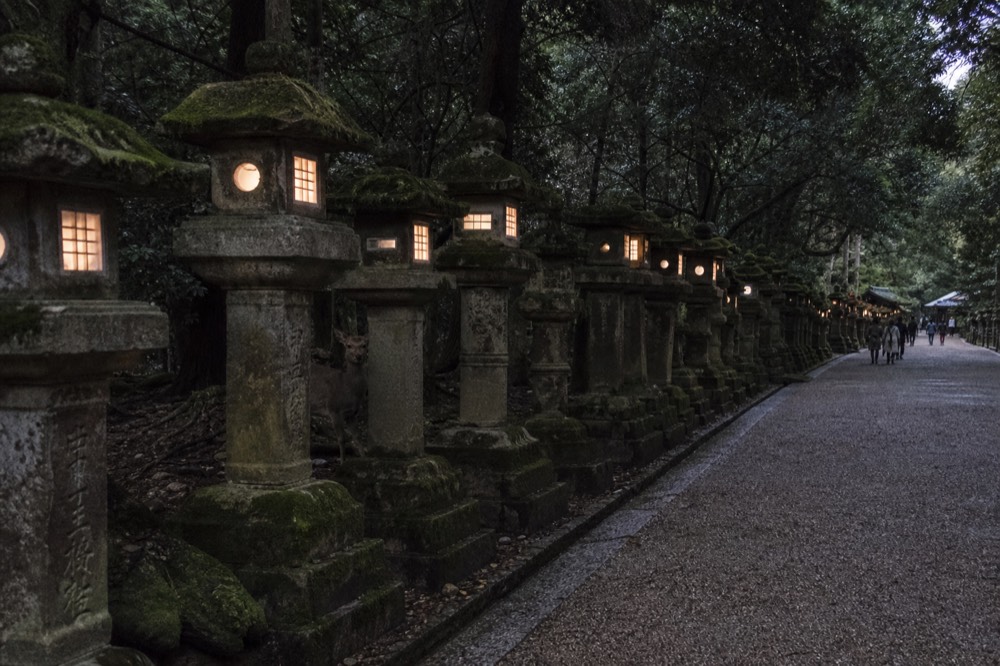
Some context makes the prices easier to judge. Todai-ji was consecrated in 752 and its Great Buddha hall is one of the largest wooden buildings on earth; the present hall is the 1709 rebuild, reduced from eleven bays to seven to save cost, but still keeping the original height and depth. In 1998 the temple was inscribed as part of the UNESCO World Heritage listing of the Historic Monuments of Ancient Nara. An 800 yen ticket against that backdrop is, by any international comparison, cheap.
One Nara sight near the temple that is genuinely free, and genuinely worth a stop on the walk, is the exterior of Kofuku-ji's Five-Storied Pagoda, about 50 metres tall and the second-tallest wooden pagoda in Japan. Be aware that it has been completely enclosed under a roughly 60-metre steel weather cover since March 2025 for a full conservation repair, its first since 1901, and it will stay shrouded until the work's scheduled completion in March 2034. Anyone showing you a clean pagoda photo taken this year is showing you an archive.
The deer, meanwhile, roam the whole park free of charge, and the July 2026 census by the Nara Deer Preservation Foundation counted 1,687 of them, up 222 on the previous year, a record count by the foundation's own table. Feeding them costs about 200 yen for a bundle of roughly 10 shika senbei crackers, and the foundation's rule is strict: feed them nothing but the licensed crackers, hand them over fast, and never tease. Our Nara deer park guide covers the etiquette and the seasonal warnings in full.
Is Todai-ji worth paying for, or is the outside enough?
For almost every visitor, the 800 yen interior is the point of the trip: the 15-metre seated Buddha, the pillar hole, the sense of scale inside the hall, none of it is visible from the free courtyard. A visitor with limited mobility, a tight coach schedule or a strong aversion to crowds could spend a rewarding hour on the free grounds and leave satisfied, but most people who skip the interior end up regretting it.
The honest framing is that the free part of Todai-ji is a good experience and the paid part is a great one. The hall's interior holds the bronze Daibutsu, flanked by guardians, with the famous opening at the base of one of the hall's supporting pillars. The line of children attempting the squeeze is part of the atmosphere. The temple also rents an audio guide at 500 yen per person, in nine languages, running about 30 minutes, collected 15 metres past the ticket gate, which is worth considering if you want history rather than just spectacle.
Crowd timing is the other half of the value question. The hall's early opening, 07:30 in the warmer half of the year, means the first hour is dramatically quieter than mid-morning, when the day tours from Kyoto and Osaka arrive. If you are travelling independently, an early start beats almost any other crowd tactic; the temple publishes no reservation system and no timed entry, so arrival time is the only lever. Our piece on the best time of day for Nara Park works through the same clock for the deer.
If the whole plan is being assembled from scratch, the homepage of Kyoto Nara Day Tour lays out how a single guided day covers both cities, and the temple's admission page remains the source to re-check before you travel. For travellers who prefer a planned route, here are the current options again:
The Osaka departure above suits visitors staying in Osaka who want the same guided itinerary without returning to Kyoto at the end, since the Osaka options finish at Osaka Namba. Whichever way you go, bring yen for the temple window: that single preparation does more for a Todai-ji visit than any amount of itinerary fine-tuning.
Todai-ji's grounds are free and its buildings are not, and the recurring questions all turn on that split: how much the hall costs, whether children pay, whether cards work at the window and whether any booking is needed. The answers below cover each of those directly, with every figure taken from the temple's own published admission information.
Common questions about Todai-ji admission
Is Todaiji Temple free?
The grounds, gates, approaches and courtyard views are free. The Great Buddha Hall costs 800 yen per adult, cash only, and the Hokke-do, Kaidando and Todai-ji Museum each charge separately. A set ticket for the hall and museum is 1,200 yen.
Can you enter Todai-ji without paying?
You can enter the precinct and see the Nandaimon gate, the approaches and the exterior of the Great Buddha Hall without paying. Going inside the hall to see the Great Buddha requires an 800 yen ticket bought at the window on the day.
Does Todai-ji take credit cards?
No. The temple states that admission payments are cash only. Foreign-card users can withdraw yen at 7-Eleven and Japan Post ATMs, which widely accept overseas cards.
Do you need to book Todai-ji tickets in advance?
No. The temple does not accept advance bookings and does not require them. Tickets are sold at the windows during opening hours, and queues are longest in late morning.
How much is the Todai-ji set ticket?
The set ticket covering the Daibutsuden and the Todai-ji Museum is 1,200 yen for adults and junior high students and above, and 600 yen for elementary school children. It saves 400 yen against buying the two separately.