How many torii gates are at Fushimi Inari?
The shrine itself publishes the answer: about 10,000 torii of all sizes along the whole mountain. Here is what that number does and does not mean.
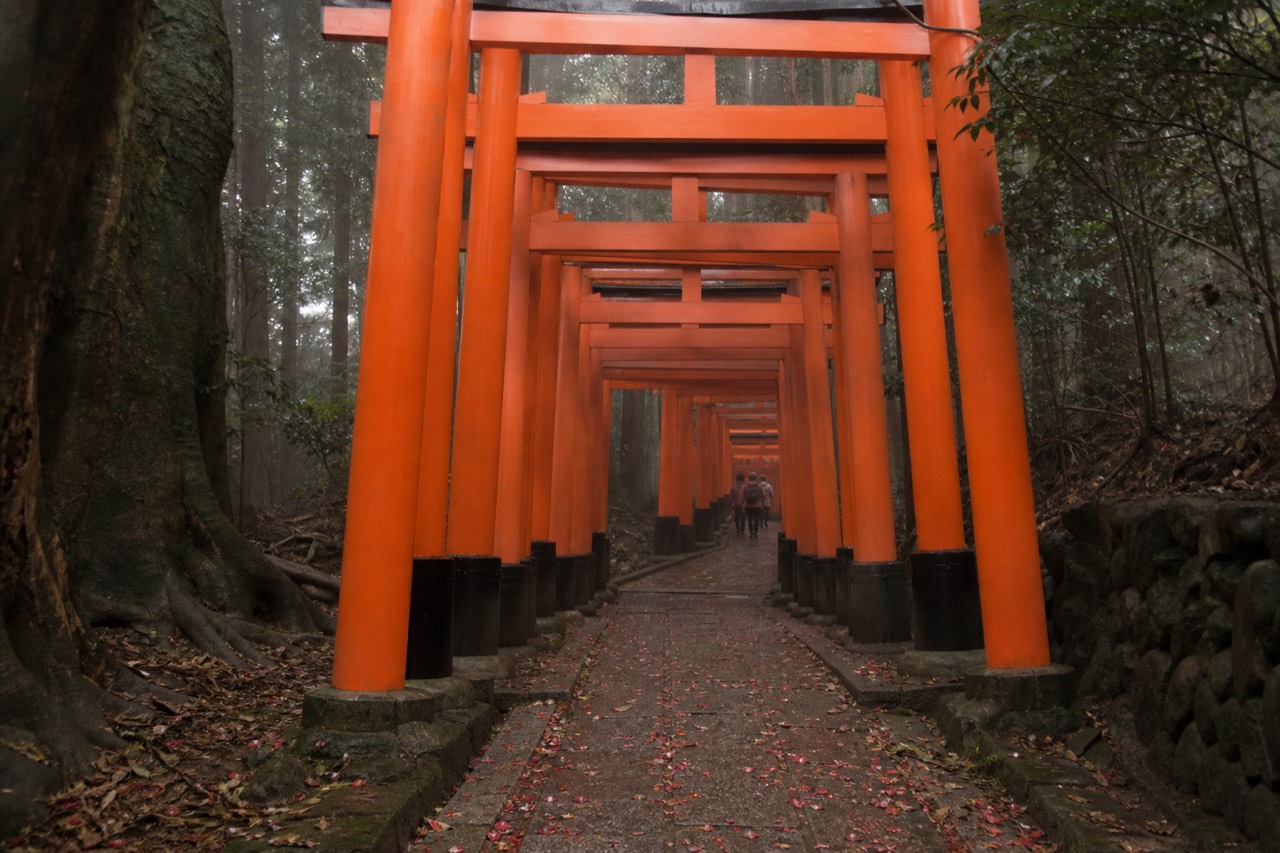
Fushimi Inari Taisha, the head shrine of roughly 30,000 Inari shrines across Japan, answers the question itself on its own FAQ page: about 10,000 torii gates of all sizes stand along the mountain paths. That is the shrine's figure, published in both Japanese and English, and it is deliberately approximate. It counts every gate on the whole of Mount Inari, from the tiny personal offerings at the summit shrines to the towering corporate donations at the base, not just the famous Senbon Torii tunnel that fills every Kyoto photo album.
One thing should be said plainly at the start, because this site is about a specific day tour: Fushimi Inari is not a stop on the Kyoto and Nara coach day tour this site covers. That tour visits Nijo Castle, Kinkaku-ji, the Kyoto Imperial Palace, Kasuga Taisha and Todai-ji with Nara Park. Fushimi Inari is worth its own visit, and this article explains the mountain, the gates and the numbers so you can plan one.
How many torii gates are at Fushimi Inari?
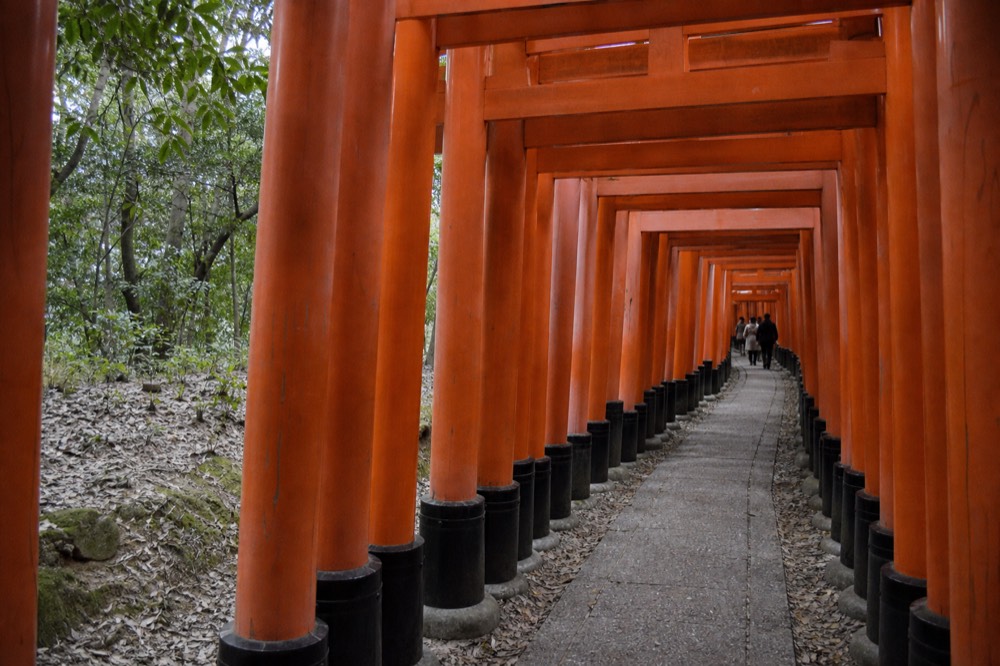
About 10,000 torii gates of all sizes stand along the mountain paths of Fushimi Inari, according to the shrine's own published FAQ. The figure covers the entire sacred mountain, from the main shrine precinct at the base to the summit shrines at the top, and it is explicitly approximate. It is not a count of the Senbon Torii tunnel alone, and it is not 32,000.
The number comes straight from the shrine. Its FAQ page, in Japanese and English, states that about 10,000 torii of all sizes now stand along the mountain paths of the whole sacred area. The shrine compares the size of its precinct to about 22 Koshien Stadiums, roughly 870,000 square metres, and most of that precinct is the mountain itself. Mount Inari is the southernmost of Kyoto's Higashiyama 36 peaks, and the trails wind through it for a couple of hours of walking.
This is why the popular alternative figure, 32,000, is wrong to print. The shrine publishes an approximate total of about 10,000 torii; the figure 32,000 has no official source. When a number that precise circulates without a publisher, it is usually a copy of a copy. The shrine's "about 10,000" is honest about being an estimate, because gates are added, removed and replaced continuously as new donors pay for them and old ones weather.
The vermillion tunnel you have seen in photographs is the Senbon Torii, two parallel dense passages of gates just above the main shrine. Those two passages hold a few hundred gates each, tightly packed and close together, which is exactly why they photograph so well. The other nine thousand or so are spread along the full loop trail: thinner rows near Yotsutsuji intersection, small single gates crowded around the mound shrines near the summit, and older weathered gates on the quieter southern descent.
For visitors planning a wider Kansai itinerary, the gates at Fushimi Inari pair naturally with a day in Nara, where Kasuga Taisha carries its own lantern landscape, roughly 2,000 stone lanterns and 1,000 hanging lanterns by common account. Our guide to Fushimi Inari shrine covers the whole visit in more depth if you want the full picture before you go.
Why are there so many torii gates at Fushimi Inari?
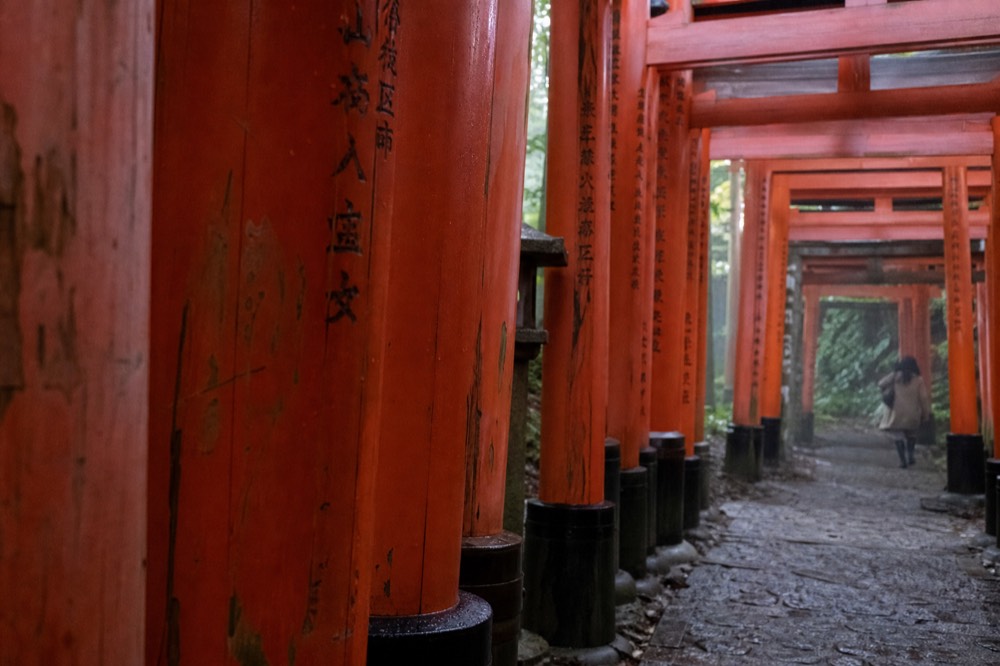
Torii donations became a customary way of giving thanks for a prayer "passing," and the practice spread from the Edo period onward. Businesses and individuals still pay for gates today, which is why the count keeps growing and why the shrine can only say "about." Each gate carries the donor's name and date on its pillar.
A torii marks the boundary between everyday ground and sacred ground, and at most shrines you pass through one or two. Fushimi Inari turned that into a tradition of mass gratitude. When a wish was granted, a person or company would donate a gate as a physical thank-you, and the custom caught on during the Edo period to the point where the mountain paths filled with them. The shrine's FAQ explains this history itself, and it is worth reading on the shrine's own page at the official Fushimi Inari FAQ.
Donation continues today. The gates you walk through carry inscriptions, on the inner face of the pillars, naming the donor and the date. Look closely on the way up and you will see company names, family names and years spread across several decades. No reliable figure exists for what it costs to donate a torii gate, so none is given here; what is certain is that new gates keep arriving, which is the practical reason no exact count exists.
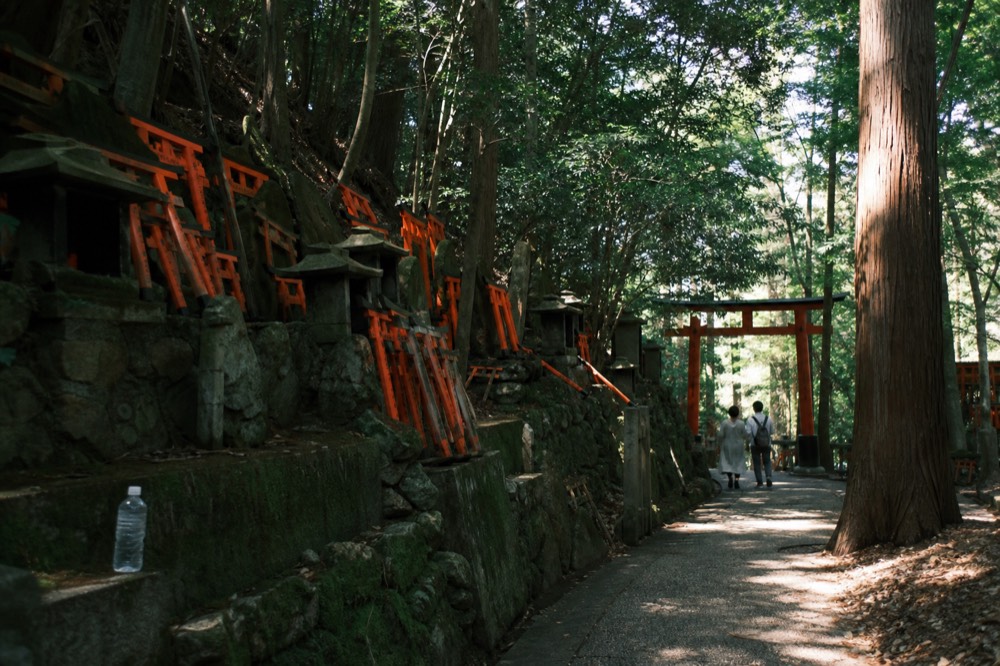
The size range explains the "of all sizes" phrasing. Near the summit, small gates the height of a garden fence crowd together in dozens around each of the mound shrines, often donated at a scale individuals can afford. Down at the base, corporate gates tower over the trail. An exact count would also have to decide what counts as one gate and what counts as a replaced gate, so the shrine keeps things simple with a round, honest number.
If the mountain itself is a half-day commitment, a coach day tour is the other way to spend a full day in the region. The Kyoto and Nara day tour that this site covers includes a licensed English-speaking guide, the coach between cities and the admissions at its stops, so what you pay covers the day's transport and entry in one go.
Is the Senbon Torii tunnel itself 10,000 gates?
No. The Senbon Torii, the famous dense tunnel of gates just above the main shrine, holds a few hundred gates in its two parallel passages. The shrine's about-10,000 figure counts the whole mountain. Treating the tunnel and the total as the same thing is the single most common error in articles about Fushimi Inari.
The tunnel photographs so well that it has come to stand for the entire shrine, and numbers get transferred onto it. Walk it and the mistake becomes obvious: even at a slow pace you clear both passages in ten minutes or so of continuous gates, which is hundreds of gates, not thousands. The shrine's own wording, gates of all sizes along the mountain paths, points deliberately beyond the tunnel.
The distinction matters for planning. Visitors who expect a 10,000-gate tunnel are finished with the highlight before they feel they have started, and the long climb beyond can come as a surprise. Visitors who know the tunnel is the overture and the mountain is the symphony, to borrow no one's phrase but our own, pace themselves differently. The full loop to the summit and back takes about two to three hours of walking by common estimates, and we cover that in more detail in how long to walk up Fushimi Inari.
Here is how the common claims stack up against what the shrine actually says:
| Claim you will see | What the evidence says |
|---|---|
| "About 10,000 torii" | The shrine's own figure, stated on its FAQ as gates "of all sizes" along the whole mountain, explicitly approximate |
| "32,000 torii" | No publisher found for this figure; not on any shrine page we could read |
| "10,000 in the Senbon Torii" | Wrong scope: the tunnel holds a few hundred gates; the 10,000 covers the entire mountain |
| "Thousands in the tunnel" | Closer, but still overstated for the two passages themselves |
The table is not pedantry. If you are deciding between a quick photo stop and a half-day hike, the real geography of the gates is the decision-making information. The tunnel delivers the postcard in twenty minutes. The mountain delivers the other nine thousand gates, the mound shrines, and the quiet.
What does it cost and when can you visit?
Entry to Fushimi Inari costs nothing and the shrine sets no closing time for the paths, which is why early morning and late evening visits are a known workaround for crowds. The shrine publishes hours only for its desks: prayer times, amulets and goshuin stamps have their own daily schedule, and the paths themselves stay walkable around the clock.
The free, always-open character of the place is unusual among Kyoto's big sights. Kinkaku-ji charges 500 yen and keeps 09:00-17:00 hours; Kiyomizu-dera opens at 06:00 and charges admission. Fushimi Inari asks for nothing at the gate and posts no closing hour, which changes the arithmetic of a Kyoto itinerary entirely. A visit at 07:00 before the day trips arrive, or after dinner when the lower gates empty out, costs nothing but an alarm clock.
Practical notes for the walk itself: wear real shoes, not the sandals you wore to the temples, because the loop trail is a genuine mountain path with stone steps and unpaved sections. Bring water in summer. Kyoto's record heat speaks for itself: four of the city's six hottest days since records began in 1880 fall in 2018, 2024, 2025 and 2026, with the 2026 peak at 39.7 degrees on 23 July, according to the Japan Meteorological Agency's own ranking table at the Kyoto Local Meteorological Observatory, whose phenology records we also use below.
Crowd-watching is a solved problem here too. The shrine itself links to the Kyoto City Tourism Association's crowd-comfort forecast and to live cameras at the front and rear approaches, from its own site at inari.jp. Checking the cameras before you leave your hotel is the single most useful minute of planning you can do for this visit.
When do the gates look their best?
The gates look best early in the morning or late in the afternoon, when the light slants through the tunnel and the day-trip crowds have thinned. Cherry season around late March and the December maple colouring are the strongest seasonal backdrops, and Kyoto's official maple date is a December date, not the mid-November one often repeated.
The crowd logic is simple. The tunnel is narrow and unmissable, so every visitor passes through it, and the peak pressure is late morning through mid-afternoon. Before 08:00 the passages can feel close to private. After sunset the vermilion catches the lamps and the atmosphere changes completely, and since the shrine sets no closing time, that is a legitimate plan rather than a rule-bender.
On seasons: Kyoto's cherries normally flower on 26 March and reach full bloom on 4 April, the 1991-2020 averages from the Kyoto observatory; in 2026 flowering came on 23 March and full bloom on 30 March. The maple story is the one worth correcting. Kyoto's official maple colouring date is normally 5 December, and it was 10 December in 2025, the latest on record being 20 December 2024. The mid-November peak-colour line that circulates about Kyoto autumn is folklore; late November to early December is the real window, and the ginkgo colouring, normally 24 November, often outperforms the maples for a late-November visitor.
Can you see Fushimi Inari on a guided day tour?
No. The Kyoto and Nara day tour sold through this site does not stop at Fushimi Inari; its six visits are Nijo Castle, Kinkaku-ji, the Kyoto Imperial Palace, lunch on lunch options, Kasuga Taisha and Todai-ji with Nara Park. Fushimi Inari is best treated as a separate morning or evening visit, easily reached by JR from Kyoto Station.
That is not a swipe at the tour; it is geography and time. A full Kyoto and Nara coach day runs about 10.5 hours from Kyoto with roughly 60 to 80 minutes of road each way between the two cities, and there is no room in that schedule for a mountain hike. What the tour does, it does with a licensed English-speaking guide, the coach and the admissions in the price, which is a different product from the free, self-guided Fushimi Inari visit described above.
The two experiences pair well across a multi-day stay. Day one: the coach tour, Nara's deer and the Great Buddha of Todai-ji. Day two: Fushimi Inari at dawn under your own steam, then the temples the tour covered or skipped, using the practical background in our Nara day trip from Kyoto guide and the free-entry picks in free things to do in Kyoto and Nara.
If a single day is all you have, choose honestly between them. A guided coach day buys structure, a guide's commentary and the Nara sights you would struggle to self-drive. Fushimi Inari buys a mountain, ten thousand gates and a sunrise, for the price of a train ticket. Some visitors do Fushimi Inari at 06:00 and still make a mid-morning tour departure, but that is a long day and a personal call.
For travelers weighing the tour's options: the no-lunch version from Kyoto is the from-price at $185.65 per adult, and it is also the honest pick for anyone who has read the reviews. The included lunch is the listing's weakest element by its own reviewers' accounts, in 2015, 2017 and again in 2025, and eating independently near a stop is usually the better meal. The lunch options suit travelers who value a guaranteed seat over a memorable plate.
For your wider reading, and for honesty about this site's own name: Kyoto Nara Day Tour is the site, and this article is one of a series that answers the questions people actually search for about the region, including the ones, like Fushimi Inari, that sit outside the tour's route.
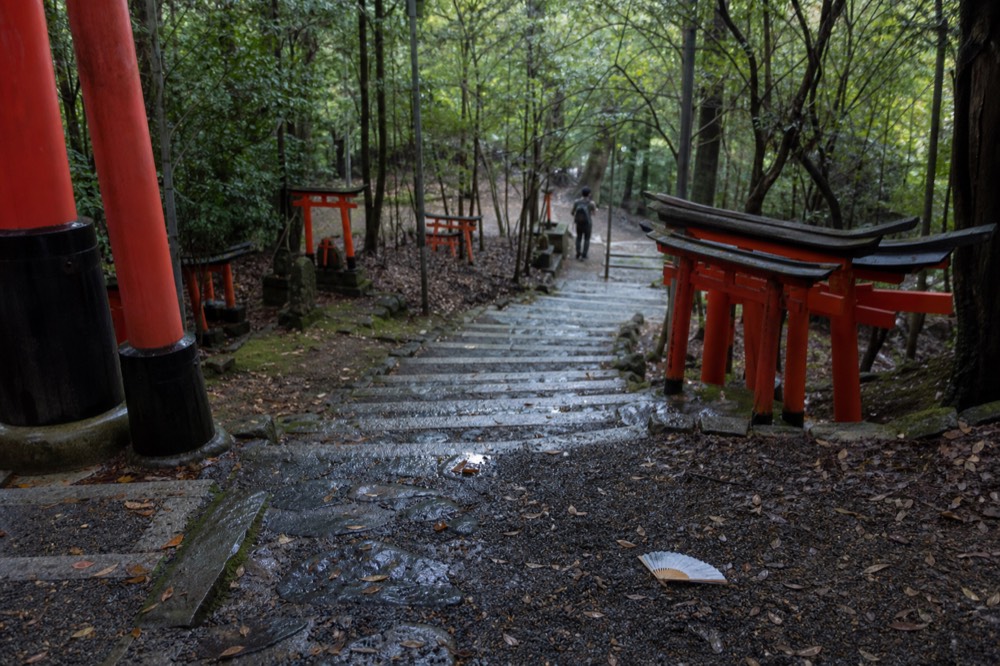
The shrine's own FAQ settles the headline question: about 10,000 torii of all sizes along the whole mountain, not 32,000, and not a count of the tunnel alone. The details below cover the tunnel, the donations behind the gates, the cost of a visit and how this fits with a guided day tour, each answer drawn from the shrine's own pages and official records.
Common questions about torii gates at Fushimi Inari
How many torii gates are at Fushimi Inari?
About 10,000 torii gates of all sizes stand along the mountain paths, according to the shrine's own FAQ. The figure covers the entire sacred mountain, not just the Senbon Torii tunnel, and it is deliberately approximate because gates are donated and replaced continuously.
Are there really 32,000 torii at Fushimi Inari?
No source at the shrine supports 32,000. The shrine's own published figure is about 10,000 torii of all sizes along the whole mountain, and no official page we could read gives a higher count.
How many gates are in the Senbon Torii tunnel itself?
The two parallel passages of the Senbon Torii hold a few hundred gates each. The famous tunnel is the densest part of the mountain, but it accounts for a small fraction of the roughly 10,000 gates in total.
Why do people donate torii gates?
Donating a gate became a way of giving thanks for a prayer passing, a custom that spread from the Edo period onward. Individuals and companies still donate gates today, and each carries the donor's name and date on its pillars.
Does it cost anything to walk through the gates?
No. Entry to Fushimi Inari is free and the shrine sets no closing time for the paths, which makes early-morning and evening visits a practical way to avoid the biggest crowds.
Is Fushimi Inari included in the Kyoto and Nara day tour?
No. The tour's stops are Nijo Castle, Kinkaku-ji, the Kyoto Imperial Palace, lunch on lunch options, Kasuga Taisha, and Todai-ji with Nara Park. Fushimi Inari is best visited separately on its own morning or evening.