Do you need to book anything for Nara Park?
Nara Park itself needs no booking, no ticket and no timed entry. Here is exactly what to reserve ahead, what to pay cash for on the day, and when the deer calendar changes the plan.
Do you need to book anything for Nara Park?
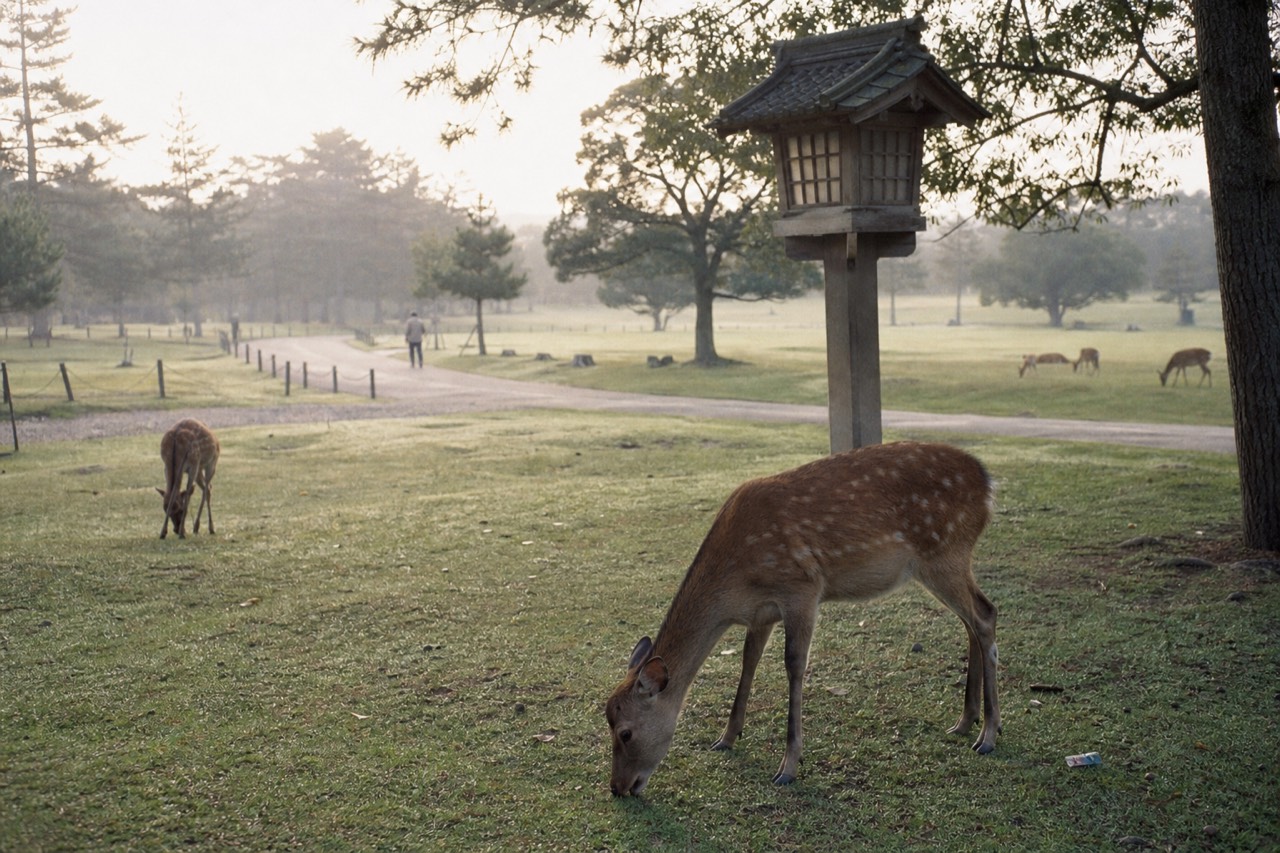
No. Nara Park is a public park with no gate, no admission charge and no booking system of any kind. You walk in whenever you like. The paid attractions inside and beside it, Todai-ji's Great Buddha Hall, Kofuku-ji's halls and museum, Kasuga Taisha's special worship area, all sell tickets on the spot, and Todai-ji and Kofuku-ji state plainly on their own pages that they take cash only.
That is the whole answer for the park, and it surprises people who have just come from Kyoto, where Nijo Castle's Honmaru Palace now demands an advance web ticket released only 30 days ahead. Nara works differently. There is nothing to reserve, nothing to print, no timed slot and no queue for a booking confirmation. The deer do not take appointments either.
The nuance is not about booking Nara Park. It is about three things around it: which buildings sell tickets and at what price, what happens to your plan when the deer calendar turns protective, and whether the day you are spending in Nara is part of a bigger Kyoto-and-Nara itinerary where one element, a guided coach tour or a Tokyo-side rail pass, does need committing to early. This article works through each of those in turn.
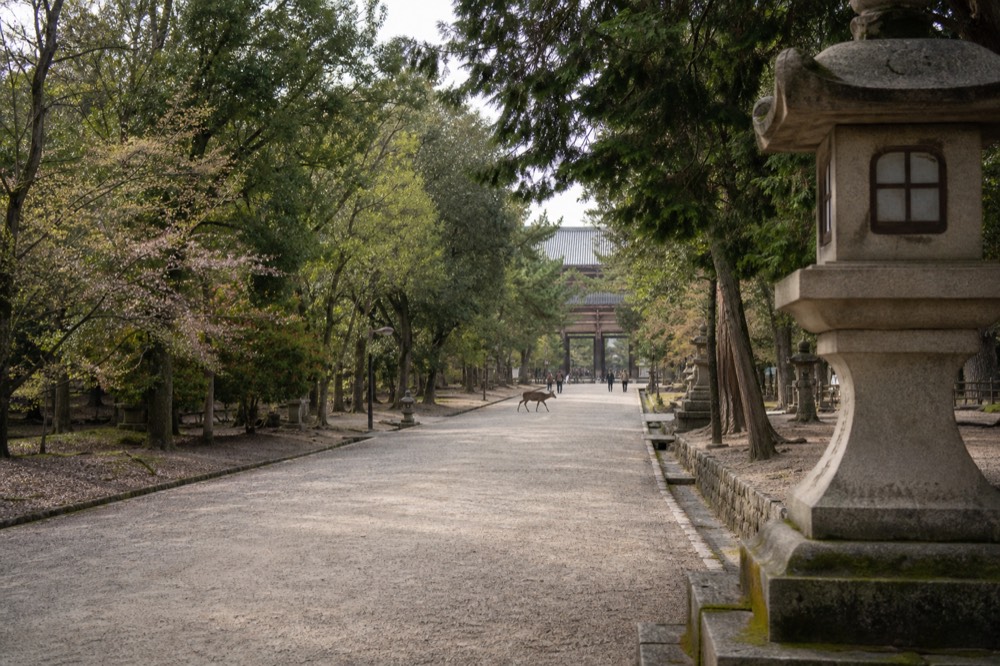
It is worth saying what "the park" actually covers, because the confusion drives most of the booking questions travelers ask. Nara Park is the swath of public land spreading east and south of Kintetsu Nara Station, taking in the grass where the deer graze, the approach roads to Kasuga Taisha, and, sitting inside or along its edges, the paid precincts of Todai-ji and Kofuku-ji. People read that temples inside a "park" must need park tickets, and the two ideas get tangled. They are separate. The park admits anyone at any hour; the temples inside it run their own doors, their own hours and their own cash boxes, and the distinction never produces a reservation requirement on either side.
If you are linking Nara into a full day out of Kyoto or Osaka, the choice of guided versus independent changes what "booking" means for the day as a whole, and that is worth a paragraph before the ticket detail.
Which Nara sights sell tickets, and do any need advance booking?
None of the Nara sights inside or beside the park require advance booking. Todai-ji's Great Buddha Hall charges 800 yen for adults at the door and explicitly accepts no advance reservations, because it accepts no reservations at all. Kofuku-ji's three paid buildings open 09:00 to 17:00 every day with no booking. Kasuga Taisha's grounds are free, with a 700 yen special worship fee paid on site.
Todai-ji's own admission page is unusually clear on this point: advance booking is not accepted, and not required. The temple charges 800 yen per adult for each of its four paid buildings, the Great Buddha Hall, the Hokke-do, the Kaidan-in Kaidando and the Todai-ji Museum, with a set ticket covering the hall plus museum at 1,200 yen. Groups of 30 or more pay 700 yen each. Payment is cash only, a rule the temple prints on the same page, and 7-Eleven and Japan Post ATMs accept foreign cards if you arrive short of yen.
The hall keeps seasonal hours worth knowing before you set an itinerary: 07:30 to 17:30 from April to October, 08:00 to 17:00 from November to March. The Hokke-do and Kaidando run 08:30 to 16:00 all year, and the museum opens 09:30 with a late-last-entry schedule that shifts with the seasons. The temple closes on no regular day, barring special rites or emergencies. An audio guide is available at 500 yen per person in nine languages, collected 15 metres past the ticket gate, with the desk open from 10:00.
Kofuku-ji, a short walk inside the park boundary near Kintetsu Nara Station, follows the same pattern. Its combined ticket for the Central Golden Hall, Eastern Golden Hall and National Treasure Museum is 1,600 yen for adults, sold between 09:00 and 16:00 only, with cash the sole payment method. The temple takes no group bookings and needs no advance contact. One caveat that matters to photographers: the Five-Storied Pagoda is completely enclosed in a roughly 60-metre steel weather cover, and will stay that way until the restoration finishes in March 2034, per the temple's own restoration project site at kohfukuji-project.jp.
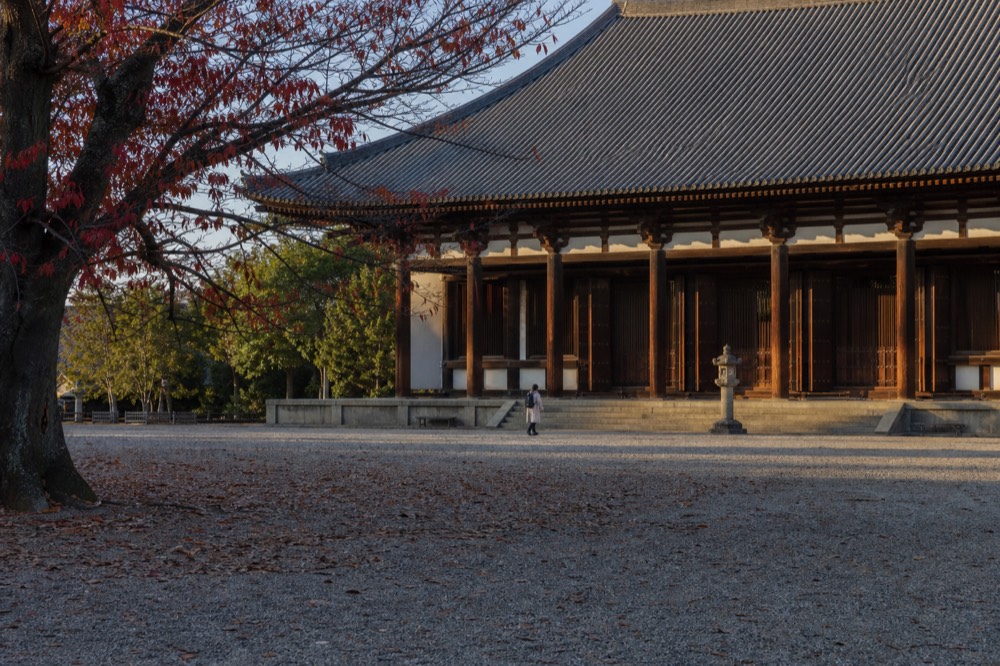
Kasuga Taisha, on the eastern edge of the park, keeps its whole outer grounds and lantern-lined approach free. The paid parts are the special worship area inside the middle gate at 700 yen, the museum at 700 yen and the Man'yo Botanical Garden at 700 yen, each bought at the door. The special worship fee rose from 500 yen on 1 October 2024, so older guidebooks understate it, and the worship area closes on a rolling list of festival dates and on mornings at the start, middle and end of each month, so a same-day decision at the gate is genuinely how it works.
Here is the ticket picture in one table:
| Sight | Adult price | Booking needed? | Payment |
|---|---|---|---|
| Nara Park itself | free | no, open public space | none |
| Todai-ji Great Buddha Hall | 800 yen | no, reservations not accepted | cash only |
| Todai-ji Hall + Museum set | 1,200 yen | no | cash only |
| Kofuku-ji combined ticket | 1,600 yen | no, sold 09:00-16:00 | cash only |
| Kasuga Taisha grounds | free | no | none |
| Kasuga Taisha special worship | 700 yen | no | on site |
The short planning answer: bring cash, arrive before mid-afternoon, book nothing. The single Nara-area exception worth knowing about is on the Kyoto side of a combined day. Nijo Castle's Honmaru Palace, which appears on several Kyoto-and-Nara itineraries, requires an advance web ticket released 30 days ahead, on top of its 800 yen castle admission. The palace, not the park, is what breaks the "just show up" plan. The Nara half of the day never will.
When does the deer calendar change your plans?
Twice a year the deer themselves, not any ticketing system, are the reason to adjust a Nara visit. The Nara Deer Preservation Foundation designates June and November as deer-protection months: calving runs mid-May through June, when does guarding newborn fawns turn aggressive, and the rut runs September to November, when stags must not be approached.
None of this requires a booking, and the park never closes for it. But the foundation's own education pages, at naradeer.com, are blunt about what changes: the deer are habituated but wild, they bite, strike, butt and charge, and older visitors and small children need extra care during those windows. If your trip falls in June or November, plan the park with more distance and less hand-feeding, and treat the November window as a reason to give the animals room rather than a reason to skip Nara.
The population figure matters for planning more than it first appears. A park with more deer and more visitors means the feeding etiquette matters more, not less. The rules are simple and published by the foundation itself: feed nothing except shika senbei, the crackers sold in the park for about 200 yen a bundle, hand the cracker over fast, never tease, and never hold food in a closed fist or the deer will follow and press. The foundation also notes that approaching a newborn fawn provokes the mother, and that even de-antlered stags during the rut must be left alone, which corrects a common assumption that a stag without antlers is a safe stag.
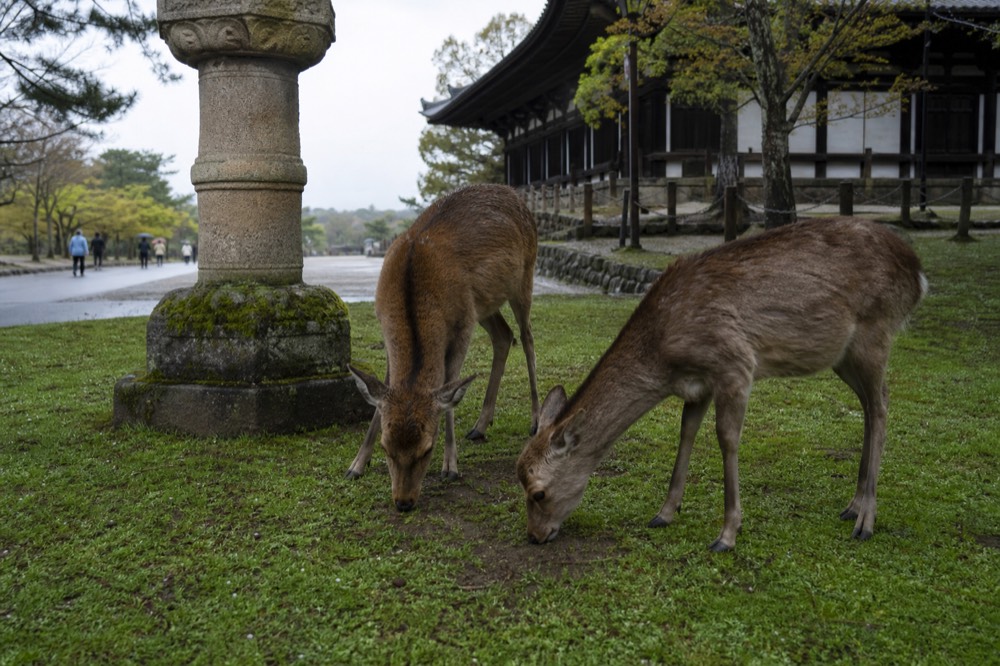
For a day-tripper, the practical translation is this: no reservation can move you away from a crowded hour, because there is no reservation system to use. What moves you is timing. Early morning and late afternoon are the quieter windows, the deer are fed and calmer before the cracker sellers get busy, and the temple buildings around the park open between 07:30 and 09:00 depending on the season. Kasuga Taisha's worship area opens at 06:30 from March to October and 07:00 from November to February, with special worship from 09:00, so a dawn start buys you an empty approach and lanterns in low light, the single best reason to arrive early that no booking system could ever sell you.
Does a guided tour remove the need to plan any of this?
A guided coach tour removes the ticket queueing, the cash juggling and the transport puzzle, and it is the one part of a Nara day that genuinely must be booked in advance. The Kyoto and Nara Day Tour, run by JTB Sunrise Tours and rated 4.8 from 32 reviews, covers the admissions to Nijo Castle, Kinkaku-ji, the Kyoto Imperial Palace, Kasuga Taisha and Todai-ji, with a licensed English-speaking guide and coach, from $185.65 per adult.
The tour runs in six combinations of departure city and lunch. The Kyoto no-lunch option is the published from-price at $185.65; the Kyoto lunch options with a Western set or an Indian thali, and the Osaka departures, are published in Hong Kong dollars on their listings, HK$1,597 to HK$1,698. One honest note worth having before you pay for lunch: the included meal is the listing's own weakest element by its reviewers' accounts, in reviews from 2015, 2017 and again in 2025. The no-lunch options cost less and leave you free to eat in Nara, where the food around the park and Naramachi is better than a coach-group set menu.
The three Osaka options end at Osaka Namba and do not return to Kyoto, which matters if your hotel is in Kyoto. The Kyoto options meet at 08:20, the Osaka options at 07:15, since an Osaka pickup versus a Kyoto departure typically adds roughly 30 to 60 minutes each way. A full Kyoto-and-Nara coach day runs about 10.5 hours from Kyoto, door to door, with the road between the two cities taking about 60 to 80 minutes each way depending on traffic. The tour visits six things and no others: Nijo Castle, Kinkaku-ji, the Kyoto Imperial Palace, lunch on the lunch options, Kasuga Taisha, and Todai-ji with Nara Park. It does not visit Fushimi Inari, Kiyomizu-dera or Arashiyama, so if any of those is the reason you are travelling, this tour will not cover it and an independent day is the better shape.
What the tour cannot change is the deer calendar above or the cash-only rule at Todai-ji, though with admissions already covered, the cash question mostly disappears inside the itinerary. What it does change is the morning: someone else holds the timetable, the coach and the ticket money, and your only job is to be at the meeting point on time. If you would rather read about the trade-offs first, the companion piece on whether Kyoto and Nara fit in one day works through the timing, and the guide to train fares from Kyoto to Nara covers the independent alternative.
What should you actually prepare before the day?
Prepare cash, a route and a start time, not bookings. A few thousand yen per adult covers every paid building around Nara Park if you are selective, and the full run of tickets in the table above still leaves change from a 10,000-yen note. The only decisions that benefit from being made early are the guided-tour seat and, on a combined Kyoto day, the Nijo Castle Honmaru web ticket.
Getting there independently needs no reservation either. The JR Nara Line and the Kintetsu Kyoto Line both run Kyoto to Nara without booking, the Miyakoji Rapid takes about 45 minutes and runs roughly every 30 minutes, and the Kintetsu express takes about the same time with its station just 5 to 8 minutes' walk from the park edge, against 15 to 25 minutes from JR Nara. Fares run about 720 yen on JR and about 760 yen on Kintetsu, live-search figures rather than operator-confirmed prices, and fares change. None of it sells out. The Japan Rail Pass covers the JR Nara Line including the Miyakoji Rapid, but it does not cover Kintetsu, so pass holders should route via JR Nara Station and accept the longer walk.
One transport fact that does have a hard deadline: the Japan Rail Pass rises on 1 October 2026, with the ordinary 7-day pass going from 50,000 to 53,000 yen for purchases from that date, per the official pass site at japanrailpass.net. Even after the rise, a Kyoto-Nara return costs about 1,440 yen on JR, so the pass is not what decides this particular trip. But a pass buyer with a broader itinerary has a real date to beat, and the purchase location's local date is what decides which price applies.
The last preparation item is seasonal and costs nothing. Kyoto's cherry blossoms flowered on 23 March 2026 and reached full bloom on 30 March, against a normal of 26 March and 4 April, per the Kyoto Local Meteorological Observatory. If you are timing a spring trip around those weeks, the thing to book early is your accommodation, not your park entry: spring and autumn weekends fill Nara's hotels and Kyoto's everything, while the park itself keeps its no-ticket, no-booking character all year. Travelers planning a full independent route may find the Nara day trip planning guide useful for the wider picture.
Nothing in or around Nara Park needs a reservation: the park is free public land, Todai-ji accepts no advance bookings and sells its 800-yen tickets at the door, and Kofuku-ji and Kasuga Taisha work the same way. The only things worth booking ahead on a Nara day are a guided coach seat and, on a combined Kyoto itinerary, the Nijo Castle Honmaru web ticket.
Common questions about booking Nara Park
Do you need to book anything for Nara Park?
No. Nara Park is public land with no gate, no admission charge and no booking system. The paid buildings around it, Todai-ji, Kofuku-ji and Kasuga Taisha's special areas, all sell walk-up tickets, and Todai-ji and Kofuku-ji take cash only.
Do you need tickets for Todai-ji?
You need a ticket for the Great Buddha Hall and the other paid buildings, at 800 yen per adult each or 1,200 yen for the hall plus museum set, but you buy it at the door. The temple accepts no advance reservations, and none are required.
Is Nara Park free to enter?
Yes, the park itself is free and always open. Only the temple and shrine buildings inside and around it charge, and those charges are paid on site in cash.
When is the worst time to visit Nara Park without a plan?
June and November, the foundation's deer-protection months, and any mid-afternoon in peak season. Calving runs mid-May to June and the rut runs September to November, so keep more distance from the deer then. None of it requires booking, only awareness.
Should you book a guided tour to Nara instead?
A guided coach tour such as the Kyoto and Nara Day Tour from $185.65 covers the admissions, coach and licensed English-speaking guide, and it is the one part of a Nara day that must be booked in advance. Independent travel needs no booking at all, just cash and a start time.
Does anything on a combined Kyoto and Nara day need advance booking?
Only Nijo Castle's Honmaru Palace on the Kyoto side, which requires an advance web ticket released 30 days ahead and costs 1,000 yen on top of castle admission. Everything on the Nara side is walk-up.
If you are still weighing the two ways to spend the day, Kyoto Nara Day Tour compares the guided options side by side, including the cheaper no-lunch departures.