Naramachi Old Town: What to See in Nara's Former Merchant Quarter
Naramachi is Nara's old merchant quarter, a compact grid of machiya townhouses a short walk from the park, and it is not a stop on the Kyoto and Nara coach tour this site covers.
Short answer
Naramachi is a walkable former merchant district of machiya townhouses in central Nara, reached on foot from the park area, with shops, cafes and a restored machiya open to the public. Allow about an hour. It is not a stop on the Kyoto and Nara day tour, which ends its Nara time at Todai-ji and Nara Park.
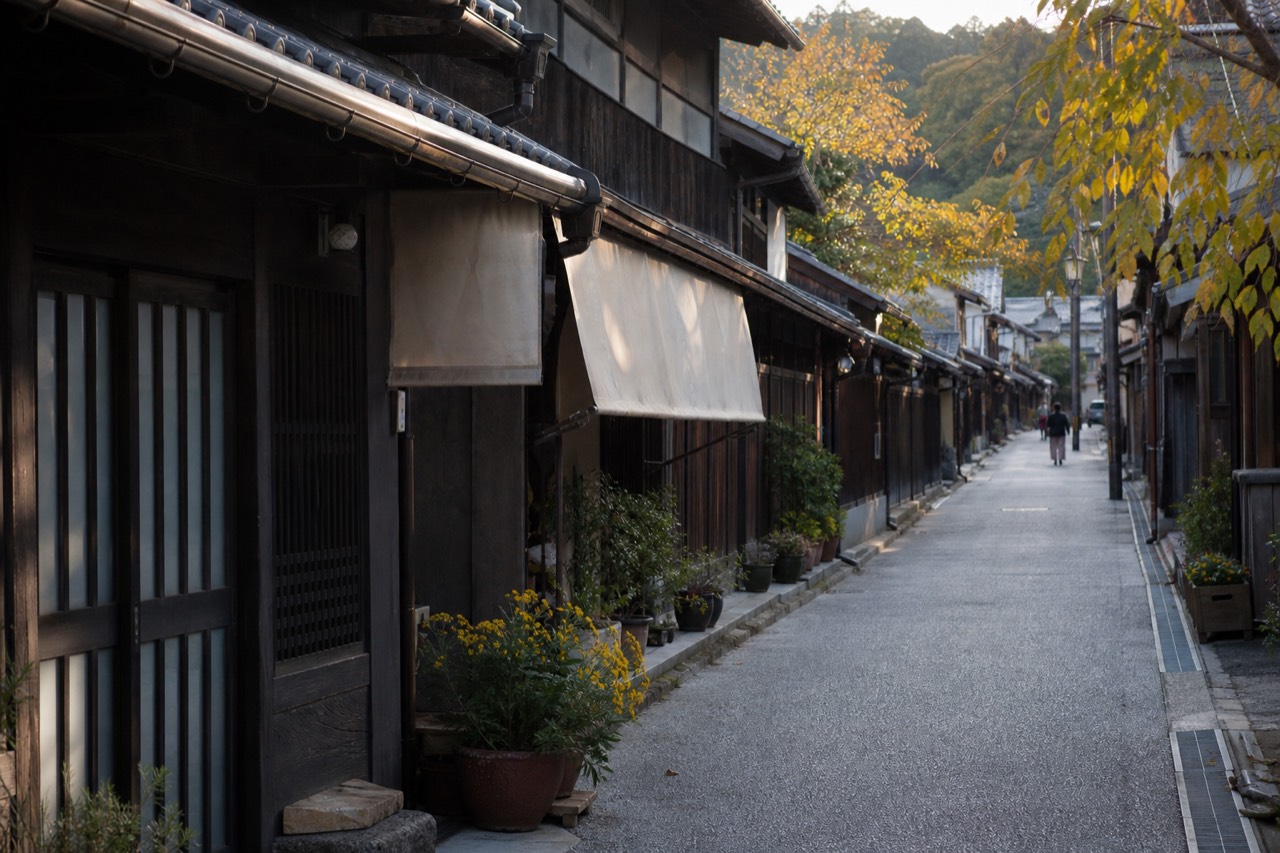
Naramachi grew up in the eighteenth and nineteenth centuries as Nara's merchant quarter, a dense grid of narrow-fronted machiya townhouses where brewers, indigo dyers and traders worked and lived behind lattice fronts. That much is what the district is: a few blocks of low wooden buildings, small shops and cafes, sitting in the middle of modern Nara and easy to miss if a day is planned around the big sights. It is worth stating plainly at the start: Naramachi is not a stop on the Kyoto and Nara day tour this site covers. That tour visits Nijo Castle, Kinkaku-ji, the Kyoto Imperial Palace, lunch on the options that include it, Kasuga Taisha, and Todai-ji with Nara Park, six stops and no others. Naramachi is what you do if you have built your own day, or if you have time left after the coach day has ended.
This guide covers the quarter as a place to walk: what the machiya are, what is open to enter and what is a shop, how much time it deserves, what it costs, and how the seasons change it.
What exactly is Naramachi?
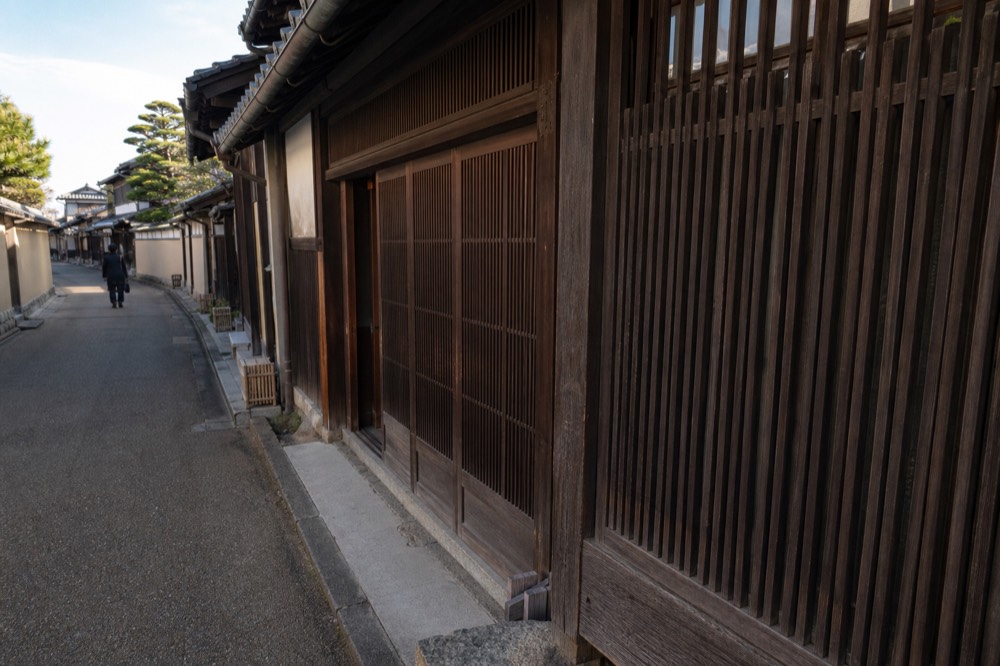
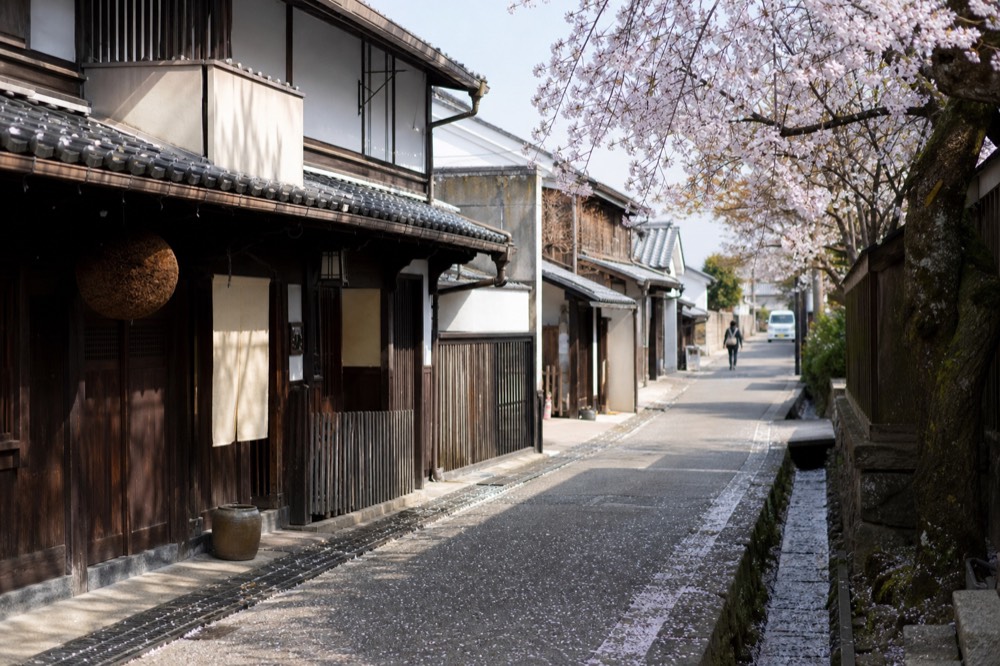
Naramachi is the surviving merchant quarter of old Nara: a compact district of machiya townhouses, the narrow wooden buildings that lined Japan's commercial streets before concrete replaced them, now holding small shops, cafes, workshops and a handful of buildings you can walk inside. The word machiya breaks down as "town house", and the type is defined by its shape rather than its decoration: a narrow street front, often just one room wide, stretching deep back from the road, with living quarters and workspaces behind the shop. Nara's version uses a distinctive lattice of thin vertical slats across the front, spaced so a seated shopkeeper could watch the street while passers-by saw only shadows inside.
The quarter sits on land that was once the grounds of Gango-ji, one of Japan's earliest temples, and the ordinary buildings that filled in that land are what visitors walk through today. Very little of it is a museum in the formal sense. Most of it is a working shopping street. That is the honest framing: come for the texture of the streets, the restored facades and the small independent businesses, not for a curated attraction with a ticket gate.
For context on the bigger picture, our things to do in Nara guide places Naramachi among the city's other draws, and the Nara day trip from Kyoto guide covers the full route the other way.
What is there to actually see and do in Naramachi?
The district's content is: machiya streetscapes to walk, a restored townhouse open to the public, small craft shops and workshops you can browse, and a scatter of shrines tucked between the buildings, all within a few minutes' walk of each other. The scale is the point. This is not a sight you queue for. It is a quarter you drift through.
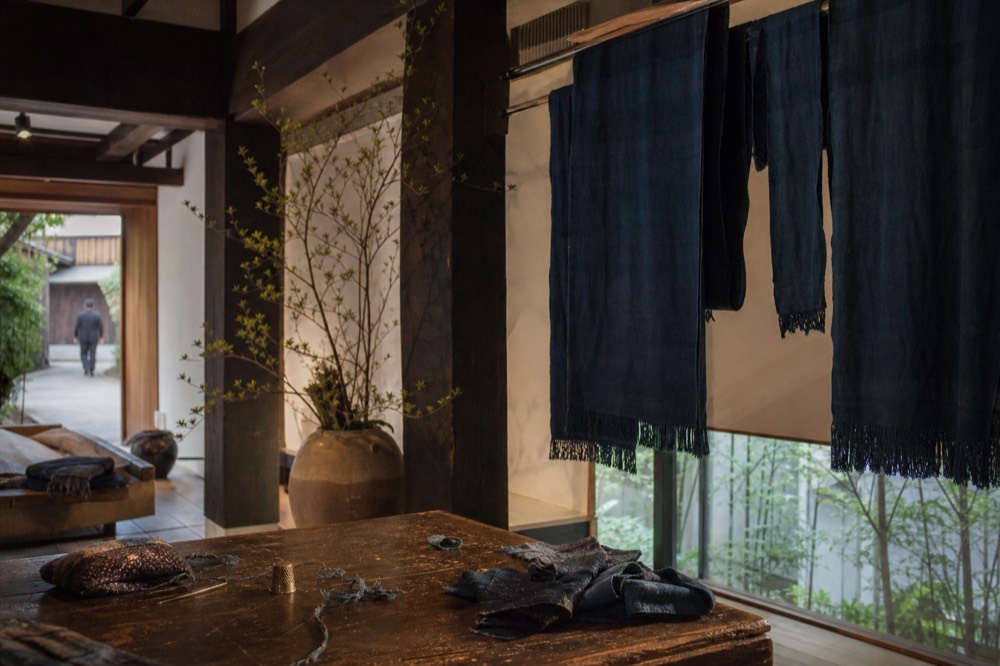
The single most worthwhile stop for most visitors is the restored machiya that is open to walk inside. It shows the interior arrangement that the street facades hide: the raised tatami rooms, the narrow kitchen corridor, the courtyard that pulls daylight and air into the middle of a deep plot. Going inside one building reorganises how you read every other facade on the street, because you stop seeing the lattice as decoration and start seeing it as a working filter between shop and street. Beyond that, the quarter's shops lean toward traditional crafts: indigo-dyed cloth, which has a long history in the district, along with ceramics, pickles, sweets and small galleries. Some occupy genuine old machiya; others are modern premises in period style, and there is no shame in not always being sure which is which, because the district has been consciously restored rather than frozen.
Tucked into the grid are also small shrines and lanes that predate the shopfronts, including a famously narrow alley that is a favourite photograph and a reminder of how tight the original street plan was. Give yourself permission to wander off the main street: the quarter rewards the side lanes more than the busier frontages.
If you are weighing Naramachi against spending the same hour elsewhere in the city, the comparison is really between atmospheric streets and headline monuments. The coach tour this site is built around makes that trade a different way: it takes the monument route, and covers both cities in one long day, rated 4.8 from 32 reviews and priced from $185.65 per adult for the no-lunch option departing Kyoto. Three of its six options look like this:
How much time does Naramachi deserve?
About an hour covers the quarter properly for most travellers: a slow loop of the main streets, one stop inside the restored machiya, and one drink or snack break; ninety minutes if you shop seriously or linger in cafes, and as little as thirty minutes if you are simply passing through between the park and the station. The honest answer depends on what the rest of your day looks like, because Naramachi's character is low-key and it will not reward a rushed tick-box visit the way Todai-ji does.
For perspective on the budgeting problem, Nara Park itself earns a wide range of answers depending on season and deer enthusiasm, a question covered in detail in how many hours at Nara Park. The two sit close together in the same walkable core of Nara, so the practical split many travellers land on is the park and the big temples first, Naramachi second, when legs are tired and the pace naturally slows. That is the right order. Naramachi at the end of a day, with a coffee and a shaded bench, is exactly what it is good at.
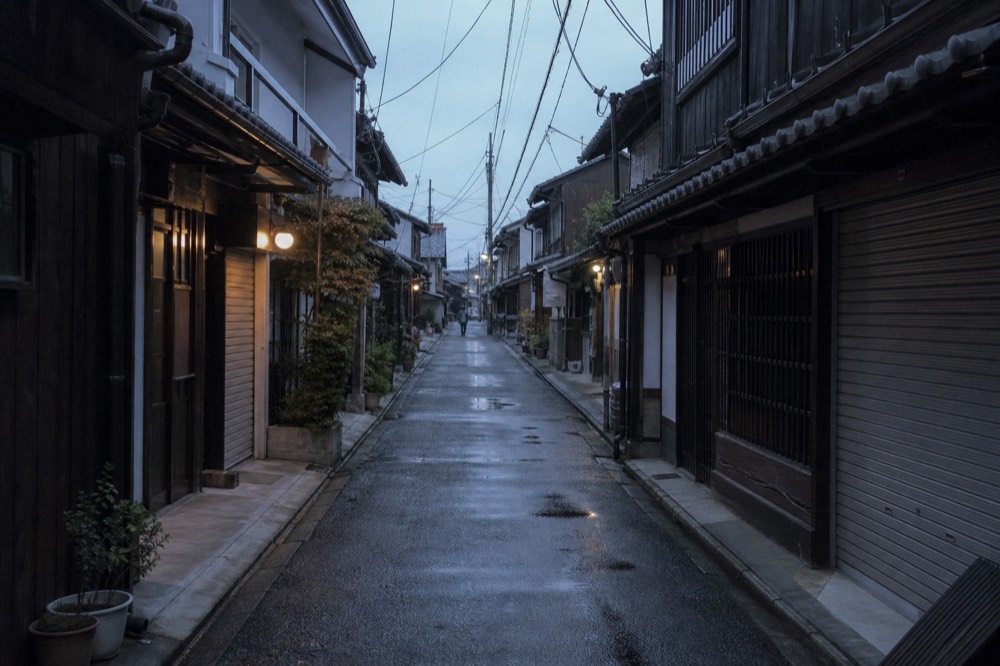
One honest note on timing inside the quarter: like most small independent retail districts in Japan, it wakes late and shuts early. Mid-morning to late afternoon is the window when shops are reliably open; early morning walkers get pretty, empty streets and a lot of shutters. If your only free hours are dawn or evening, walk it for the architecture and plan nothing else.
What does Naramachi cost to visit?
Walking Naramachi's streets costs nothing: there is no gate, no ticket and no district entry fee, and the only costs are whatever you spend inside shops, cafes and the couple of buildings that charge for entry, which are individually priced and modest. The quarter is a public neighbourhood, not an attraction. That makes it one of the genuinely free things to do in the Nara walkable core, and it pairs well with the free parts of the bigger sights nearby: Kasuga Taisha's grounds and approach are walk-through free, with only the special worship inside the middle gate charged at 700 yen, as the shrine's own pages state.
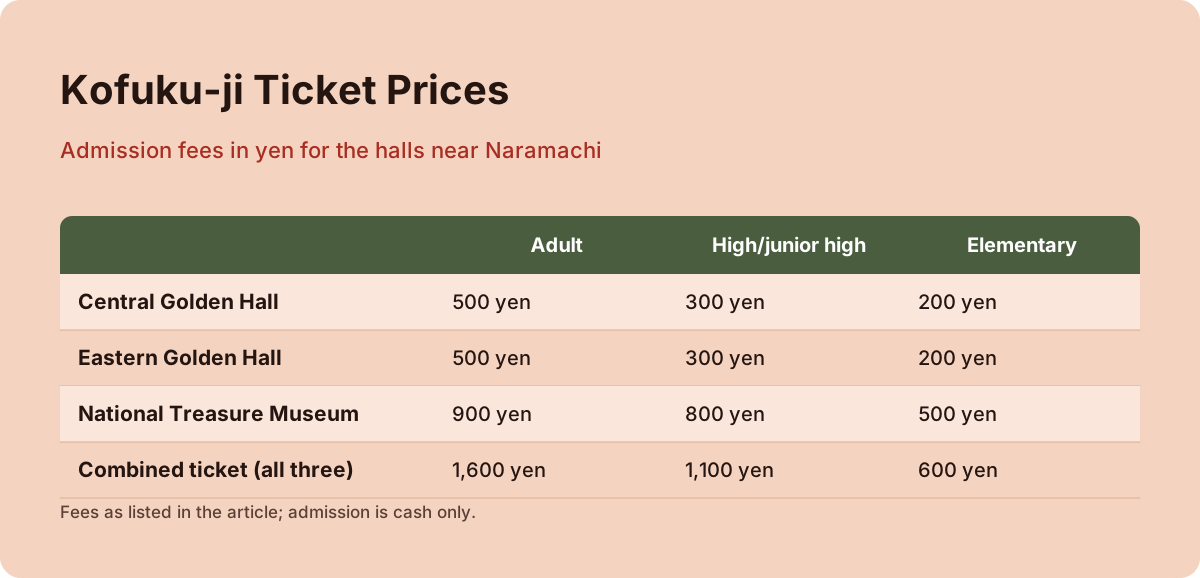
The paid items close by are the ones with published, verifiable prices. Kofuku-ji, which stands between the station side of the district and the park, charges per building and in cash only, per its own visitor guide at the temple's official page:
| Kofuku-ji ticket | Adult | High/junior high | Elementary |
|---|---|---|---|
| Central Golden Hall | 500 yen | 300 yen | 200 yen |
| Eastern Golden Hall | 500 yen | 300 yen | 200 yen |
| National Treasure Museum | 900 yen | 800 yen | 500 yen |
| Combined ticket (all three) | 1,600 yen | 1,100 yen | 600 yen |
Two warnings matter here. First, the combined ticket is sold only between 09:00 and 16:00; after that you buy single-hall tickets. Second, the Five-Storied Pagoda, the temple's most photographed structure, has been completely enclosed under a roughly 60-metre steel weather cover since March 2025 and stays that way until the restoration is scheduled to finish in March 2034. Anyone planning pagoda photos should plan around that.
For a wider look at free and paid options across both cities, see free things to do in Kyoto and Nara.
When is the best time of year to walk Naramachi?
The most comfortable months to walk Naramachi are late March to April and October to November, when daytime highs average between roughly 14 and 20 degrees in the Kansai region, and the streets carry seasonal colour; midsummer is the hardest, with July and August mean daily maxima above 31 degrees in both Kyoto and Nara. Those figures come from the Japan Meteorological Agency's 1991-2020 climate normals, which are the cleanest basis for planning a trip that is mostly outdoors on foot.
Two season-specific corrections are worth making, because the folklore is loud. Autumn colour in Kyoto is a December event by the official measure, not a mid-November one: the Kyoto Local Meteorological Observatory's normal maple-colouring date is 5 December, and in 2025 it was 10 December, with the latest on record 20 December 2024. Anyone booking "peak foliage week" in mid-November on the assumption of red maples is usually a fortnight early, though ginkgo colouring normally arrives around 24 November. Cherry blossom runs the other way on expectations: Kyoto's 1991-2020 normal flowering is 26 March with full bloom 4 April, and in 2026 the city flowered on 23 March with full bloom on 30 March. Early April is the safer bet if blossom is the goal.
| Season | What it means for Naramachi | Official basis |
|---|---|---|
| Late March to early April | Cherry blossom, Kyoto full bloom normally 4 April, 30 March in 2026 | JMA Kyoto observatory |
| June to mid-July | Rainy season, roughly 4 June to 8 July in the Kinki region in 2026 | JMA preliminary declarations |
| July to August | Mean daily maxima above 31 C in Nara; hot, humid walking | JMA climate normals |
| Late November | Ginkgo colouring, normally around 24 November in Kyoto | JMA Kyoto observatory |
| Early December | Maple colouring, normally 5 December, 10 December in 2025 | JMA Kyoto observatory |
Summer deserves a specific word beyond the averages. Kyoto's station records, which begin in 1880, put 39.7 C on 23 July 2026 as the third-hottest day ever recorded there, and four of the six hottest days on record fall in 2018, 2024, 2025 and 2026. Nara's own numbers track closely. A district that is walked almost entirely outdoors, with narrow lanes that hold heat, is a morning activity in July and August, full stop. More seasonal detail is in best time to visit Nara.
How do you fit Naramachi into a day that already includes Nara Park?
The pattern that works is: big sights first, Naramachi last, because the quarter lies between Nara Park and the station side of the city, so it falls naturally on the walk back, and it needs no tickets, no timing and no energy beyond a slow stroll. If you have come on the coach day tour, the practical reality is different: the tour's Nara time is spent at Kasuga Taisha and at Todai-ji with Nara Park, and the three Osaka departure options end at Osaka Namba rather than returning to Kyoto at all. Tour passengers who want Naramachi need either free time at the end of the tour's Nara stop or a separate self-guided block.
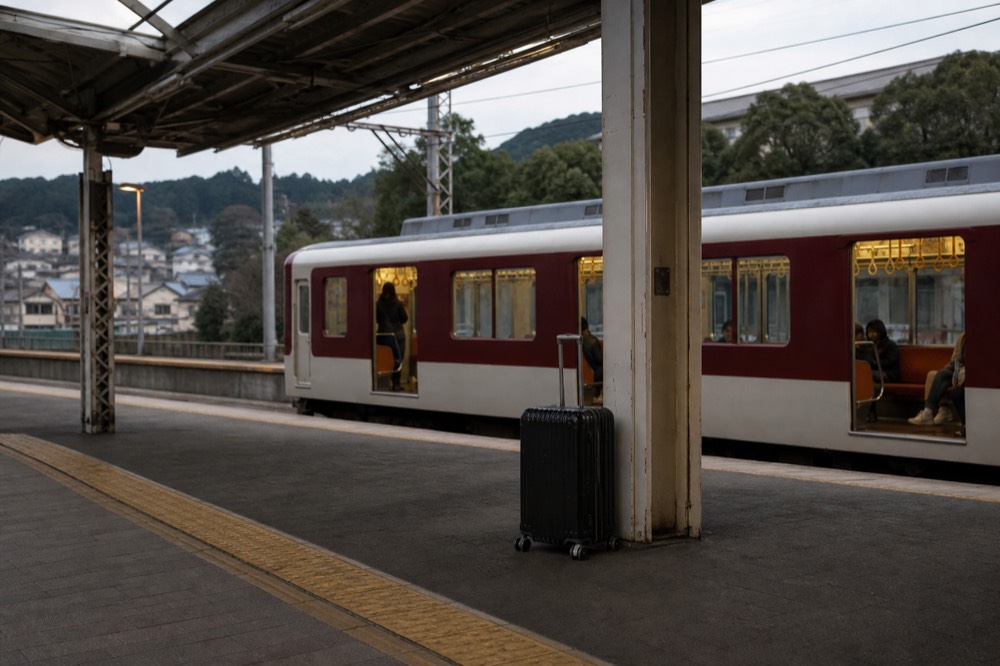
For independent travellers the arithmetic is simple. The JR Nara Line from Kyoto runs its Miyakoji Rapid service in about 45 minutes, roughly every half hour; the Kintetsu express takes about the same time, with its limited express around 35 minutes, at fares of roughly 720 yen on JR and about 760 yen on Kintetsu, with fares subject to change. Kintetsu Nara Station sits about 5 to 8 minutes' walk from the park edge, which puts Naramachi inside the same comfortable walking core. One transport fact with a hard date attached: the Japan Rail Pass rises on 1 October 2026, with the 7-day ordinary pass going from 50,000 to 53,000 yen, confirmed on the official Rail Pass price page. Even at the new price, a pass is not what decides a Kyoto-Nara day trip, because a return costs about 1,440 yen on JR; the full route comparison is in Kyoto to Nara transport options.
A sample self-guided shape for one day, assuming a Kyoto start:
| Time block | Activity | Notes |
|---|---|---|
| Morning | Travel Kyoto to Nara | Kintetsu or JR, roughly 35 to 75 minutes by service |
| Late morning | Todai-ji Daibutsuden and Nara Park | Daibutsuden 800 yen, cash only |
| Early afternoon | Kasuga Taisha grounds and lantern approach | Grounds free, special worship 700 yen |
| Mid afternoon | Kofuku-ji halls, optional | Combined ticket 1,600 yen, sold to 16:00 |
| Late afternoon | Naramachi stroll and cafe | Free, shops open into late afternoon |
| Evening | Return to Kyoto | Last trains comfortably after dark |
Bring cash. Todai-ji and Kofuku-ji both state on their own pages that admission is cash only, and small Naramachi shops are the same by default. Foreign cards work widely at 7-Eleven and Japan Post cash machines, so withdrawing notes in advance is routine.
Is Naramachi worth it if you only have half a day in Nara?
Yes, if and only if the half day already covers Todai-ji and some of the park, because Naramachi costs nothing, sits directly on your walking route, and fills the remaining thirty to sixty minutes better than any other single stop in central Nara; skip it only if the deer and the Great Buddha are still unseen. The quarter's value is proportional to how much Nara you have already absorbed. It is not a destination. It is the coda.
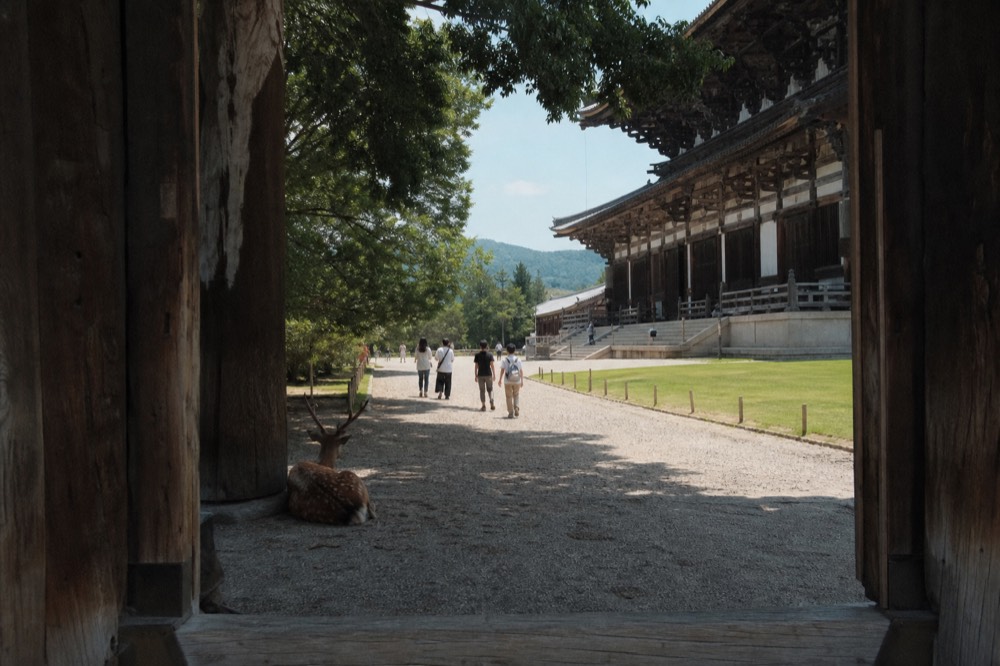
Half-day visitors face a real squeeze, and the honest ranking puts the Daibutsuden first: an 800-yen, cash-only admission to a hall 57.012 metres east to west and 48.742 metres high, dates that come from the temple's own information pages, as does the fact that no advance booking is accepted or required, per Todai-ji's admission page. Then the deer, then Kasuga Taisha's approach, and Naramachi slots into whatever is left. If the half day is genuinely four hours, our is four hours in Nara enough piece works the same equation in detail, and the short answer there is that four hours covers Todai-ji, the park and one more thing: that third thing is usually Naramachi or Kasuga Taisha, not both.
For travellers who would rather not run the arithmetic at all, the coach alternative bundles the headline sights of both cities into one day. The no-lunch option from Kyoto is the from-price of $185.65 per adult; the same itinerary from Osaka meets earlier, at 07:15, and both Osaka lunch variants run to HK$1,698 as published. One consistent thread in the reviews over the years, from 2015 through 2025, is that the included lunch is the weakest element of the day by the reviewers' own accounts, which is why the cheaper no-lunch option is worth a look if you would rather eat in Naramachi or back in Kyoto.
What about the deer: does Naramachi have any?
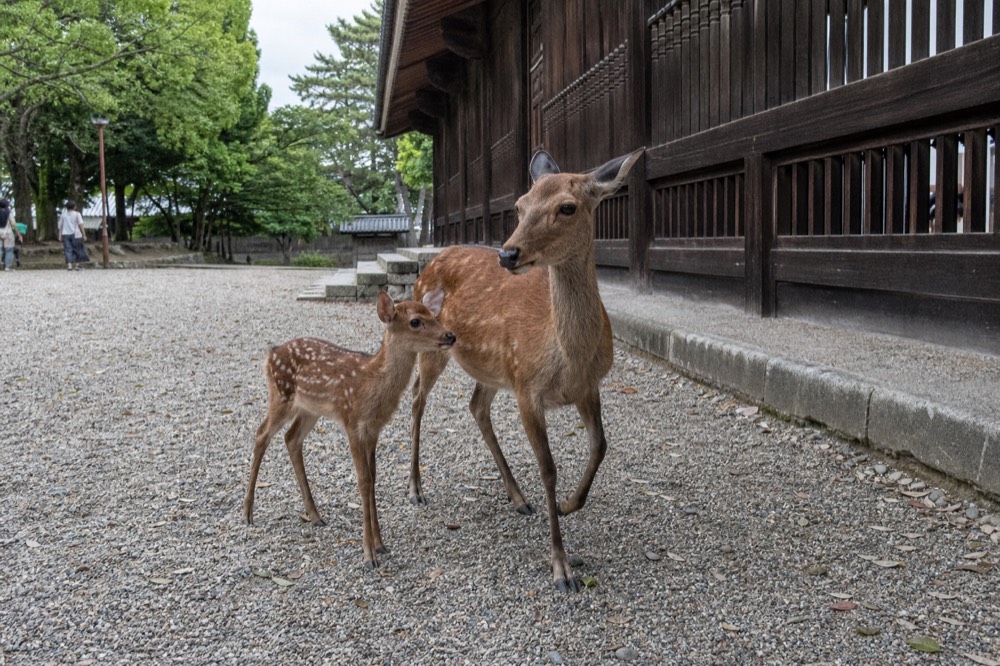
No, Naramachi itself has no deer; the herd's range is the park and the temple and shrine ground around it, and the quarter's streets are deer-free, though individual animals occasionally wander, so food and paper bags should be secured on the walk between the two. The deer belong to Nara Park, and their management is the business of the Nara Deer Preservation Foundation, which counted 1,687 of them in July 2026, a rise of 222, with 411 stags, 990 does and 286 fawns. The foundation's own guidance is direct: the deer are habituated but wild, they bite, butt and charge, and the only thing you may feed them is shika senbei, the special crackers sold in the park for about 200 yen a bundle.
Two seasons change the calculus for anyone mixing deer and old streets. June is a designated deer-protection month because calving runs mid-May through June and does turn aggressive around a birth; November is the other protection month because the rut runs September to November and stags, including de-antlered ones, must not be approached. Naramachi is the safer place to be in those windows if deer encounters are a concern. The full story, including the controversies around the herd's size, is in Nara Deer Park and the Nara deer controversy.
Where does Naramachi fit if you are combining Kyoto and Nara in one day?
Naramachi is the flexible hour: it works at the end of a self-guided Kyoto-Nara day, and it works as the thing you do with leftover time after a coach day's Nara stop, but it cannot be substituted into the coach itinerary, which has a fixed six-stop route and no district walking time in Nara beyond the park and Todai-ji. The combination question, whether one day is enough for both cities at all, has a whole answer of its own in can you see Kyoto and Nara in one day, and the summary is that one day works if you accept a packed schedule and a coach doing the driving.
The coach product that dominates this question is operated by JTB Sunrise Tours under the listing title Kyoto and Nara Day Tour. It runs about 10.5 hours from Kyoto, about 11 hours 15 minutes from Osaka, with roughly 60 to 80 minutes of road time each way between the cities, and the Osaka departures add about half an hour to an hour on the way out. The Kyoto departure meets at 08:20. The tour's route is fixed, which is its strength and its limit: six stops, executed efficiently, with a licensed English-speaking guide, the coach and the admissions in the price. There is no version of it that wanders a merchant quarter.
For travellers based in Osaka, the trade-offs stack differently: earlier start, Osaka Namba finish rather than a Kyoto return, and lunch-inclusive pricing published in Hong Kong dollars. The Nara from Osaka guide works that side of the ledger, and the no-lunch Osaka option keeps the price down and leaves dinner open on the Namba side.
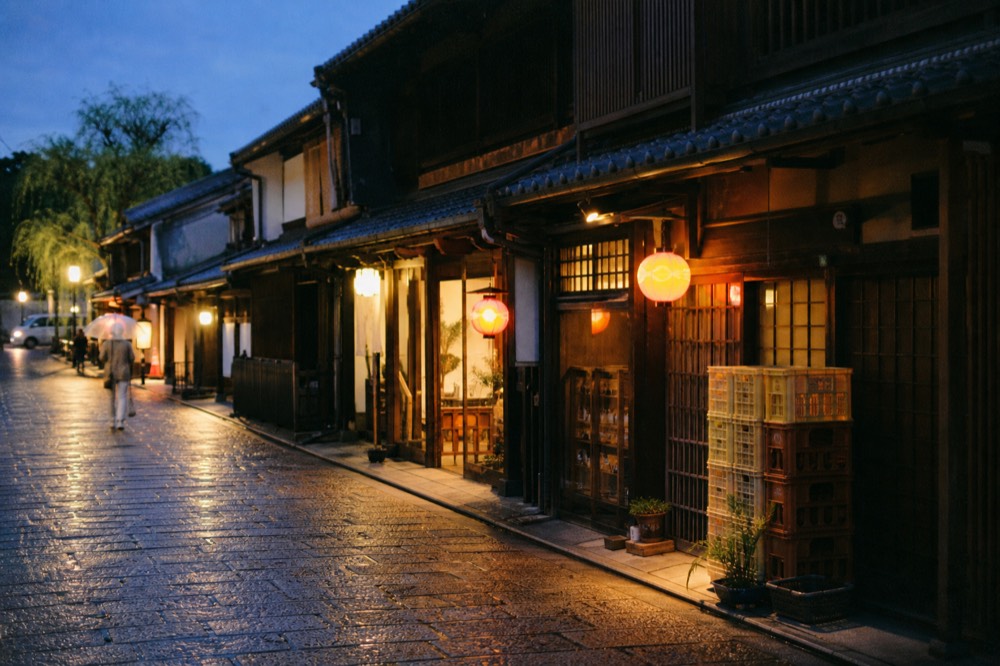
Whichever way the day is built, the closing thought on Kyoto Nara Day Tour planning is this: the monuments fill the memory cards, but Naramachi is where Nara stops being a procession of eighth-century buildings and becomes a living neighbourhood. An hour there, unhurried, is the difference between a day trip and a day.
The short answers are: Naramachi is not on the coach tour's route, it needs about an hour, it costs nothing to walk, shops open from mid-morning, there are no deer in its streets, and it combines easily with Nara Park in a single day on foot. Each question below expands on one of those points.
Common questions about Naramachi
Is Naramachi a stop on the Kyoto and Nara day tour?
No. The tour visits Nijo Castle, Kinkaku-ji, the Kyoto Imperial Palace, lunch on the options that include it, Kasuga Taisha, and Todai-ji with Nara Park. Naramachi is not on the route, so you need free time after the tour's Nara stop or a separate visit.
How much time do you need in Naramachi?
About an hour for a slow loop, one visit inside the restored machiya and a snack stop. Ninety minutes if you shop, and as little as thirty minutes if you are passing through between the park and the station.
Does Naramachi cost anything to visit?
No. The streets are a public neighbourhood with no gate or entry fee. You pay only for what you buy in shops and cafes and for the couple of individually priced buildings you can enter.
When is the best time of day to walk Naramachi?
Mid-morning to late afternoon, when the independent shops are reliably open. Early morning gives pretty, quiet streets but a lot of closed shutters.
Are there deer in Naramachi?
No. The deer's range is Nara Park and the temple and shrine ground around it. Naramachi's streets are normally deer-free, though a wandering animal is possible, so keep food secured on the walk between the two.
Can you combine Naramachi with Nara Park in one day?
Yes, easily. Both sit in the same walkable core of Nara, a few minutes from Kintetsu Nara Station. The usual order is the park and the big temples first, then Naramachi as a slow finish on the walk back toward the station.