Why is Nara Park so famous?
Nara Park is famous for its 1,687 free-roaming deer, a National Natural Monument, sharing ground with Todai-ji, Kasuga Taisha and Kofuku-ji. Here is what the fame is actually built on.
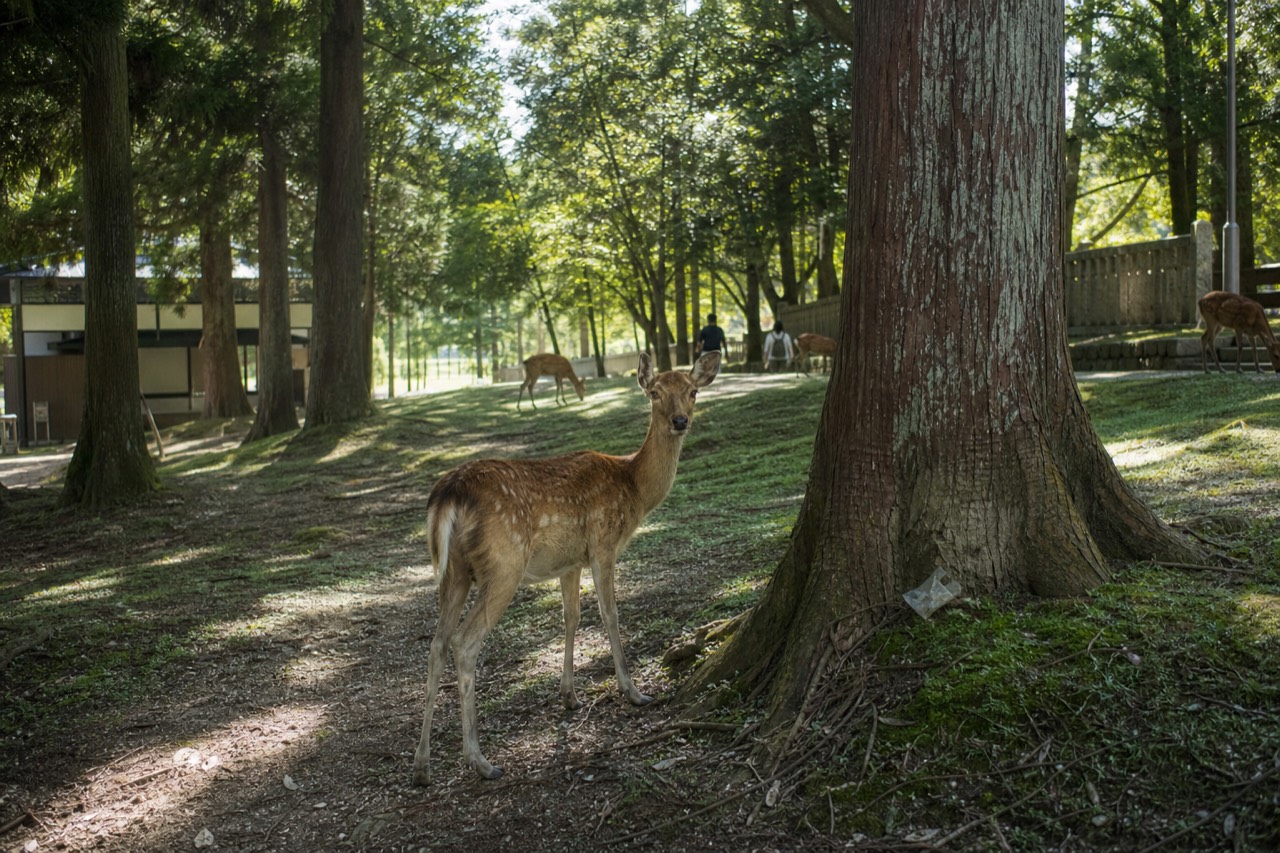
Nara Park is famous because more than 1,600 deer roam its open ground freely, protected as a National Natural Monument, and because that ground is shared with three of Japan's oldest religious monuments: Todai-ji with its Great Buddha hall, Kasuga Taisha with its lantern-lined approaches, and Kofuku-ji with its five-storied pagoda. No other place in Japan puts wild animals, imperial history and world heritage sites on the same patch of grass, with no fence between the visitor and any of it.
That is the short answer. The longer one involves a shrine that has guarded the deer for well over a millennium, a census taken at dawn every July, a temple hall that was once the largest wooden building on earth, and a park that is, in a legal sense, not really a park at all.
Why is Nara Park so famous?
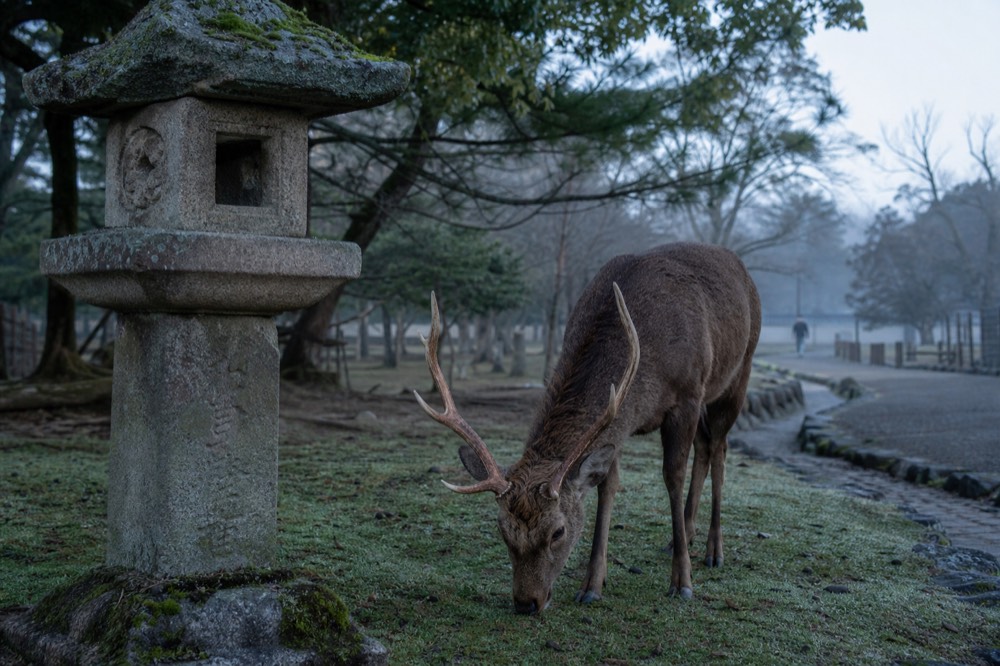
Nara Park is famous for the intersection it creates: over 1,600 free-roaming deer, protected as a National Natural Monument, live in the same open space as Todai-ji's Great Buddha hall, Kasuga Taisha's roughly 2,000 stone lanterns and Kofuku-ji's pagoda. The deer can be fed, bowed to and photographed at close range, which no other world heritage site in Japan allows.
The July 2026 census, taken by the Nara Deer Preservation Foundation on the mornings of 15 and 16 July between 05:30 and 08:00, counted 1,687 deer: 411 stags, 990 does and 286 fawns. That is 222 more than the previous year's count, a rise the foundation recorded in its July 2026 survey. The count is not done by the city or the tourist board; it is done by foundation staff and volunteers together with Kasuga Taisha, Nara Prefecture and three local universities, which tells you how seriously Nara takes its deer.
The foundation itself dates back generations. It was incorporated in 1934 and took its present name, the Nara Deer Preservation Foundation, in 1947, but the idea of protecting the deer is far older. The animals were traditionally seen as messengers of the gods of Kasuga Taisha, and killing one was once a capital offence. That reverence is the reason the deer are still here, unfenced, in the middle of a modern city.
Fame compounds. The deer draw photographers; the photographers draw more visitors; the visitors feed the deer, which keeps the population comfortable around people, which draws more photographers. The foundation's own guidance is careful on this point: the deer are habituated but wild. They bite, strike, butt and charge, and older visitors and small children need extra care.
If the combination sounds like something better experienced with a licensed guide at your side than worked out alone from a paper itinerary, there is exactly one bookable product that covers both sides of it in a single day, and several ways to take it.
Where do the Nara deer come from?
The deer descend from animals revered as divine messengers of Kasuga Taisha, the shrine founded in the Nara period whose deities were said to arrive from Kashima on a white deer. The Nara Deer Preservation Foundation, incorporated in 1934, now manages them, and the deer hold National Natural Monument status, meaning they are protected cultural property rather than ordinary wildlife.
The practical machinery of that protection is more specific than most visitors expect. June and November are the foundation's designated deer-protection months, one for calving and one for the rut. Calving runs from mid-May through June, and a doe near a birth turns aggressive; approaching a newborn fawn provokes the mother. The rut runs September to November, when stags, including those whose antlers have been cut, must not be approached at all.
Feeding is regulated down to the cracker. Visitors may feed the deer nothing except shika senbei, the special rice crackers sold in the park for about 200 yen a bundle of roughly ten, with proceeds supporting the deer. The technique matters as much as the food: hand the cracker over quickly, do not tease, and never hold it in a closed fist, or the deer will follow and press. The foundation publishes these rules in Japanese, English and Chinese, and they are the difference between a charming encounter and a bruised hip.
The deer also have a harder side to their story, which the foundation publishes openly rather than hiding. In fiscal 2025, 140 deer died: 30 stags, 41 does and 69 fawns. Road accidents accounted for 36 of those deaths and disease for 30. The record population and the growing pressure of tourism are the backdrop to the foundation's education work, which is why its signage asks for distance as much as interaction.
For visitors who want the fuller picture of the herd, including how the counting is done and what the rules are in each season, the Nara deer park guide covers it in depth, and the foundation's own guidance pages are the primary source for the safety rules quoted above.
Planning a first visit around the deer, the temples and the walking in a single day is exactly where a guided option earns its keep.
What else makes the park famous besides the deer?
The park encloses three world-class monuments: Todai-ji, whose Great Buddha hall measures 57.012 metres east-west and 50.480 metres north-south and houses a bronze Buddha consecrated in 752; Kasuga Taisha, with its 700-yen special worship and famous lantern approaches; and Kofuku-ji, whose roughly 50-metre pagoda is Japan's second-tallest wooden pagoda. Together they form the UNESCO-listed Historic Monuments of Ancient Nara, inscribed in 1998.
Todai-ji is the anchor. The present hall, dedicated in 1709, is a scaled-down rebuild of a structure that was once about 88 metres wide, and it was for centuries the largest wooden building in the world. Adult admission to the Daibutsuden is 800 yen, cash only, with a set ticket covering the hall and the Todai-ji Museum for 1,200 yen. The hall opens 07:30 to 17:30 from April to October and 08:00 to 17:00 from November to March, and no advance booking is accepted or required, as the temple states plainly on its own admission page.
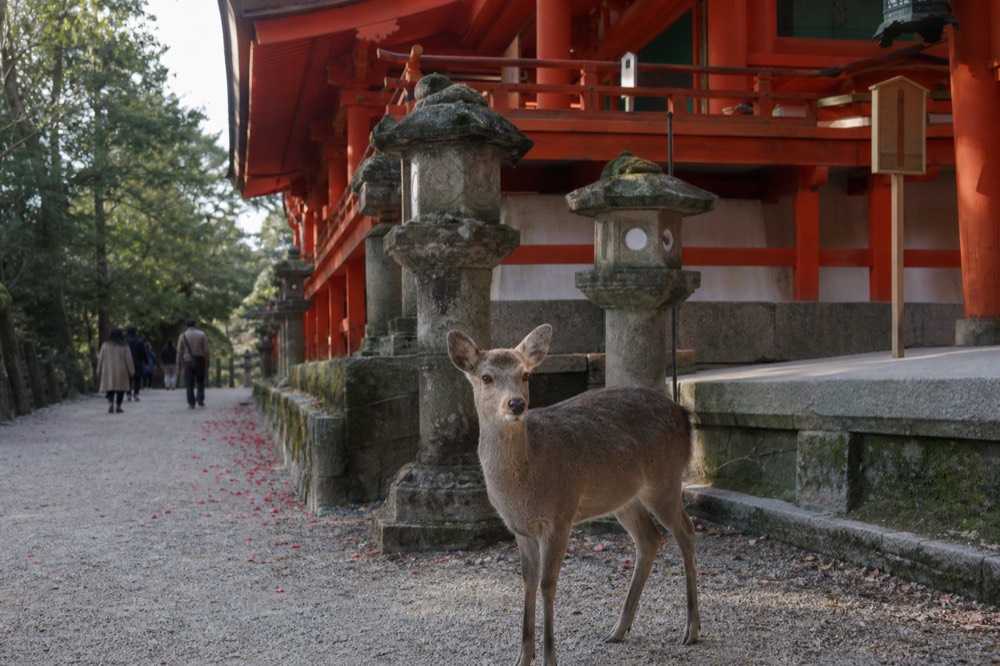
Kasuga Taisha, a short walk into the park's wooded edge, is famous for its lanterns: roughly 2,000 stone lanterns line the approach and roughly 1,000 bronze hanging lanterns decorate the shrine buildings. The special worship area inside the middle gate costs 700 yen, a fee raised from 500 yen on 1 October 2024, a change many older guidebooks still have wrong. The shrine's museum holds 354 National Treasures, a staggering figure for a single institution.
Kofuku-ji carries a caveat every visitor should know before walking over: its five-storied pagoda, about 50 metres tall and the tallest building in Nara Prefecture, has been completely enclosed under a roughly 60-metre steel weather cover since March 2025 for its first full conservation repair in about 120 years, with completion scheduled for March 2034. Anyone arriving expecting the classic pagoda photo will find a shroud. The temple's three paid halls, the Central Golden Hall, the Eastern Golden Hall and the National Treasure Museum, are open as usual, with a combined ticket at 1,600 yen, cash only.
| Site in the park | Adult admission | Notes |
|---|---|---|
| Todai-ji Daibutsuden | 800 yen | Cash only; set ticket with museum 1,200 yen |
| Kasuga Taisha special worship | 700 yen | Raised from 500 yen on 1 October 2024 |
| Kasuga Taisha grounds and approach | Free | Lanterns visible without a ticket |
| Kofuku-ji combined ticket | 1,600 yen | Three halls; cash only; sold 09:00-16:00 only |
| Kofuku-ji single hall | 500 yen | Central or Eastern Golden Hall |
| Deer feeding (shika senbei) | About 200 yen | Roughly ten crackers; feed nothing else |
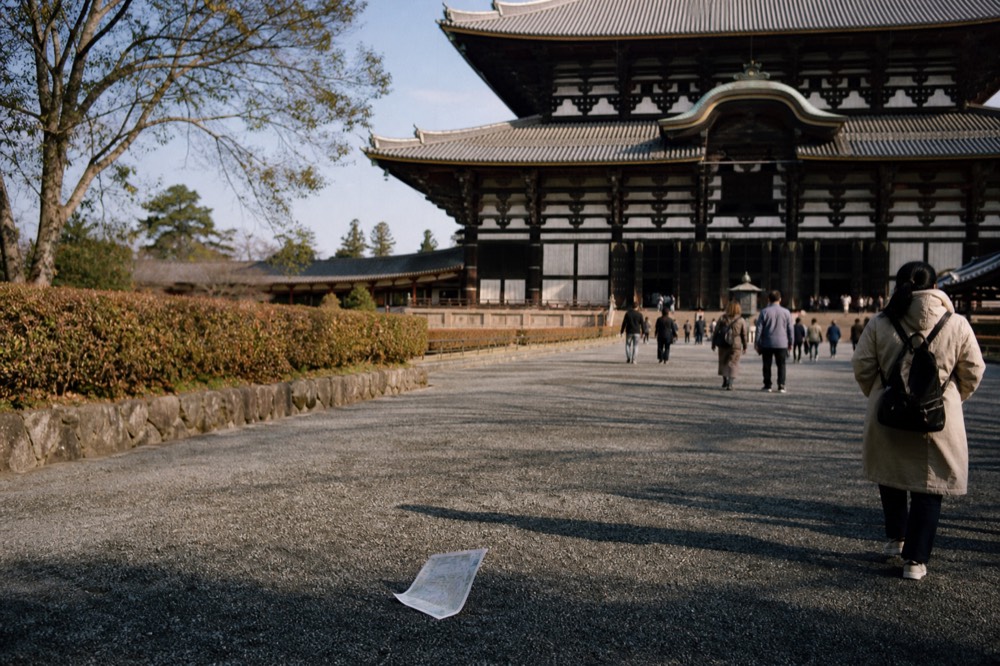
The park's layout rewards walking. The whole ensemble, Nara Park, Todai-ji, Kasuga Taisha, Kofuku-ji and the Naramachi old town beyond it, sits within a compact area that can be covered on foot from either of Nara's two stations, a scale that surprises visitors expecting something the size of a national park. The Todai-ji temple guide walks through the hall and its statues in more detail.
Seeing all three sites plus the deer in one day, in the right order and without backtracking, is the practical problem most visitors underestimate. The coach tour run by Kyoto Nara Day Tour solves it by pairing the Kyoto mornings, Nijo Castle, Kinkaku-ji and the Kyoto Imperial Palace, with a Nara afternoon at Kasuga Taisha, Todai-ji and Nara Park, with a licensed English-speaking guide and admissions arranged along the way.
Is Nara Park worth the trip from Kyoto?
Yes, and it is an easy trip: the JR Nara Line covers Kyoto to Nara in about 45 minutes on the Miyakoji Rapid for about 720 yen one way, and Kintetsu reaches Kintetsu Nara station, five to eight minutes' walk from the park, in a similar time. A typical guided coach tour runs about 10.5 hours from Kyoto, door to door, with the Kyoto to Nara leg taking 60 to 80 minutes each way by road.
Doing it independently is genuinely viable, and the guide to a Nara day trip from Kyoto covers the timetables and routing in detail. Kintetsu Nara station is the better arrival point for the park: it is about five to eight minutes on foot to the park edge and Kofuku-ji, while JR Nara station means a walk of roughly 15 to 25 minutes. Fares change, so treat those figures as approximate.
The guided alternative suits a different kind of day. The single bookable product covering both cities, the Kyoto and Nara Day Tour operated by JTB Sunrise Tours, is rated 4.8 from 32 reviews and runs from $185.65 per adult for the cheapest option, which departs Kyoto with an 08:20 meeting time and no lunch included. Six variants exist: three departing Kyoto and three departing Osaka at 07:15, each with or without lunch, and the three Osaka options end at Osaka Namba rather than returning to Kyoto.
One honest note on the lunch: across the reviews on this listing, the included set lunch is the element of the day guests criticise most often; the no-lunch option costs less. The no-lunch option costs less and leaves the midday meal open, and Nara has plenty of better food within walking distance of the park, which the what to eat in Nara guide maps out. For a visitor whose main goal is the park itself, the plain departure with no lunch is the sensible pick.Timing matters more than most itineraries admit. The deer are at their calmest and the light at its best early in the morning, which is also when the park is emptiest; the best time of day for Nara Park question gets a full treatment elsewhere on this site. Season matters too: June and November, the foundation's two deer-protection months, are when the animals are most likely to be stressed or penned, with does protective of fawns in early summer and stags aggressive through the autumn rut.
The fame, in the end, is durable because it is structural. The deer are not an attraction that was built; they are a population that survived, protected continuously for more than a millennium, and the temples around them are not reconstructions built for tourism but working religious institutions holding some of the densest concentrations of National Treasures in Japan. Whether a visit lasts half a day or a full one with Kyoto attached, what not to miss in Nara is a shorter list than people expect, because almost everything famous stands within a few minutes' walk of everything else.
Nara Park is famous chiefly for its free-roaming deer and the world heritage sites they share the ground with, and the questions visitors ask most often are about feeding, safety, cost and timing. The short answers below cover the essentials, with every figure drawn from the temples' and the deer foundation's own published pages, so nothing here needs double-checking against a guidebook.
Common questions about Nara Park
Why is Nara Park so famous?
Nara Park is famous for its free-roaming deer, 1,687 in the July 2026 census, protected as a National Natural Monument, and for the world heritage sites they share the ground with: Todai-ji's Great Buddha hall, Kasuga Taisha and Kofuku-ji, all part of the Historic Monuments of Ancient Nara inscribed by UNESCO in 1998.
Can you feed the deer at Nara Park?
Yes, but only shika senbei, the licensed rice crackers sold in the park for about 200 yen a bundle of roughly ten. The Nara Deer Preservation Foundation's rules say to hand the cracker over quickly, never to tease, and never to hold it in a closed fist. Feeding the deer anything else is prohibited.
Are the Nara deer dangerous?
They are habituated but wild, in the foundation's own words. They bite, strike, butt and charge. Extra care is needed around older visitors and small children, around does with fawns from mid-May through June, and around stags during the September to November rut.
Is Nara Park free to enter?
The park itself costs nothing and the deer area is open ground. The paid parts are the monuments inside it: Todai-ji's Daibutsuden at 800 yen, Kasuga Taisha's special worship at 700 yen, and Kofuku-ji's three halls, with a combined ticket at 1,600 yen. Todai-ji and Kofuku-ji take cash only.
How much time do you need at Nara Park?
The park, the deer and Todai-ji can be seen in about half a day; adding Kasuga Taisha's approaches and Kofuku-ji comfortably fills four hours or more, and most guided tours spend an afternoon in Nara as part of a full eight to ten hour day that also includes Kyoto's major sites.
When should you avoid Nara Park?
June and November are the foundation's designated deer-protection months, the first for calving and the second for the rut, when the animals are most easily provoked. Early morning is the best time of day for both deer behaviour and thin crowds.