What are the rules about photographing geisha in Kyoto?
The photography rules for Gion and Kyoto's other geisha districts: which streets are public, where the 10,000 yen private-alley penalty applies, and what the city's own guidelines ask of visitors.
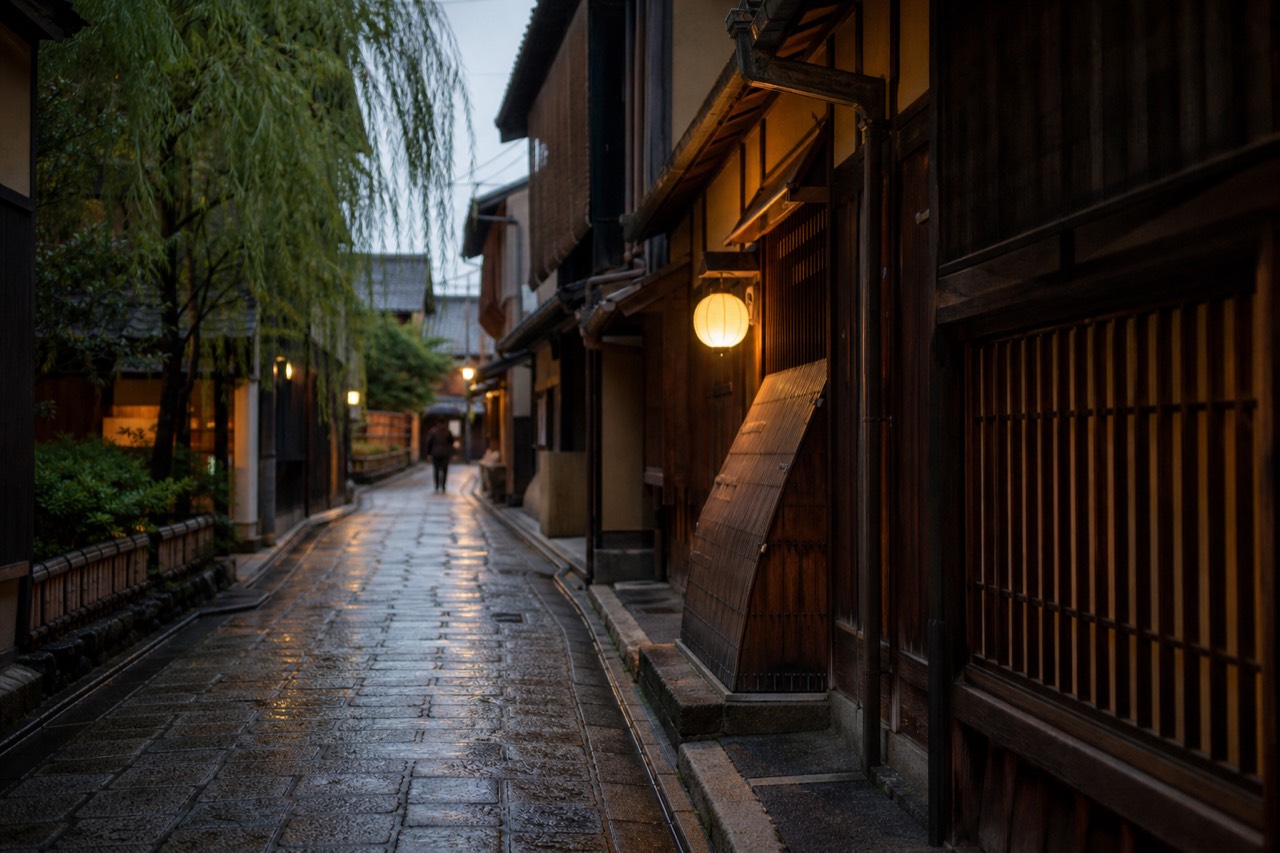
Kyoto's geisha districts have tightened faster than almost any other part of the tourist city. Gion now has signs in several languages, cameras on private lanes, and volunteers on patrol during the evening rush, all because a small number of visitors chased, cornered and harassed maiko on their way to work. The response is real, specific, and easy to follow once you know which street you are standing on.
What are the rules about photographing geisha in Kyoto?
The core rule is consent: you may photograph the streets and scenery freely, but photographing a geiko or maiko requires her permission, and chasing or grabbing her to get a shot is prohibited under guidelines published by Kyoto City. In Gion's private alleys, photography and even entry are banned outright, with a 10,000 yen penalty, enforced with signage and cameras.
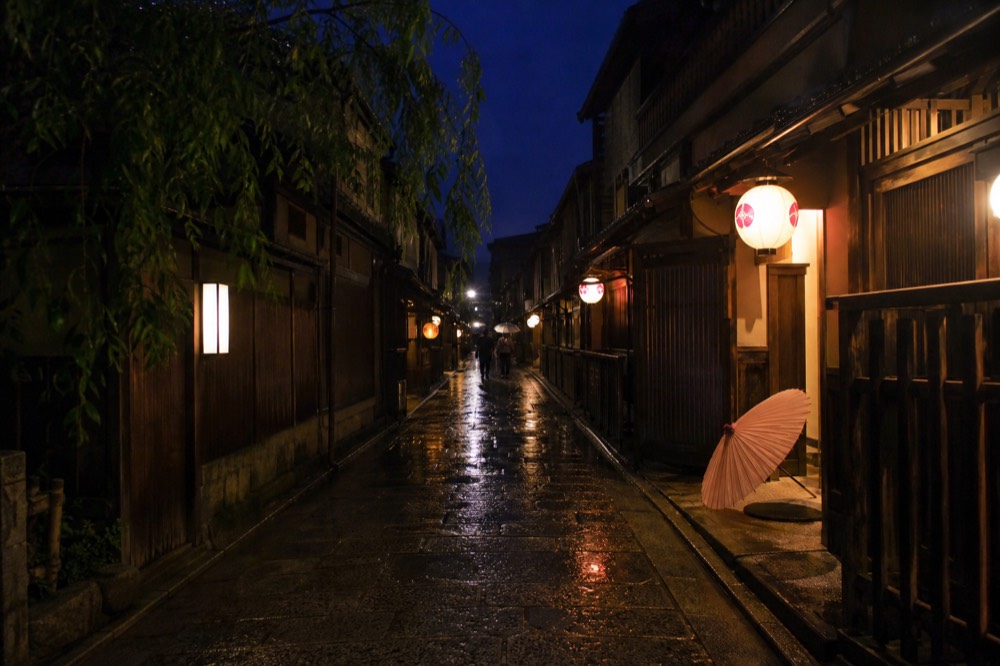
The distinction that matters is between public and private ground. Hanamikoji, the main street through Gion, remains a public road. Anyone can walk it and take pictures of the teahouse facades, the lanterns and the general street scene. The private lanes that run off it, the narrow roji alleys behind the teahouses, are another matter entirely: the neighbourhood association closed them to photography and to entry, and posted the 10,000 yen penalty at the entrances. Volunteers patrol in the evenings, and cameras record the lanes. If a maiko happens to cross your frame on the public street, the city's guidance is still the same: keep your distance, never block her path, and do not follow her.
That guidance is not folklore repeated by bloggers. Kyoto City publishes its own rules for photographing geiko and maiko, and they are worth reading directly: the city's guidelines for photographing geiko and maiko. They ask visitors not to touch, not to chase, not to block passage, and not to photograph without permission.
The stakes for the women themselves are easy to underestimate. A maiko walking to an appointment at 6 p.m. is commuting to work, on a schedule, in shoes that make cobblestones genuinely hazardous. The rules exist because that commute was being interrupted hundreds of times a night at the peak of the problem.
For travellers whose interest in Kyoto goes beyond the geisha districts, the city's headline sights can be covered efficiently on a structured day out. These three options are the most useful starting points:
The Kyoto and Nara Day Tour by JTB Sunrise Tours, rated 4.8 from 32 reviews, visits Nijo Castle, Kinkaku-ji, the Kyoto Imperial Palace, Kasuga Taisha, and Todai-ji with Nara Park, with a licensed English-speaking guide, the coach and the admissions covered in the price. It does not visit Gion, which is worth knowing before you book: the geisha districts are an evening experience on the east side of the city, and most visitors add them on their own after the coach returns.
Which streets in Gion can you photograph, and which are off limits?
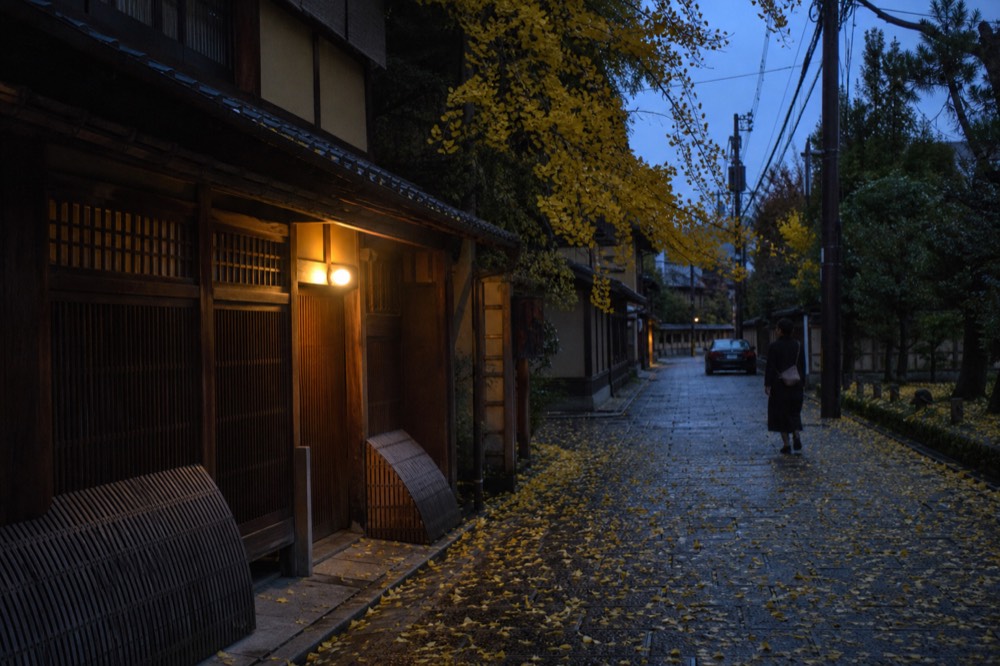
Hanamikoji, Gion's main street, is public and photographable: the teahouse fronts, the lanterns and the evening atmosphere are all fair game. The private alleys branching off it ban both entry and photography, with a 10,000 yen penalty posted at the entrances and enforced by patrols and cameras.
The boundary is physical and clearly marked. The main street is wide, busy and lined with machiya teahouses whose wooden facades photograph beautifully in the blue hour. The private roji lanes are narrow, unlit compared with the main drag, and closed. Signs at the alley mouths state the ban in Japanese, English and Chinese. If you are unsure whether you are on public or private ground, the rule of thumb is simple: the broad street is public, the narrow lanes behind the buildings are not.
Gion is not the only district where these expectations apply. Miyagawa-cho and Pontocho, the other working geisha quarters, have the same dynamic: public streets you can photograph, private interiors and back lanes you cannot, and working women who owe you nothing. Kamishichiken, near Kitano Tenmangu, is quieter and smaller, and the same courtesy applies there with even less infrastructure to spell it out.
A useful pairing for an evening in Gion: the district sits within walking distance of several of east Kyoto's other draws. If you are building your own evening, our rundown of what not to miss in Kyoto covers the sights closest to the geisha quarters, and the one day Kyoto itinerary shows how a Gion evening slots onto a day of temple-hopping.
One nearby note on timing: Kiyomizu-dera, the temple on the hill above the Higashiyama streets that flow down toward Gion, opens at 06:00 year-round and closes at 18:00 on ordinary days, with extended 21:30 closing on its spring, summer and autumn night-viewing dates. The temple publishes the full table at its official access page, and the night-viewing dates change every year, so check the table rather than a guidebook.
Why did Kyoto introduce these photography rules?
The rules are a response to harassment: visitors chased maiko down streets, grabbed their kimono sleeves and blocked their path for photographs, to the point that the Gion neighbourhood association closed its private alleys and Kyoto City published formal guidelines. The measures protect working women on their commute, not a photo opportunity.
The escalation followed a pattern seen across heavily visited cities: a small minority behaves badly, the volume of bad behaviour scales with visitor numbers, and eventually the local community legislates. In Gion's case the community had a lever most do not, ownership of the private lanes. Closing those lanes to entry and photography was something the neighbourhood could do unilaterally, and it did.
The city's guidelines fill the gap the alleys could not: they govern behaviour on public streets, where photography itself is not banned, only the harassment around it. The distinction matters. Nobody is telling you to leave your camera at the hotel. They are telling you that a telephoto shot of a woman walking to work, taken from a respectful distance on a public street, is a different act from sprinting after her for a selfie.
There is a cultural layer too. A geiko or maiko is a professional entertainer in the middle of a working evening, often running between engagements on a tight schedule. The kimono she wears can represent an investment of thousands of dollars, and the hair of a maiko is styled on her real head, weekly, at real cost in time and discomfort. A grabbed sleeve is not a trivial thing to her.
What is the fine for taking photos in Gion's private alleys?
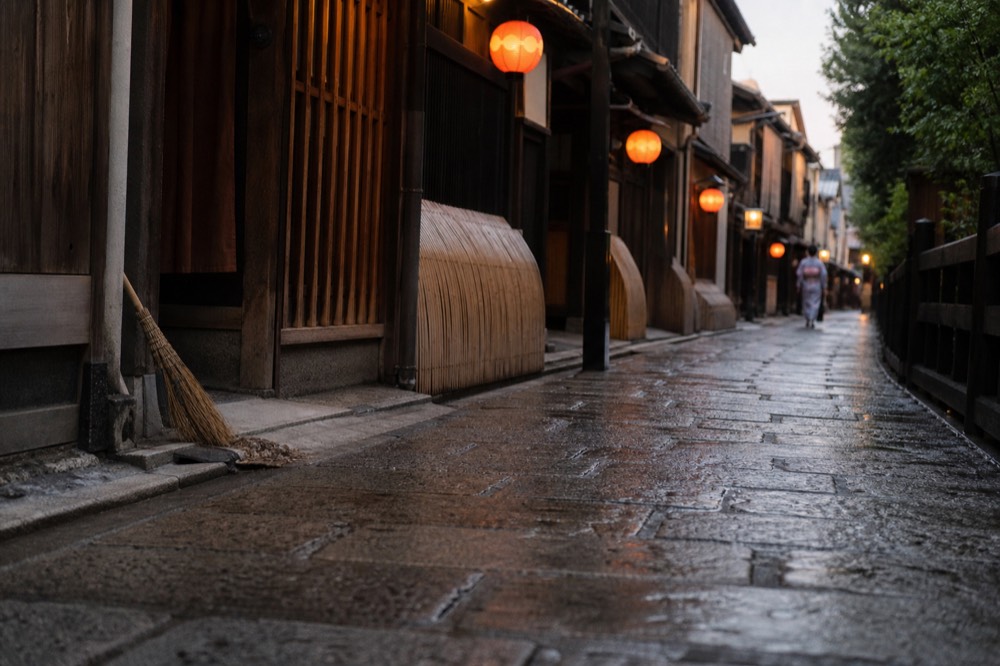
The fine for entering or photographing Gion's private alleys is 10,000 yen, and it is enforced through posted signage, cameras, and volunteer patrols. On Gion's public streets, however, there is no fine for taking photos themselves, since the sanctions in those areas target harassment of residents and geisha rather than the act of photography.
The practical reading for a visitor: the alleys are not a grey zone. The signs are at the entrances, in multiple languages, and the ban covers your feet as much as your lens. Walking down a closed lane is the violation, whether or not you lift your camera. The 10,000 yen figure is posted by the neighbourhood association, and reports of enforcement have been consistent since the ban took hold.
| Situation | Allowed? | What applies |
|---|---|---|
| Photographing Hanamikoji's streets and facades | Yes | Public street; normal courtesy |
| Entering a private alley off Hanamikoji | No | Posted 10,000 yen penalty, signage and cameras |
| Photographing inside a private alley | No | Covered by the same alley ban |
| Photographing a maiko on a public street | With permission | City guidelines ask you to keep distance and not block her path |
| Chasing, touching or grabbing a maiko | No | Prohibited by Kyoto City guidelines; harassment is the target |
| Photographing teahouse exteriors and lanterns | Yes | Public view, no restriction |
The volunteer patrols deserve a word, because they are not police. Their role is to watch the lanes, point visitors to the signs, and report violations. The enforcement teeth belong to the neighbourhood association and, where harassment crosses into obstruction or assault, to ordinary Japanese law. A tourist dispute over a photograph is far more likely to end with an escort out of the lane than an arrest, but the penalty exists and the cameras do not blink.
How can you see or photograph maiko respectfully in Kyoto?
The respectful route is distance and context: photograph the district rather than the woman, attend a licensed performance or public event where appearance is part of the programme, and if a maiko passes on a public street, let her pass. Permission-based photography exists, but it comes through organised settings, not street encounters.
There are legitimate ways to see the art close up. Several theatres and cultural venues in Kyoto stage scheduled performances by geiko and maiko, where the performers are on stage precisely to be watched. Spring and autumn public dances in the geisha districts are ticketed, advertised in advance, and photographable only within the venue's rules, which usually means no photography at all during the performance. The point is that in these settings the women have consented to being seen.
Street photography of the district itself is the underrated alternative. Gion at dusk, with its stone lanes, hanging lanterns and wooden facades, is one of the most photogenic streetscapes in Japan, and none of it requires a person in the frame. The images that age best from Gion are almost always architecture and atmosphere, because they capture the thing a visitor actually came to see: a working historic district, not a person trying to get to work.
If you are staying in Osaka and planning your Kyoto time around an evening in Gion, the arithmetic changes. A day tour that departs from Osaka at 07:15 ends at Osaka Namba rather than returning to Kyoto, so the evening in Gion needs to be a Kyoto evening with a late train back, or a separate day. The Osaka departure option with the standard Western set lunch is published at HK$1,698:
That lunch deserves one honest caveat: reviewers across several years have singled out the included meal as the weakest part of the tour, and the no-lunch options cost less and leave you free to eat what you want in Nara. The Indian thali option exists for travellers who want a seated meal that suits them, but nobody should book the tour for the food.
Do the rules apply outside Gion as well?
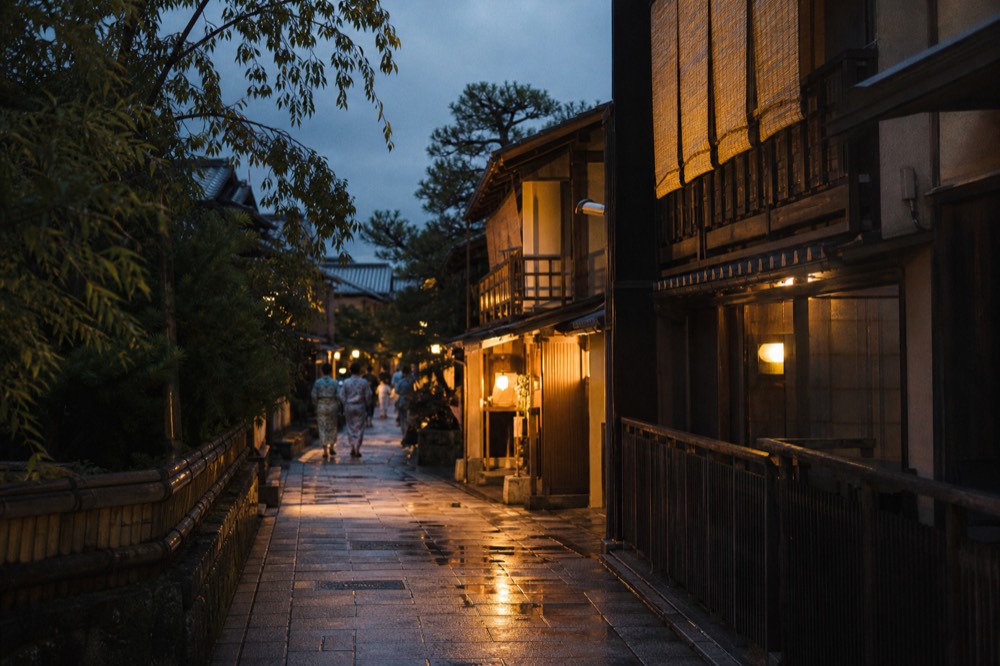
Yes: Kyoto City's guidelines on photographing geiko and maiko apply citywide, and the same consent-and-distance standard governs Miyagawa-cho, Pontocho and Kamishichiken. What is specific to Gion is the physical closure of private alleys with a posted 10,000 yen penalty; elsewhere the rules are behavioural rather than fenced.
Miyagawa-cho, south of Gion along the Kamo River, is a working district with a similar evening rhythm and fewer visitors. Pontocho, the narrow alley running parallel to the river, is a dining destination as much as a geisha quarter, and its restaurants and lanterns are photographed constantly without issue. Kamishichiken, Kyoto's oldest geisha district near Kitano Tenmangu, is small, quiet and deserves extra restraint precisely because there is no signage or patrol infrastructure to spell out what should be obvious.
The riverbank itself, and the bridges over the Kamo River, are public and photographable, and the views toward the Higashiyama hills at dusk are among the best free scenes in the city. For travellers counting costs, our guide to free things to do in Kyoto and Nara covers the riverbank alongside the temples and shrines that charge nothing.
A final framing that helps: Kyoto is a live city of about the same scale as a large European capital, and its geisha districts are workplaces, not theme parks. The photography rules are the city drawing a line around the workplace. Visitors who respect that line find Gion generous with everything else it has, and the team behind Kyoto Nara Day Tour covers the rest of the city, the Nara leg included, for those who want the history without the hunt.
For a first visit that pairs Kyoto's headline sights with Nara's Great Buddha and the deer park, and leaves your evening free for Gion, these are the three most useful options:
The short version: streets and scenery are free to photograph on public roads, photographing a geiko or maiko requires her permission under Kyoto City guidelines, and Gion's private alleys ban entry and photography outright with a 10,000 yen posted penalty. The rules exist because visitors harassed maiko on their way to work.
Common questions about photographing geisha in Kyoto
What are the rules about photographing geisha in Kyoto?
Photography of the streets and scenery is unrestricted on public roads, including Hanamikoji. Photographing a geiko or maiko requires her permission under Kyoto City guidelines, and chasing, touching or blocking her is prohibited. Gion's private alleys ban entry and photography entirely, with a 10,000 yen penalty posted at the entrances.
Can you take photos on Hanamikoji street?
Yes. Hanamikoji is a public street and you can photograph the teahouse facades, lanterns and general atmosphere freely. The bans apply to the private alleys that branch off it, not to the main street itself.
What is the fine for entering Gion's private alleys?
The posted penalty is 10,000 yen for entering or photographing the private lanes off Hanamikoji. The ban is enforced with signage in multiple languages, cameras and volunteer patrols, and it covers your presence in the lane, not just your camera.
Where can you see maiko legally and respectfully?
Attend a scheduled performance or one of the ticketed public dances in the geisha districts, where the performers appear as part of the programme. On the street, keep your distance, never block a maiko's path, and photograph the district rather than the person.
Do the geisha photography rules apply outside Gion?
Yes. Kyoto City's guidelines apply citywide, covering Miyagawa-cho, Pontocho and Kamishichiken as well. Only Gion has the physically closed private alleys with the posted fine; elsewhere the standard is behavioural, consent and distance.
Is it legal to photograph a maiko without asking?
On a public street, photography itself is not banned, but the city's guidelines ask you not to photograph geiko or maiko without permission and never to chase, touch or obstruct them. Harassment, not the camera, is what the rules target. In the private alleys, any photography is off limits.